



Particle size consistency is a critical quality factor in chemical manufacturing. When granules vary in size, shape, or strength, they can behave unpredictably during conveying, storage, feeding, and packaging. Excessive variation may also increase dust generation, affect material flow, and create challenges for downstream processing.
For manufacturers handling molten chemicals, achieving consistent granules requires more than selecting suitable equipment. Feed stability, droplet formation, cooling conditions, mechanical operation, and product handling must work together to maintain a repeatable process.
Shanghai Rebo Granulation Machinery Co., Ltd. specializes in the development and production of industrial granulation equipment. Its sulfur granulation systems use a droplet-forming unit and a moving steel cooling belt to transform molten sulfur into solid granules. Understanding the factors that influence this process can help manufacturers improve product consistency and optimize production performance in suitable chemical granulation applications.
1. Define the Target Particle Size and Quality Requirements
The first step toward improving particle size consistency is to establish clear product specifications.
Different chemical products have different requirements for particle diameter, shape, flowability, strength, and fines content. These characteristics influence how the material behaves during storage, transportation, feeding, and subsequent processing.
For example, Rebo's sulfur granulation equipment produces granules with a typical diameter of approximately 3–6 mm and a height of around 1.5–1.8 mm. These dimensions describe the stated characteristics of its sulfur granulation process and should not be interpreted as universal specifications for other granulation technologies.
Once the target specifications have been established, manufacturers should measure representative samples collected at different stages of production. Sampling at the beginning, middle, and end of a production run can help reveal whether particle size variation is consistent or associated with changes in operating conditions.
A comprehensive quality assessment may include:
-
Particle diameter and height
-
Particle shape and uniformity
-
Percentage of undersized and oversized granules
-
Fines content and breakage rate
-
Flowability and handling characteristics
Clear acceptance criteria provide a measurable basis for process adjustments and equipment evaluation.
2. Maintain Stable Feed Conditions
Consistent granules begin with a stable material supply. In molten-material granulation, fluctuations in temperature, flow rate, or material condition can influence how the liquid reaches the forming unit and develops into droplets.
Sulfur granulation provides a practical example. In Rebo's process, molten sulfur is conveyed from a liquid sulfur pit through an insulated submerged pump, steam-jacketed pipelines, and a filter before entering the droplet-forming unit.
Each component contributes to process stability. Insulation and steam heating help maintain suitable thermal conditions, while filtration removes unwanted solid contaminants that could interfere with droplet formation. A stable feed also helps reduce fluctuations across the production line.
Manufacturers should pay particular attention to the following factors.
Temperature stability: Monitor the molten material at appropriate points and maintain the operating range specified for the process.
Feed flow consistency: Investigate fluctuations caused by pump operation, pipeline restrictions, or upstream supply changes.
Filtration performance: Inspect filters according to the maintenance schedule and investigate unexpected pressure changes or reduced flow.
Pipeline insulation and heating: Check for heat loss, uneven heating, and other conditions that may affect material delivery.
The correct operating values depend on the material and equipment configuration. Manufacturers should follow validated operating procedures rather than apply universal temperature or flow-rate settings.
3. Optimize Droplet Formation for Greater Uniformity
In droplet-based granulation, the forming unit directly influences the dimensions and shape of the finished particles. Variations in nozzle condition, material delivery, or droplet distribution can produce noticeable differences in granule size.
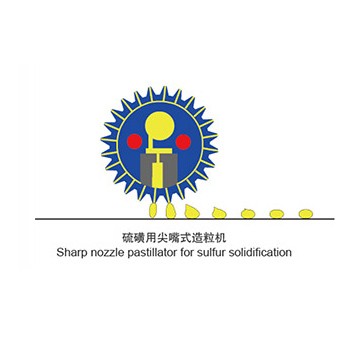
Rebo's sulfur granulation system uses patented pointed-nozzle technology, with multiple small pointed nozzles installed on a drum surface. Molten sulfur is formed into droplets and deposited row by row onto a moving steel belt.
To maintain consistent droplet formation, operators should regularly inspect the forming system for blockage, deposits, wear, and other abnormalities that may affect droplet distribution.
A practical inspection routine should include:
-
Checking whether droplets are distributed consistently across the full working width.
-
Inspecting the nozzle system for blockage, deposits, or abnormal wear.
-
Monitoring feed stability and identifying sudden changes in droplet formation.
-
Recording particle dimensions alongside relevant operating conditions.
-
Investigating recurring deviations before making major process adjustments.
The location of the variation can provide useful diagnostic information. If particle sizes shift across the entire production width, feed conditions or overall forming parameters may require investigation. If the problem is concentrated in particular rows or sections, the distribution system and individual forming components should receive closer attention.
Regular inspection and documented process adjustments help manufacturers identify the source of variation instead of repeatedly changing unrelated settings.
4. Control Cooling Conditions and Steel Belt Movement
After droplets are deposited onto the steel belt, they must cool and solidify into granules. Cooling performance and belt movement therefore play important roles in maintaining the intended particle dimensions and shape.
In Rebo's sulfur granulation process, cooling water is sprayed beneath the steel belt. The water cools the belt from below without directly contacting the sulfur product. As the droplets travel along the belt, they solidify into flattened hemispherical granules before being removed by a discharge scraper.
This arrangement makes consistent cooling and belt operation important parts of process control.
Manufacturers should monitor several factors:
-
Cooling-water operation: Confirm that the cooling system operates within its specified conditions and provides appropriate heat removal.
-
Belt speed: Maintain the prescribed speed so that granules have sufficient time to solidify before discharge.
-
Belt tracking: Check that the belt remains properly aligned and moves smoothly.
-
Belt surface condition: Inspect for damage, deposits, or irregularities that could affect product formation or release.
-
Scraper performance: Check for wear or damage that could interfere with granule removal.
Cooling adjustments should be based on observed product quality and the equipment manufacturer's recommendations. Inconsistent cooling, unstable belt movement, or uneven droplet deposition may affect the finished product.
The objective is to establish repeatable operating conditions rather than make frequent, unrecorded adjustments.
5. Reduce Granule Breakage During Discharge and Packaging
Particle size consistency can deteriorate even after granules have formed successfully. Excessive impact, friction, or compression during discharge, conveying, and packaging may break larger particles into smaller fragments.
This can increase fines content and widen the particle size distribution of the final product.
In Rebo's sulfur granulation system, a discharge scraper removes solidified granules from the belt and directs them into a receiving hopper before they proceed to the packaging system. The condition of the scraper and downstream material-handling equipment should therefore be considered when investigating particle breakage.
Manufacturers can reduce avoidable damage by reviewing:
-
Scraper condition and adjustment
-
Conveyor alignment and operating stability
-
Transfer heights and impact points
-
Material accumulation and blockages
-
Packaging equipment compatibility with the granules
One effective troubleshooting method is to compare samples collected immediately after granulation with samples taken after conveying and packaging.
If the initial sample meets the particle size specification but the packaged product contains excessive fines, the source of the problem may be downstream handling rather than the granulation process itself.
Identifying where breakage occurs prevents unnecessary adjustments to the forming system and helps focus maintenance efforts on the actual cause.
6. Use Quality Data to Improve Process Control
Visual inspection can identify obvious defects, but it cannot fully establish whether a production line consistently meets its particle size requirements. Reliable measurements and operating records are necessary for systematic improvement.
A practical quality-control program should include representative sampling, particle size measurement, and documentation of the operating conditions associated with each sample.
| Parameter | What to monitor |
|---|---|
| Feed conditions | Material temperature, flow stability, and filtration |
| Droplet formation | Distribution uniformity and nozzle condition |
| Cooling system | Cooling-water operation and heat removal |
| Mechanical operation | Belt tracking, scraper condition, and abnormal vibration |
| Finished granules | Dimensions, shape, fines content, and flowability |
| Downstream handling | Changes in particle size after conveying and packaging |
When a deviation occurs, compare quality measurements with the corresponding operating records. Where practical, change one relevant variable at a time and collect additional samples to evaluate the result.
This method makes it easier to determine which adjustments produce measurable improvements. Over time, the findings can be used to establish repeatable operating procedures, maintenance schedules, and quality-control limits.
For complex or persistent problems, collaboration between production engineers, maintenance personnel, and equipment suppliers can help identify issues involving the forming system, cooling arrangement, or overall production process.
7. Choose a Granulator That Matches Production Requirements
Not every granulation technology is suitable for every chemical. Equipment selection should account for material properties, operating temperature, target particle dimensions, production capacity, downstream handling requirements, and available plant space.
For molten sulfur applications, Rebo's system combines droplet formation with steel-belt cooling. The company lists machine widths of 1,200 mm, 1,600 mm, 1,800 mm, and 2,100 mm, with stated single-machine production capacities of 1,500, 3,000, 4,000, and 6,000 kg/h, respectively. These figures should be confirmed against the proposed equipment configuration and actual project requirements.
Rebo has developed its granulation technology from a German technical foundation and has continued refining its equipment for industrial applications. Its experience includes retrofitting imported granulators and supplying equipment for sulfur-processing projects.
When evaluating a chemical granulator, manufacturers should discuss the following requirements with the supplier:
-
Target particle dimensions and allowable size variation
-
Material characteristics and feed conditions
-
Required production throughput
-
Cooling and discharge arrangements
-
Conveying and packaging integration
-
Maintenance accessibility and process monitoring
-
Quality verification and acceptance criteria
Defining these requirements before selecting equipment helps ensure that the proposed configuration addresses the manufacturer's actual production challenges.
Conclusion
Improving particle size consistency in industrial chemical granulation requires coordinated control of the entire production process. Stable feed conditions, uniform droplet formation, appropriate cooling, reliable belt movement, careful discharge, and systematic quality measurements all contribute to repeatable results.
When particle variation occurs, manufacturers should first identify where it originates. Comparing samples from different stages of production can help distinguish problems in particle formation from damage caused by downstream handling.
For suitable molten-material applications, Shanghai Rebo Granulation Machinery Co., Ltd. provides sulfur granulation equipment based on controlled droplet formation and steel-belt cooling. By combining appropriate equipment selection with process monitoring and preventive maintenance, chemical manufacturers can work toward more uniform granules, reduced avoidable breakage, and more predictable downstream operations.
www.shrebo.com
Shanghai Rebo Granulation Machinery Co., Ltd.


+ There are no comments
Add yours