
Bearing grease replacement cycle planning rarely draws attention, yet it sits close to the center of industrial motor reliability. In plants where three-phase asynchronous motors run through continuous production shifts, the interval between grease services often decides whether a drive unit quietly holds its performance or gradually converts friction and heat into unplanned downtime. Industrial operations face high energy costs, safety hazards in explosive or flammable atmospheres, mechanical noise and vibration, and the challenge of meeting strict international standards such as IEC and CE — and bearing lubrication touches every one of those pressures. The following guide explains what determines the bearing grease replacement cycle for three-phase asynchronous motors and how Zhejiang Aolong Motor Technology Co., Ltd. (alonmax) addresses those factors through motor design.
What the Bearing Grease Replacement Cycle Actually Covers
Bearing grease replacement cycle: the planned interval at which aged or contaminated lubricant inside a motor bearing is removed and replaced, so that friction losses and internal heat generation remain within design limits and the bearing retains its designed service position.
Relubrication interval: the shorter, repeating interval at which fresh grease is added without dismantling the bearing assembly.
Condition-based trigger: the point at which observed changes — temperature rise, vibration, or abnormal mechanical noise — indicate the lubricant no longer performs its function, prompting service ahead of the planned interval.
Because the cycle is a maintenance decision rather than a fixed constant, the practical question is always which operating variables push the interval shorter and which design choices help hold it steady.
Factors That Shape the Interval in Industrial Service
Duty Cycle and Continuous Operation
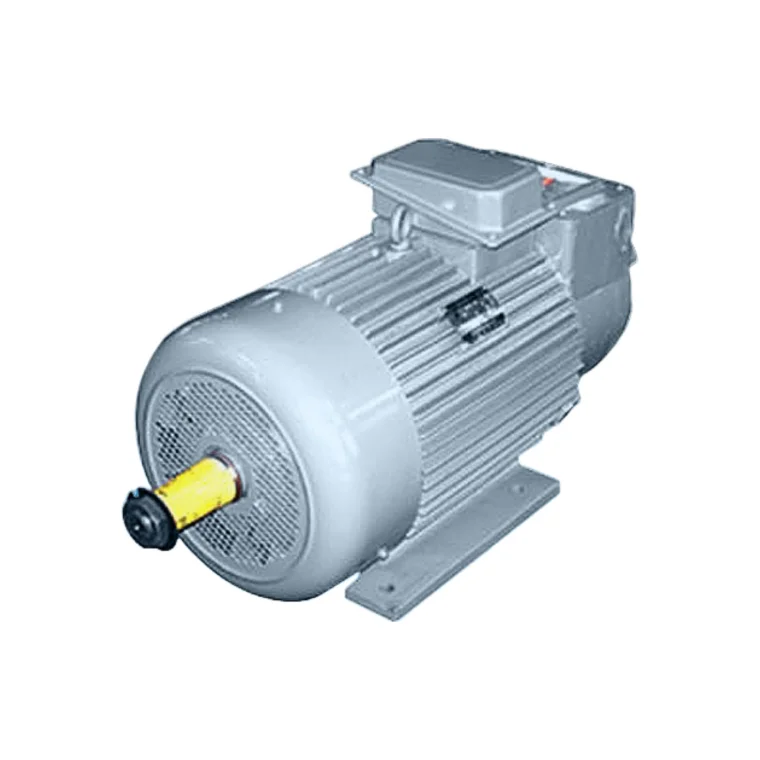
Three-phase asynchronous design is valued for providing reliable, steady power output in continuous industrial operations. Long uninterrupted duty cycles accumulate running hours quickly, so the grease replacement cycle is reached sooner in plants running multiple shifts than in intermittent duty settings.
Thermal Load and Efficiency Class
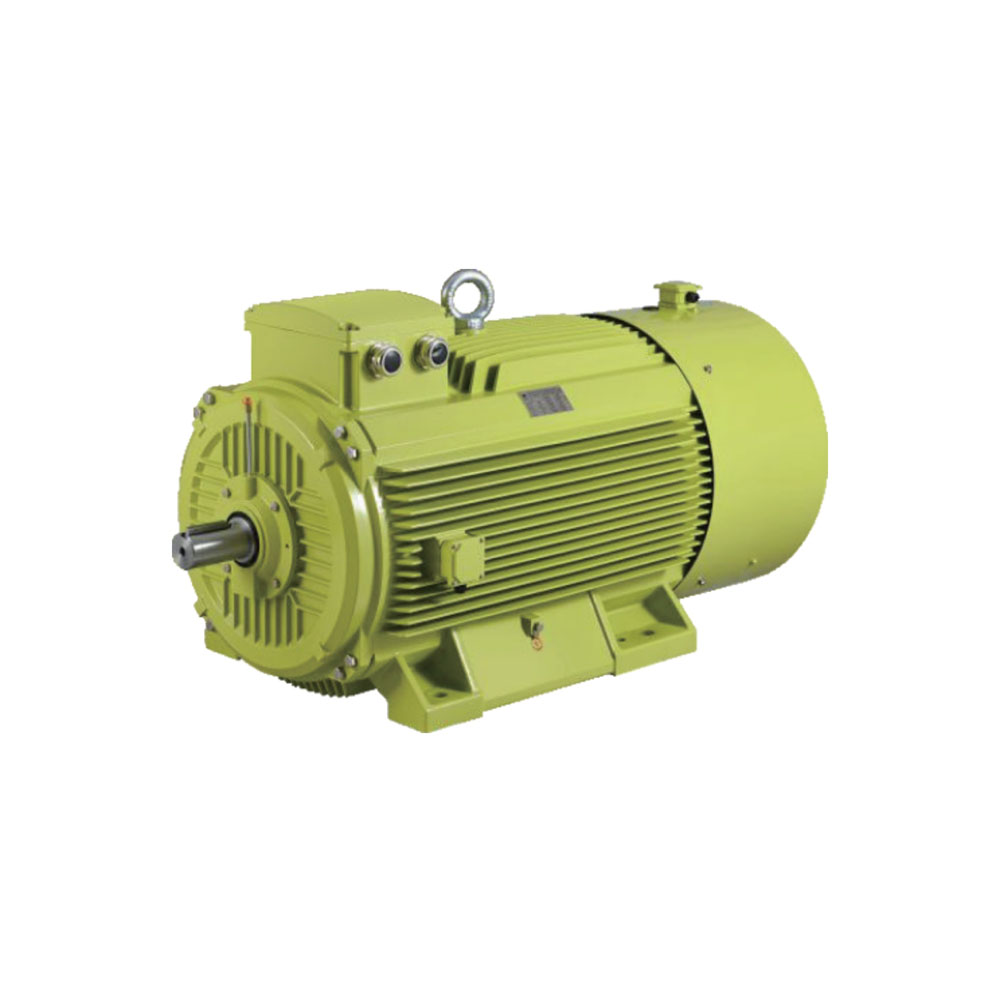
Bearing lubricant life is directly sensitive to heat. Motors built to IE3, IE4, and IE5 efficiency standards reduce electrical loss during operation, which in turn reduces the thermal burden carried by bearings and surrounding components. The YE3/IE3, YE4/IE4, and YE5/IE5 three-phase asynchronous motors from alonmax are positioned exactly on this logic: lower loss means lower operating temperature, and lower temperature supports the lubricant staying within its working range for longer.
Operating Environment
Ambient conditions decide how much contamination reaches the bearing cavity. In petrochemical refineries and chemical processing, motors must be engineered to Exd (flameproof) and Exe (increased safety) protection levels, containing internal pressure and preventing spark propagation. In food and grain processing, combustible dust protection prevents fine dust entry that could otherwise ignite. Because both protections limit ingress, the enclosure design directly influences how quickly grease is degraded by external contamination.
Variable Frequency Operation
Motors driven by variable frequency equipment introduce an additional variable: low-speed operation. YVF variable frequency motors are built for compatibility with external variable frequency drives (VFD) and address the issue of motor overheating at low speeds, while YBBP variable frequency explosion-proof motors allow speed control in hazardous zones when paired with VFDs — solving the need for adjustable flow rates and speeds in explosive environments. Where speed is frequently reduced, bearing thermal behavior changes, and the grease cycle should be reviewed accordingly rather than carried over unchanged from fixed-speed practice.
Load Profile and Dynamic Stops
Fluctuating load demands and repeated braking both load the bearing system in distinct ways. YEJ brake AC motors integrate an electromagnetic brake that stops rotation immediately when power is cut, addressing inertial movement and delayed stopping that create safety hazards. ALTY energy-saving permanent magnet synchronous motors (PMSM) run at synchronous speed with minimal rotor losses, and their permanent magnet rotor technology reduces excitation losses while boosting starting torque — useful where standard induction motors show lower efficiency at partial loads.
How alonmax Motor Engineering Supports Longer Service Life
Zhejiang Aolong Motor Technology Co., Ltd. was founded in 1989 and has spent more than 30 years in vertical integration in motor development with independent R&D capabilities. That includes a 10 million RMB investment in proprietary molds for the energy-efficient YE4 and YE5 series — custom-engineered tooling that supports consistency in the housing and fit geometries a bearing depends on.
The company operates a 30,000+ square meter modern plant (50,000+ sqm total area) with 100+ employees and produces over 660 product varieties, serving domestic Chinese markets and expanding to global markets. Its industry certifications include IEC standards compliance, CE Certification, ISO9001, China CCC Certification, CQM Certification, and CQC Certification, alongside honors such as "World Quality Zhejiang Made" and "Advanced Unit for High-Quality Development in Zhejiang". For maintenance planning, these credentials matter because they signal tested, standardized build quality across a long production run rather than a single sample.
Aolong's technical methods — three-phase asynchronous motor design, variable frequency drive technology, flameproof (Exd) and increased safety (Exe) engineering, and permanent magnet synchronous motor technology — form the toolkit that lets a plant match a motor to the thermal and environmental conditions its bearings will actually see.
Application Scenarios and Their Maintenance Implications
- Water pump systems: continuous duty favors a shorter, regularly scheduled grease interval.
- Industrial fans and HVAC: variable airflow requirements make VFD-compatible motors relevant to bearing thermal behavior.
- Mining operations: environmental severity and safety protection levels dominate the service plan.
- Petrochemical refineries and chemical processing: Exd and Exe engineering is a prerequisite before any lubrication schedule is set.
- Food and grain processing (dust environments): combustible dust protection shapes both motor selection and inspection frequency.
- Intelligent manufacturing: integrated lines reward planned, predictable service windows.
A Practical Checklist for Maintenance Teams
- Record actual running hours per motor, not calendar time alone.
- Track operating temperature trends after each service, since high-efficiency designs lower baseline heat.
- Note whether the motor runs at reduced speed under VFD control, and adjust the interval accordingly.
- Inspect enclosure integrity on flameproof and dust-protected units, because protection depends on that integrity.
- Log vibration and mechanical noise changes between services as condition-based triggers.
- Where a standard catalog motor does not fit the machinery layout, consider customized specialty motors with bespoke casing, shaft dimensions, and electrical windings built to specification.
Bringing Design and Maintenance Together
The bearing grease replacement cycle is ultimately a product of motor design, application environment, and maintenance discipline working in combination. By pairing high-efficiency series, explosion-proof engineering, variable frequency capability, and tailored customization under one specialized industrial electric motor manufacturer, alonmax gives procurement managers, plant engineers, pump and fan manufacturers, and system integrators a consistent basis for planning bearing service around real operating conditions rather than assumption.
WWW.ALONMAX.COM
ZHEJIANG AOLONG MOTOR TECHNOLOGY CO., LTD


+ There are no comments
Add yours