
Retailers and brand designers searching for a transparent LED screen for shop windows are usually trying to solve one specific problem: how to display dynamic media content on glass without sacrificing natural light, sightlines, or the aesthetic of the storefront. Conventional LED displays are often heavy, thick, and opaque, which makes them a poor fit for glass curtain walls and window-facing installations. This article examines the technical and commercial considerations behind transparent display technology, using the product line developed by Shenzhen Showho under its overseas brand Whaley-LED as a reference point for understanding what a well-engineered solution looks like.
Why Shop Windows Need a Different Kind of LED Display
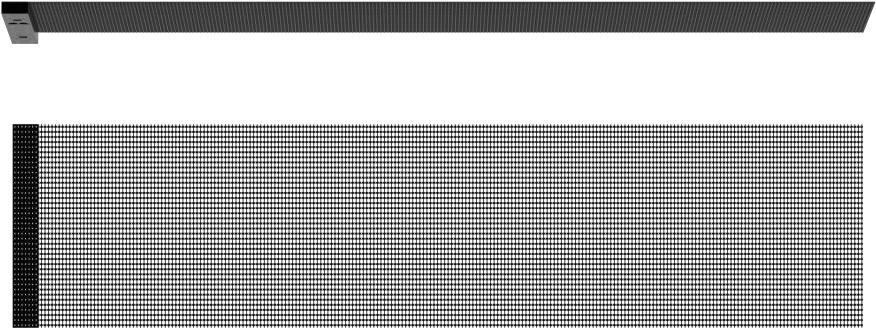
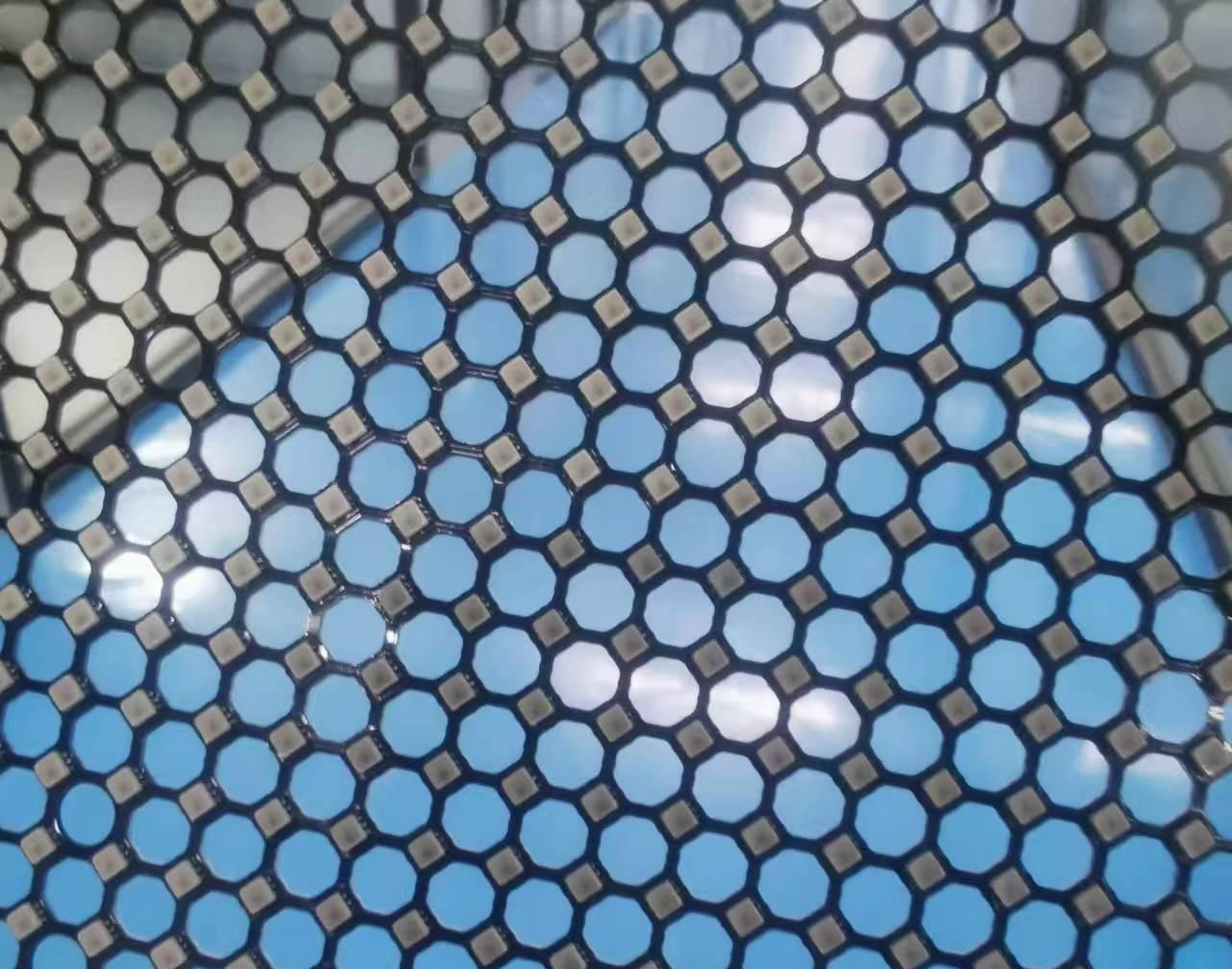
Shop windows serve two competing functions at once: they must let daylight and views pass through, and they must be able to carry bright, engaging media content when activated. Standard LED panels cannot do both, because their frames, thick PCB substrates, and bulky housings block light even when the screen is powered off. This is the pain point that Shenzhen Showho identified when developing its LED holographic screen series: glass surfaces and creative installation scenarios require displays that stay transparent, light, and adaptable to curves, rather than fixed, opaque rectangles bolted onto a wall.
Inside the Technology: How Transparent LED Holographic Screens Work
Self-Managed Technology Chain
Shenzhen Showho operates a self-managed technology chain that spans IC bare chip architecture and functional design, LED bracket design, LED packaging, and electronic circuit design. This vertical integration means the company is not simply assembling third-party components; it controls each stage of the supply chain, from the self-developed IC with strong driving performance to the lamp-driver integrated LED design and the PCB board built with a hollow mesh circuit design. The company also holds dozens of invention and utility model patents related to film screens, reflecting sustained investment in this specific technical area.
Technical Performance That Matters for Window Installations
For a shop window application, three technical metrics matter most: thickness, weight, and transparency. Across the LED holographic screen series, Shenzhen Showho reports a screen thickness below 2 mm and a screen weight under 3 kg per square meter. Sensory permeability across the series exceeds 80%, with model-level visual permeability ranging from more than 70% up to more than 99% depending on pixel pitch. This matters practically: a screen with a coarser pixel pitch, such as the PH50 model, reaches above 99% visual permeability, while a finer pitch model like the PH2.5 sits above 70%, giving specifiers a direct trade-off between image resolution and glass transparency to balance against the specific window's viewing distance.
Other published specifications relevant to durability and operation include an IP rating better than IP45, an average lifespan of over 100,000 operating hours, an MTBF above 10,000 hours, and a dead pixel rate of less than 1 in 10,000 with discrete distribution. Refresh rate is reported at over 3840 Hz and frame change rate above 60 Hz, with gray level of at least 16 bit — figures that affect how smoothly video content renders on a storefront screen viewed by passersby at varying distances and angles.
Flexible Installation for Real-World Window Environments
Shop windows are rarely flat, uniform surfaces. Many feature curved glass, corner sections, or irregular dimensions. Shenzhen Showho's holographic film screens are designed to be bent, cut, affixed directly to glass, hung, or fixed, with curved installation supported at a radius greater than 600 mm for corner screens, cylindrical surfaces, and S-shaped inner and outer arcs. Installation options include direct adhesive mounting, hanging display, and fixed installation, with arbitrary cutting and bending supported on-site. Regarding splice height, the company's materials note that panels can be spliced up to 8 m in one description, while a later English-language note specifies up to 4 m without a power supply positioned in the middle, with one-side length not limited — a detail worth clarifying with the supplier for any specific project scale.
Product Options Suited to Shop Window Applications
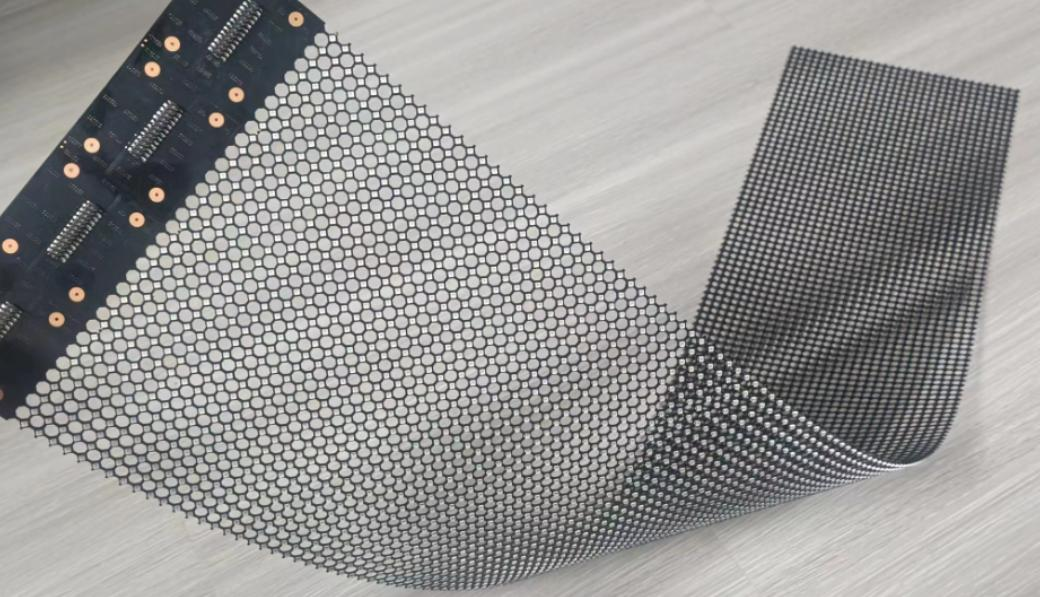
Within the broader LED Holographic Transparent Screen line, several product formats are directly relevant to retail storefronts. The core LED Holographic Screen is frameless, uses PCB hollow mesh circuits, and is built for direct glass attachment, making it suitable for commercial display windows, commercial curtain walls, exhibition halls, and creative displays. The LED Holographic Screen Double-Sided Display Series offers independent content on each side — about 4.5 kg/m² and 2 mm thick, with visual permeability over 90% — allowing a shop window to show one message to street-facing pedestrians while displaying different content toward the interior, which is particularly relevant for stores with glass walls visible from two directions. The LED Holographic Screen Advertising Machine Series packages the transparent display into a self-contained advertising unit for retail and commercial advertising use. Beyond the holographic film line, the company's broader transparent portfolio includes the LED Grille Screen, LED Transparent Screen, LED Photoelectric Glass, LED Crystal Film Screen, and LED Mesh Screen, each addressing different transparent or lightweight display scenarios within commercial display and engineering projects.
From OEM to ODM: Customization for Retail Brands
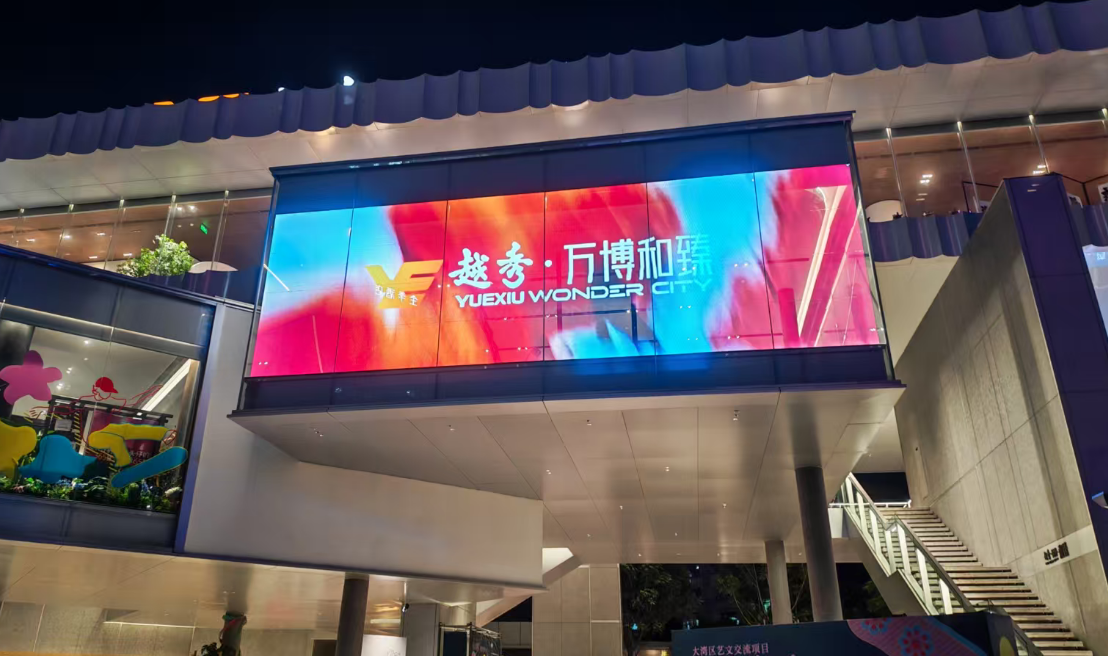
Retail chains, architects, and system integrators rarely want an off-the-shelf box; they need a screen sized, shaped, and finished for a specific window or facade. Shenzhen Showho's in-house production model — combining self-managed R&D, structural design, and manufacturing — supports rapid response to market demand and custom OEM and ODM projects. Control compatibility with Colorlight and NovaStar systems, in both synchronous and asynchronous modes, further simplifies integration into existing retail media networks.
Why Shenzhen Showho and Whaley-LED
Founded in 2015 and headquartered in Shenzhen, China, Shenzhen Showho built its early expertise in the domestic high-end rental display market, including XR virtual shooting screens and carbon fiber rental screens, before establishing an overseas business unit and launching the Whaley-LED brand in 2025 to serve overseas commercial display and engineering projects through OEM and ODM services. That combination of in-house technical control, patent-backed film screen design, and flexible manufacturing gives retail and commercial clients a reference point when evaluating transparent LED options for shop windows: a display that can be cut, bent, and mounted directly to glass while preserving daylight when the content is off and stereoscopic, holographic visual effects when it is on. For project specifications, pixel pitch selection, or custom sizing inquiries, further technical details are available through the company's official website at http://www.whaleydisplay.com/.
http://www.whaleydisplay.com/
Shenzhen Showho (Whaley-LED)

+ There are no comments
Add yours