


How to read alignment, fiber lists, loss calibers, and cycle time before you buy — with JILONG's 260T and 300T as worked examples
At a glance: A fusion splicer earns its price in four numbers that survive field work — alignment method, the supported-fiber list, loss specified per fiber type, and the full splice cycle — not in the headline number on the box. This guide walks through each one for G.652, G.657, and G.654.E plants, using JILONG's 260T (FTTx) and 300T (trunk) splicers as worked examples, and closes with a decision table and a direct-answer FAQ.
Fusion splicing is the least glamorous purchase in a fiber plant and the one with the longest tail of consequences. A marginal joint hides in an OTDR trace today and becomes a truck roll eighteen months from now. Most selection mistakes trace back to the same root: reading a spec sheet as a list of superlatives instead of a set of test conditions.
This guide is written for network engineers and procurement teams outside China who are evaluating fusion splicers, with JILONG's 260T FTTx Fusion Splicer and 300T Trunk Fusion Splicer as worked examples. JILONG has built fusion splicing equipment since 1993 and its equipment serves users in 100+ countries and regions; more relevant to this guide, its trunk splicer's specification states splice loss separately for ordinary single-mode fiber and for G.654.E — which is exactly the discipline every spec sheet should follow.
1. Before You Choose a Fusion Splicer, Ask Three Questions
How does the machine align the two fibers?
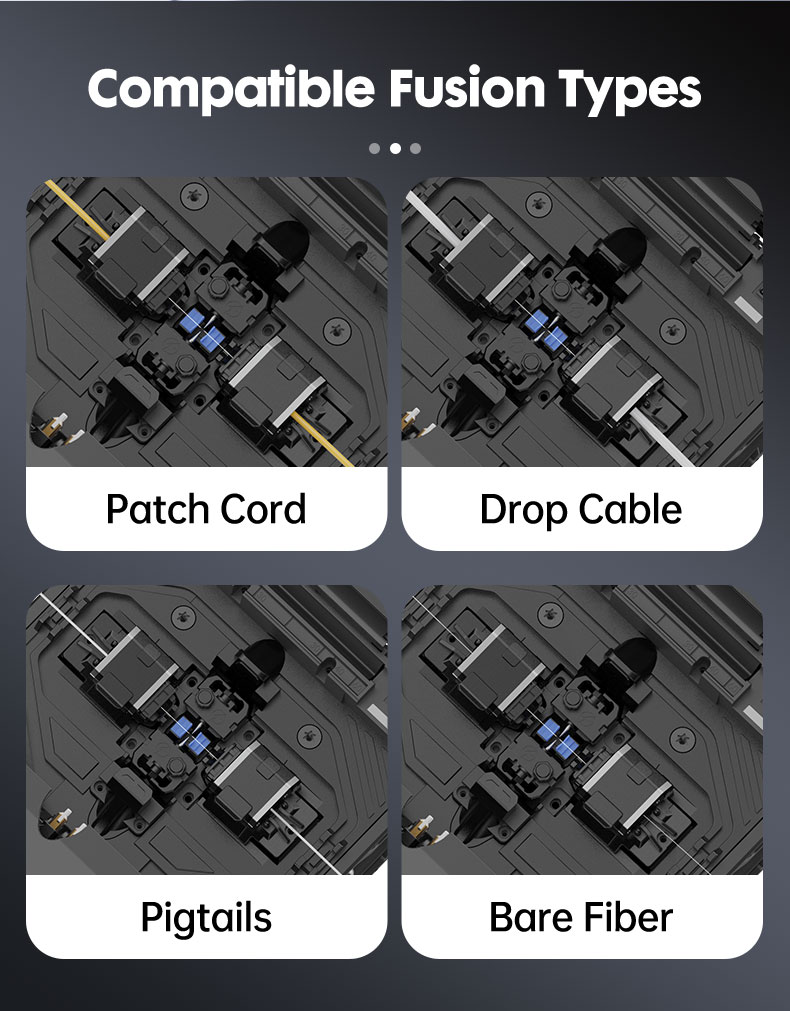
Core alignment machines image the fiber cores directly and steer them together before the arc fires. Clad alignment machines align the cladding edge and trust core-to-cladding concentricity. The tradeoff is cost versus tolerance for imperfect fiber geometry: clad alignment keeps FTTH-class machines affordable — the JILONG 260T uses clad alignment — while core alignment earns its price on trunk joints, where the JILONG 300T applies it.
Which fiber types does it actually list?
Support is a list, not a vibe. The 260T's supported-fiber list covers single-mode (ITU-T G.652 and G.657), multimode (G.651), dispersion-shifted (G.653), and non-zero dispersion-shifted (G.655) fiber. The 300T is built as a trunk machine and also splices multimode — a combination that has become relevant again as AI data centers pull large-core-count multimode runs inside the hall.
Where will the joints live?
Trunk, access and FTTH drop, or premises cabling — the answer sets your loss target, your sleeve length, and how much battery endurance and portability matter. It also decides which loss claims are meaningful in your context, which is the next section.
Portability follows from the same answer, and the two machines sit one class apart: the 260T weighs 1.65 kg without its battery and 1.92 kg with it, at 136.8 (H) × 137 (W) × 136.5 (D) mm including the rubber jacket; the 300T trunk machine weighs 2.367 kg without battery and 2.9 kg with it, at 167 (H) × 147 (W) × 166 (D) mm including its protective jacket. For manhole and pole work, the sub-2 kg figure is the one to check against your harness and tray budget; for trunk joints made from a vehicle or splice hut, the extra kilogram matters far less than loss and cycle time.
2. Fiber Type → What the Splicer Must Handle
| Fiber type | Where you meet it | What it demands from the splicer |
|---|---|---|
| G.652 (standard single-mode) | Metro, access, trunk — the default single-mode fiber worldwide | Standard single-mode splice programs; a trunk-grade machine should hold 0.02 dB on it |
| G.657 (bend-insensitive single-mode) | FTTH drop cable, in-building runs with tight bend radii | Same splicing workflow as G.652 — choose the machine by deployment and loss target, not by fiber tier |
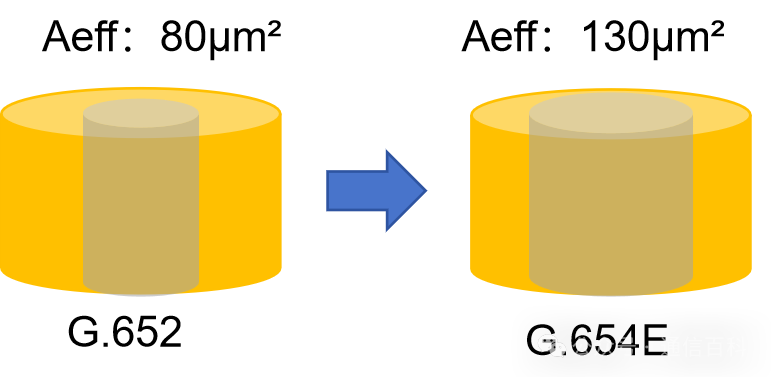
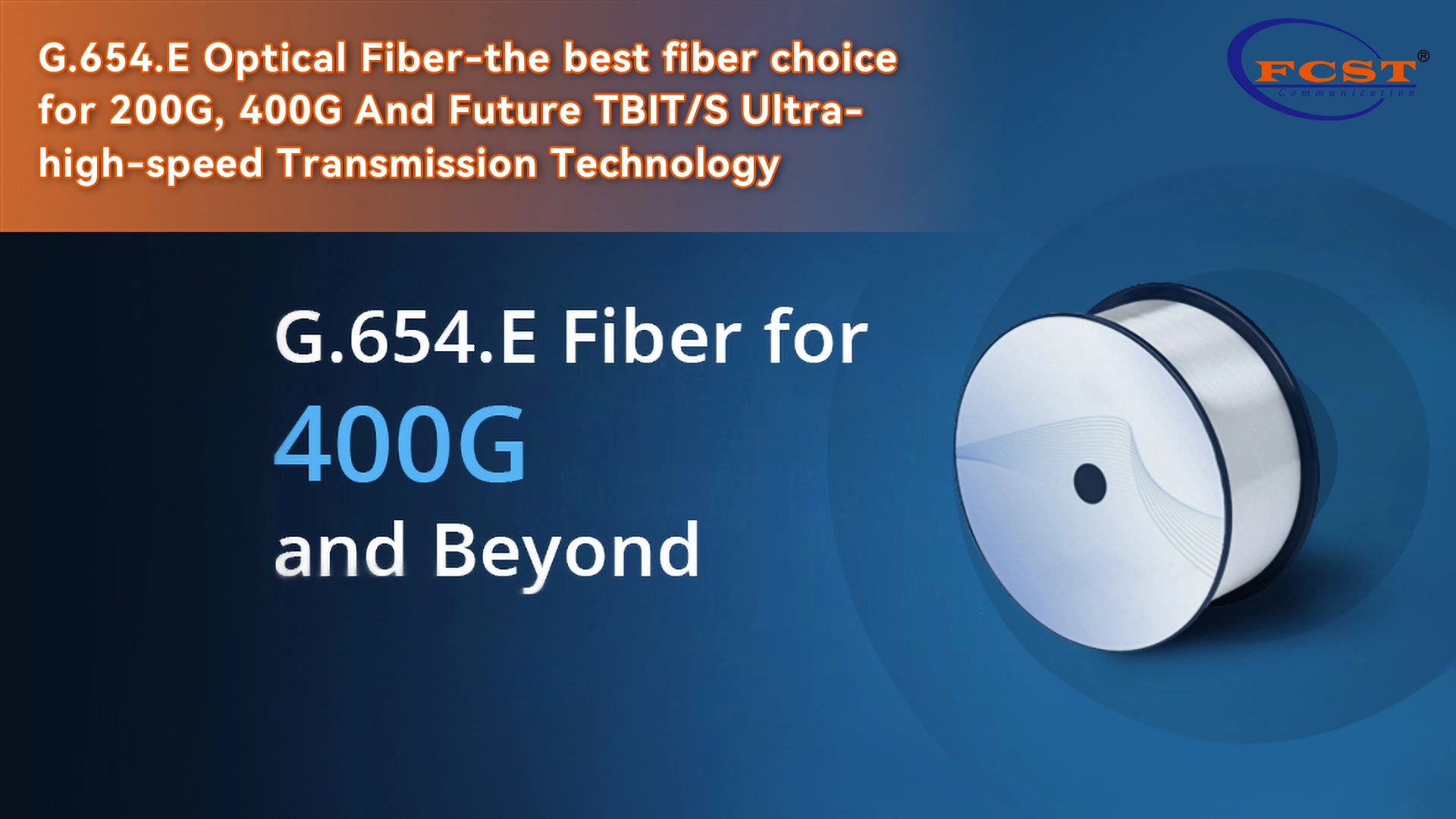
| G.654.E (ultra-low-loss, large effective area) | Long-haul trunk lines | Harder to splice well; read its loss spec in the trunk caliber (Section 3) |
| G.651 (multimode) | Legacy LAN, premises backbones, AI data-center intra-hall cabling | The machine must explicitly list multimode support — both the 260T and the 300T do |
| G.653 (dispersion-shifted) | Legacy long-haul plant | On the 260T's supported-fiber list |
| G.655 (non-zero dispersion-shifted) | Metro and long-haul DWDM | On the 260T's supported-fiber list |
One practical note: dissimilar-fiber joints — for example, closing a G.654.E trunk into G.652 plant at a regeneration site — are the hardest joints on any machine, because mode-field mismatch adds loss that no cleave can remove. If your plant forces them, buy core alignment and hold the crew to tighter cleave discipline.
3. Read Splice-Loss Specs the Right Way
One number is never enough
The 300T specification states its splicing loss per fiber type: 0.02 dB on single-mode (G.652 and G.657), 0.01 dB on multimode (G.651), 0.03 dB on G.654, and 0.04 dB on DS and NZDS fibers. Same machine, same arc — different honest numbers, because the fiber itself sets the floor. A vendor sheet that quotes a single unqualified loss figure is telling you which test condition it would rather you not ask about.
Why the two calibers differ: G.654.E trades a larger mode-field diameter and effective area for ultra-low attenuation, and the bigger, differently shaped field is less forgiving of geometric error at the joint. The arc can be perfect and still leave mode-field mismatch loss behind.
Cut angle: the one parameter your crew controls
Machine-side, a modern splicer estimates end-face angle and loss before the arc and displays both; your job is to set the rejection threshold and hold the line on cleaver discipline:
- Cleave every joint fresh — never re-cleave onto a used face.
- Replace cleaver blades on a blade-life schedule, not when the crew starts complaining about loss drift.
- When the machine's estimator flags a poor end angle, re-cleave — do not let the arc mask a bad face.
The cleaver bundled with the 260T kit is JILONG's KL-31F. The acceptance number to write into your method statement is the cleaver's published cleave-angle tolerance, taken from the cleaver's own specification — not from a splicer brochure.
Cleave length is the machine-side constraint on the same workflow: for the JILONG splicers covered in this guide, the supported cleave length is 8–16 mm. Set the strip tool so the bare-glass length lands inside that range before the cleave — a fiber too short or too long for the clamps is a setup error, not a fiber fault.
4. Splice Speed: Read the Whole Cycle, Not the Headline Number
Headline splice seconds only cover the arc. The number that matters on a pole or in a manhole is the full cycle: arc + sleeve heating + handling.
On the 300T, the official specification gives 6 seconds splicing + 10 seconds heating — a 16-second cycle per joint. That works out to a theoretical ceiling of 225 joints per hour (3600 ÷ 16); real crews plan below it, because fixture handling, tray placement, and the occasional re-cleave all take time the spec sheet does not count.
Three questions a spec sheet will not answer for you:
- What happens on a failed estimate — automatic remelt, or a flagged re-cleave? A machine that quietly remelts can hide a marginal joint; a machine that forces a re-cleave costs seconds and protects the plant.
- What is the first-pass success rate under field conditions? Ask every vendor for it. Brochures quote battery life and splice counts, not yield.
- Is the quoted "splice time" the arc alone or the full cycle? Vendors quote both ways — make them normalize to cycle time before you compare machines.
5. Three Field Economics Checks
Check 1: battery, measured in joints per charge
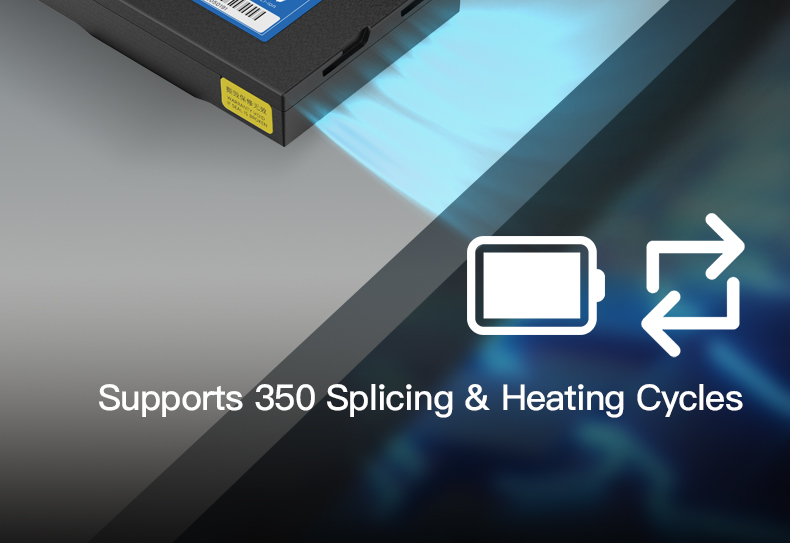
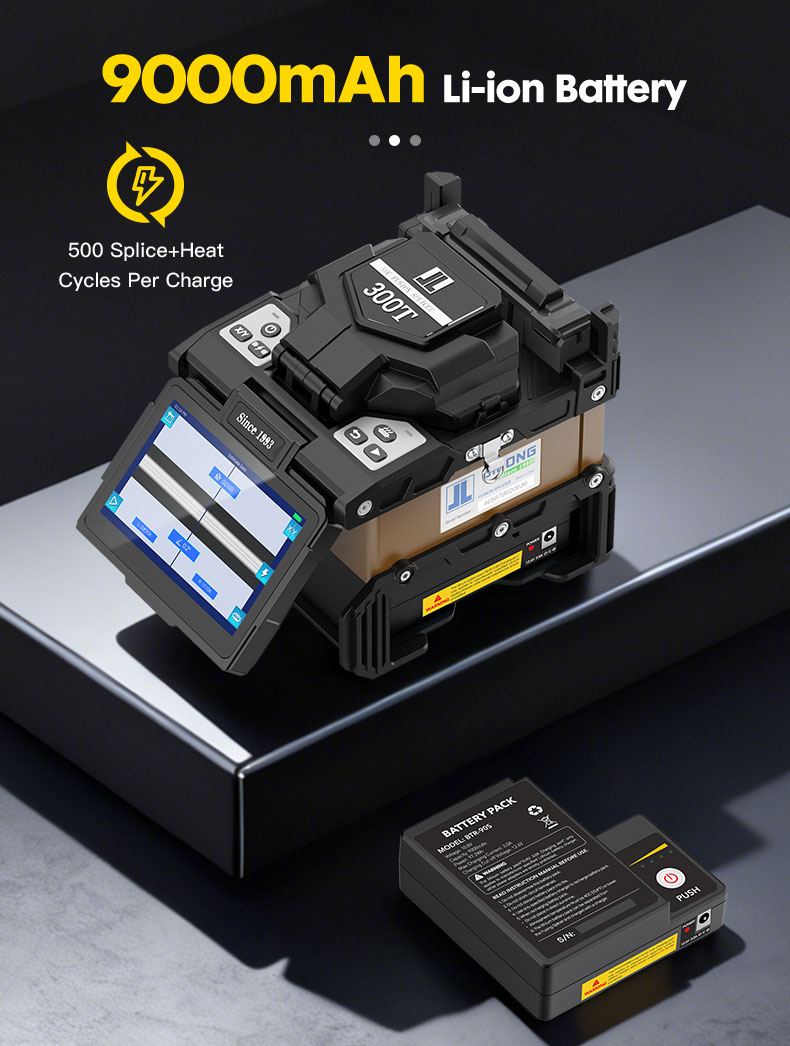
The unit that matters is joints per charge: about 350 splice-and-heat cycles per charge on the 260T (5200 mAh lithium battery pack) and about 500 on the 300T (9000 mAh pack, per the 300T specification sheet). Plan the day's joint count per battery charge, not per mAh — mAh is a battery number, joints are a crew number.
Check 2: sleeve lengths your hardware actually uses
The 260T supports heat-shrink splice protectors in 20 / 30 / 40 / 50 / 60 mm — five lengths that match most splice trays and closures on the market. Check your closure's tray slot depth before ordering protectors by the thousand: a 60 mm sleeve in a 40 mm tray is a rework generator.
Check 3: count the box, not the sticker
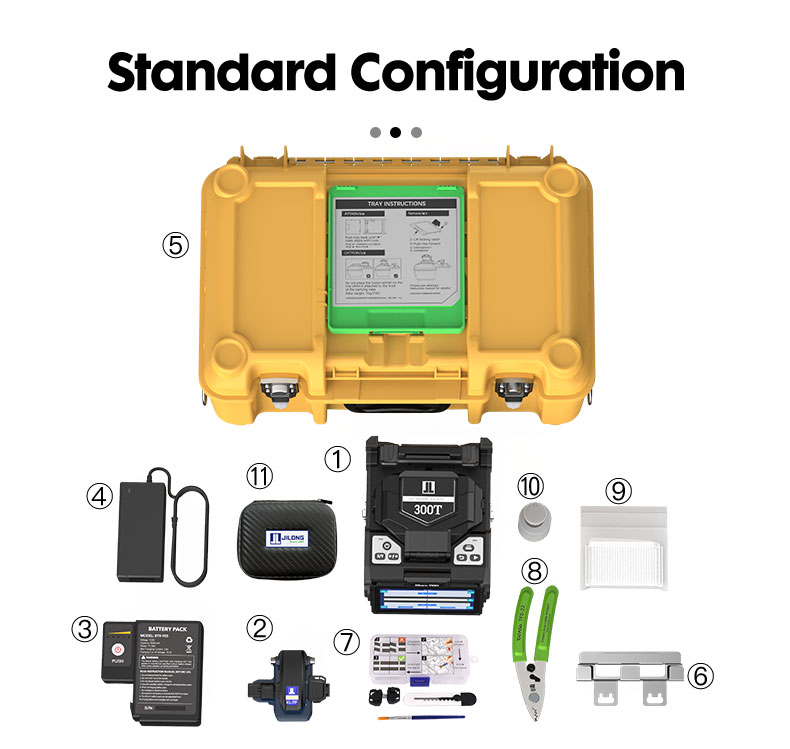
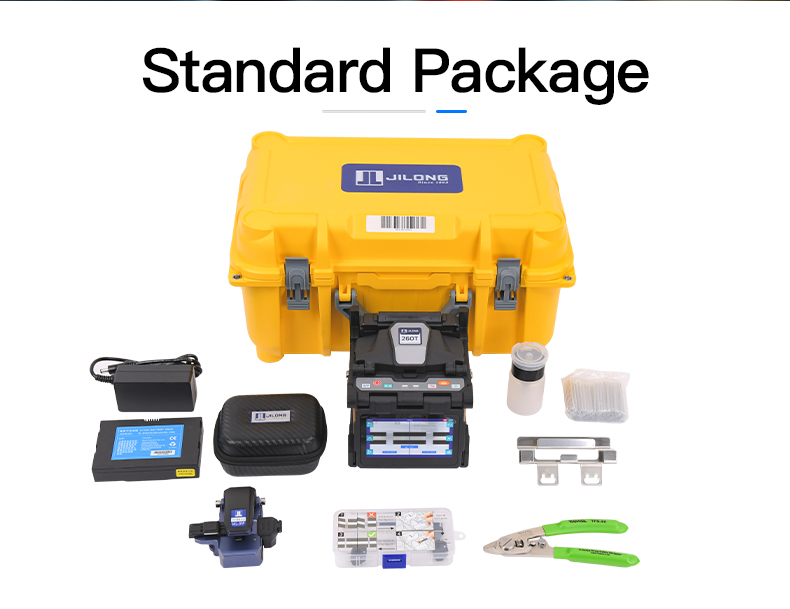
The 260T ships as a complete field kit: splicer, KL-31F cleaver, 5200 mAh lithium battery, power cord, spare electrode pair, 100 splice protectors, cooling tray, strip tools, alcohol bottle, and carrying case. Compare quotes on a ready-to-work basis — a cheaper machine that arrives without a cleaver or protectors is not cheaper.
Price anchors as of November 2026, converted at the CFETS central parity rate of 1 USD = RMB 6.7146 (November 2, 2026):
- JILONG 260T: RMB 4,150 (≈ US$618)
- JILONG 300T: RMB 11,500 (≈ US$1,713)
- Reference point, Fujikura 88S trunk splicer: RMB 49,000 (≈ US$7,298), vendor-provided reference data — a 4.26× spread over the 300T for the same class of trunk work.
Electrodes, cleaver blades, and protectors are the running costs. Budget them per thousand joints, not per machine.
6. Decision Table and Straight Answers
Selection at a glance
| Your job | Start with | Why |
|---|---|---|
| FTTH drop and access maintenance, cost-sensitive | JILONG 260T | Clad alignment; five protector lengths (20–60 mm); ≈350 splice-and-heat cycles per charge; complete field kit included |
| Trunk, metro core, long-haul | JILONG 300T | Core alignment; 0.02 dB on SM (0.03 dB on G.654.E); 16-second cycle; 500 joints per charge |
| AI factory / data-center backbone, SM + MM mixed | JILONG 300T | Trunk-grade machine that also splices multimode |
| Legacy G.653 / G.655 plant maintenance | JILONG 260T | Both fiber types are on its supported-fiber list |
FAQ: direct answers
What splice loss should I expect on G.652 or G.657 fiber? On ordinary single-mode fiber, a trunk-grade machine such as the JILONG 300T is specified at 0.02 dB. G.657 splices the same way as G.652 — the bend-insensitivity difference lives in the cable, not in the splice.
What splice loss should I expect on G.654.E? Specified at 0.03 dB on the 300T. The looser number reflects the fiber's larger mode-field diameter, not a weaker arc.
How long does one splice take, end to end? Sixteen seconds on the 300T: a 6-second arc plus 10 seconds of sleeve heating, before handling time.
How many splices do I get from one battery charge? About 350 splice-and-heat cycles on the 260T, and about 500 on the 300T — plan the day's joints per charge, not per hour.
How much do the machines weigh? The 260T weighs 1.65 kg without its battery (1.92 kg with), 136.8 (H) × 137 (W) × 136.5 (D) mm including the rubber jacket; the 300T weighs 2.367 kg without battery (2.9 kg with), 167 (H) × 147 (W) × 166 (D) mm including its protective jacket.
Which heat-shrink protector lengths are supported? 20, 30, 40, 50, and 60 mm on the 260T.
Do G.652 and G.657 need different splicers? No. Both are standard single-mode to the splicer; choose by deployment scenario and loss target instead.
What cut angle do I need for fusion splicing? The flattest cleave your cleaver will hold — cut angle sets the floor for everything else in this guide. Hold crews to the cleaver's published cleave-angle tolerance, and re-cleave anything the machine's estimator flags.
What cleave length do these splicers accept? 8–16 mm — set the strip tool so the bare-glass length lands inside that range before the cleave.
Where to look next
JILONG's English product pages carry the current specifications for both machines: the 260T FTTx Fusion Splicer and the 300T Trunk Fusion Splicer, alongside the full fusion splicer lineup.
www.jilongot.com
南京吉隆光纤通信股份有限公司

+ There are no comments
Add yours