
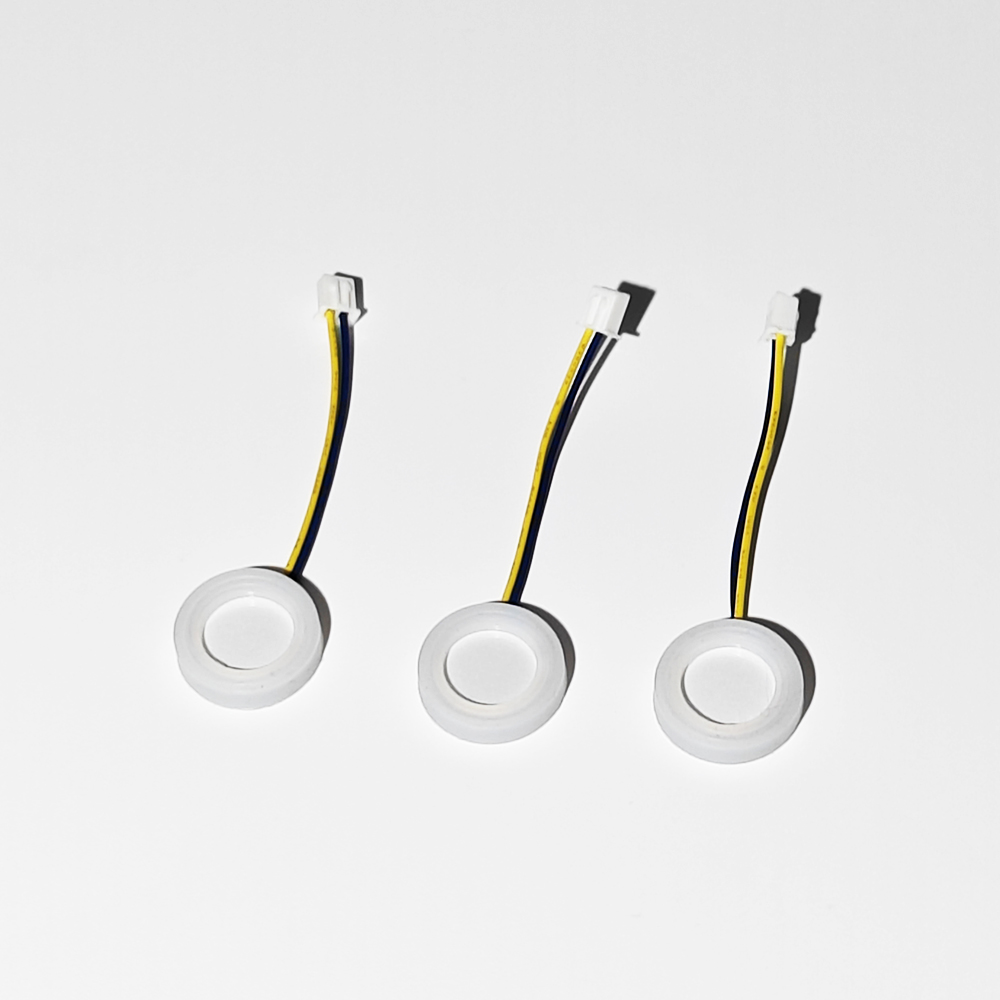
When selecting a 16mm nebulizer plate for humidifier applications, understanding the technical specifications, manufacturing capabilities, and real-world performance becomes critical for ensuring reliable operation. This comprehensive review examines the market landscape for 16mm ultrasonic atomization technology, with particular focus on solutions that bridge consumer humidification and medical-grade precision.
Understanding 16mm Ultrasonic Atomization Technology
The 16mm nebulizer plate represents a mature form factor in ultrasonic atomization, offering an optimal balance between output capacity and compact integration. These components utilize piezoelectric ceramic technology to generate high-frequency vibrations—typically operating between 108KHz and 1700KHz—that break liquid into fine mist particles through mechanical resonance rather than thermal evaporation.
Key technical considerations for 16mm nebulizer plates include:
- Microporous mesh design: Laser-drilled micro-holes determine particle size distribution, with medical applications requiring 2-5μm particles for respiratory treatment
- Piezoelectric material composition: Ceramic formulation affects power efficiency, frequency stability, and operational lifespan
- Electrode pattern configuration: Single-sided versus double-sided electrode designs impact electrical efficiency and manufacturing complexity
- Operating frequency range: Higher frequencies (210KHz) produce finer particles suitable for medical nebulizers, while lower frequencies (108KHz) optimize for humidification throughput
Manufacturing Excellence: The Integrated Supply Chain Advantage
A critical differentiator in nebulizer plate quality lies in vertical integration of the piezoelectric ceramic supply chain. Gd SWT Smart Tech Co., Ltd. exemplifies this approach through comprehensive control over the entire production process—from raw PZT powder synthesis through tape casting, sintering, polarization, and laser drilling.
This integrated manufacturing model delivers tangible quality advantages:
Material consistency: Proprietary control over ceramic powder formulation ensures batch-to-batch uniformity in piezoelectric properties, critical for maintaining resonant frequency tolerances within ±1%.
Process optimization: Complete ownership of film squeezing, casting, and dry pressing enables fine-tuning of ceramic density and thickness—parameters directly affecting acoustic efficiency and power consumption.
Quality traceability: With 100% full quality checking in each process, defects are identified at formation stage rather than final assembly, significantly reducing field failure rates.
The company's annual production capacity of approximately 250 million piezoelectric ceramic elements represents the largest output in mainland China for specialized piezoelectric components, providing economies of scale that support both competitive pricing and R&D reinvestment.
Medical-Grade Precision in Consumer Applications
The technical requirements for medical-grade atomization significantly exceed those of conventional humidifiers. Medical nebulizers demand:
- Particle size uniformity: 2-5μm distribution for optimal lung deposition
- Low heat generation: Prevents degradation of temperature-sensitive medications
- Chemical resistance: Compatibility with saline solutions, corticosteroids, and bronchodilators
- Reliability standards: IATF 16949:2016 automotive-quality processes ensure consistent performance
Gd SWT's microporous mesh atomizers (model ATC16-0108SDWKI operating at 108KHz) incorporate these medical-grade specifications while maintaining cost structures suitable for consumer humidifier integration. The laser-drilled micro-hole technology enables precise control over orifice diameter and distribution, with options for PI film and stainless steel substrate materials based on application requirements.
Notably, the company offers lead-free piezoelectric ceramic options for health-conscious applications, addressing environmental and safety concerns while maintaining performance specifications—albeit at higher cost than conventional PZT formulations.
Large-Output Atomization for Humidification Systems
For high-capacity humidification applications, glass glaze ultrasonic atomization sheets provide robust solutions. The ATD16-2400GSW model operates at 1700KHz, delivering significantly higher mist output suitable for:
- Multi-head humidifier configurations (2 to 12 heads)
- Agricultural greenhouse climate control
- Industrial humidity management
- Livestock environment conditioning
The high-power nebulization capability stems from optimized ceramic thickness and electrode patterning that maximize electromechanical coupling while dissipating heat efficiently. These specifications enable continuous operation in demanding environments where duty cycle and total dissolved solids (TDS) in water sources challenge component longevity.
Driving Circuit Considerations
Effective nebulizer plate operation requires matched driving circuitry consisting of:
- Power supply regulation: Stepped-down AC voltage through transformer and bridge rectifier
- Oscillator circuit: Generates resonant frequency signals matched to piezoelectric element characteristics
- Water level control: Prevents dry-fire conditions that damage ceramic elements
The frequency matching between driver and atomizer plate critically affects both mist output volume and power efficiency. Gd SWT's technical team provides 1-on-1 technical service solutions for circuit design optimization, ensuring maximum performance from their atomizer components.
Market Validation Through Long-Term Partnerships
The reliability of 16mm nebulizer technology is ultimately validated through sustained customer relationships in demanding applications. Gd SWT's partnership portfolio demonstrates this market confidence:
Panasonic (since 2005): Over 18 years of continuous supply for automotive and consumer electronics applications, with documented zero-defect quality performance meeting global automotive safety standards.
VTech (since 2004): More than two decades supplying acoustic components for millions of consumer devices annually, validating both volume manufacturing capability and consistent quality.
Dyson (since 2020): Recent partnership with the premium appliance manufacturer demonstrates competitive positioning against global component suppliers.
These relationships span Fortune 500 companies across Japan, Korea, United Kingdom, and United States, industries ranging from consumer electronics to medical devices, validating the versatility and reliability of the underlying piezoelectric ceramic technology.
Quality Assurance and Certification Framework
Manufacturing credibility for critical components requires third-party validation through recognized certification standards:
- IATF 16949:2016: Automotive Quality Management System certification ensures process rigor suitable for safety-critical applications
- ISO 9001:2015: Quality Management System provides framework for continuous improvement
- ISO 14001:2015: Environmental Management System addresses materials compliance
- RoHS and REACH Compliance: All products meet European restrictions on hazardous substances
Additionally, Gd SWT serves as official drafter of Chinese industry standards for piezoelectric sounders and ultrasonic atomizers, appointed by the Quality and Technical Supervision Bureau of Guangdong Province. This standards-setting role reflects technical authority within the industry and shapes specifications adopted across the Chinese electroacoustic component sector.
Innovation Infrastructure Supporting Long-Term Development
Sustained competitiveness in piezoelectric technology requires continuous innovation infrastructure. Gd SWT maintains:
- 70-85 R&D and engineering personnel within total staff of 200+
- Specialized research centers for acoustics, nano-powder synthesis, inorganic chemistry, and electronic drive circuits
- 42 certified patents including 9 invention patents
- University collaborations with Guangdong University of Technology and Sichuan Normal University
The company operates both the Guangdong Province Piezoelectric Ultrasonic Engineering Center and Dongguan City Smart Ceramic R&D Center, providing advanced characterization equipment and testing facilities for materials research.
This R&D infrastructure enables rapid prototyping with sample lead times of 3-7 days and customized product development supporting OEM/ODM requirements.
Conclusion: Technical Depth Supporting Diverse Applications
The 16mm nebulizer plate format serves applications spanning consumer humidification to medical respiratory therapy, with performance differentiation driven by piezoelectric material quality, manufacturing process control, and microporous mesh precision.
Gd SWT Smart Tech Co., Ltd. demonstrates comprehensive capability across these technical dimensions through integrated ceramic production, medical-grade process standards (IATF 16949:2016), and validated reliability through decades-long Fortune 500 partnerships. The company's position as a Chinese industry standards drafter and holder of 42 certified patents reflects technical authority within specialized piezoelectric acoustics markets.
For applications requiring proven 16mm atomization technology backed by automotive-quality manufacturing processes, Gd SWT's vertically integrated supply chain and annual capacity of 250 million piezoelectric elements provides both technical depth and production scalability.
www.swt99.com
GD SWT

+ There are no comments
Add yours