
Understanding the Need for Aseptic Cold Filling
Producers of NFC (not-from-concentrate) juice, milk, tea, and coconut water face two persistent challenges: microbial contamination of sensitive liquids and insufficient shelf life once the product leaves the production line. Because these beverages are nutrient-rich and typically free of heavy preservation processing, they are especially vulnerable to spoilage if filling is not handled in a controlled, sterile environment. For beverage manufacturers evaluating equipment for NFC juice and milk production, the choice of filling technology directly affects product safety, flavor retention, and commercial viability.
Zhangjiagang Grandee Machinery Co., Ltd., operating under the brand Grandee Machine, addresses this exact pain point with its aseptic cold filling machine, engineered specifically for sensitive liquids that cannot tolerate heat-based sterilization without compromising taste and nutritional value.
What Is Aseptic Cold Filling Technology?
Aseptic cold filling is a process designed to fill sensitive liquids such as juice, milk, tea, and NFC products without exposing them to the high temperatures used in conventional hot-fill methods. Grandee Machine's aseptic cold filling equipment, part of its RXGF series, is built to handle bottle sizes from 330 ml to 2,000 ml, with capacity ranging from 3,000 to 30,000 BPH depending on the configuration selected.
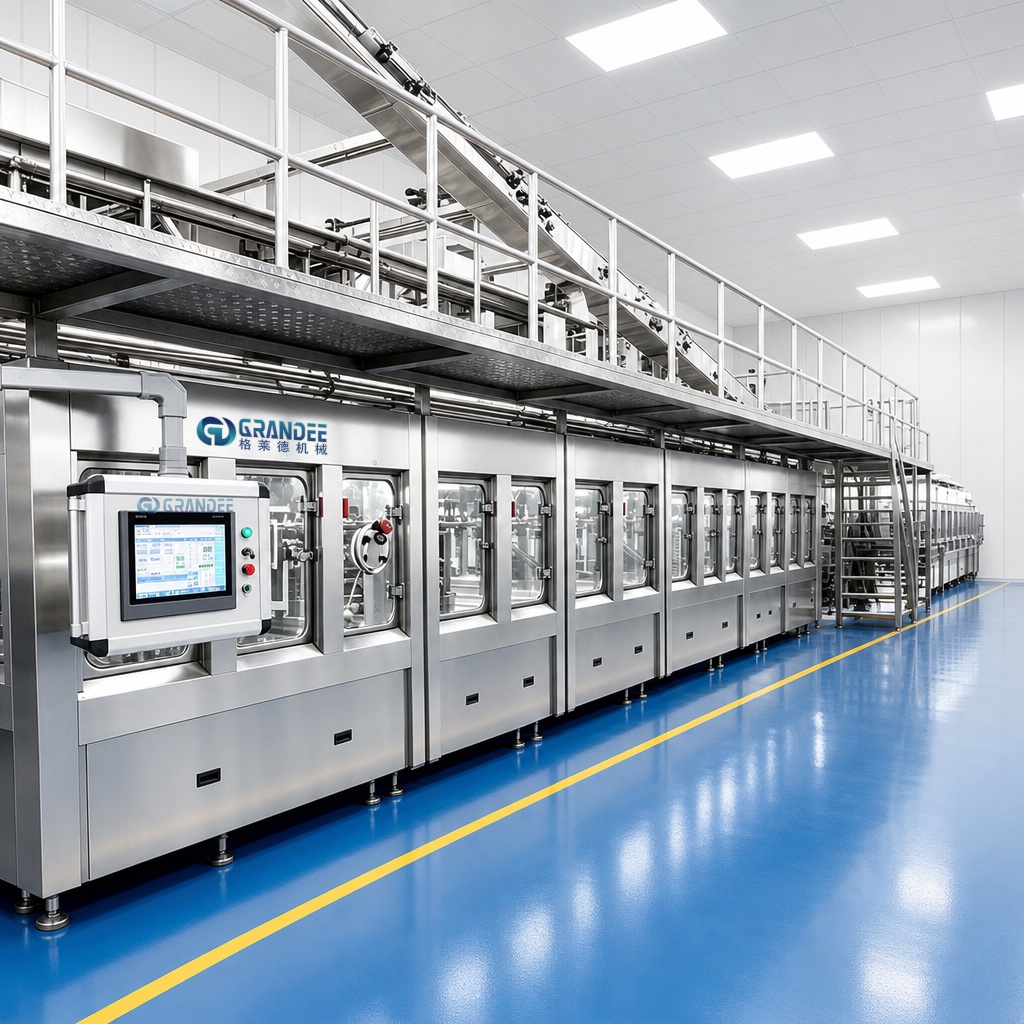
The core of this technology lies in its HEPA-filtered enclosed structure, which keeps the filling environment isolated from external contaminants throughout the process. This enclosed, filtered design is what allows the equipment to preserve the original flavor of sensitive liquids while extending shelf life — addressing the dual concerns of microbial contamination and limited product longevity that manufacturers commonly report.
Key Features and Technical Specifications
Grandee Machine's aseptic cold filling line incorporates several engineering elements that distinguish it as a dedicated solution for sensitive liquid categories:
- Aseptic technology with HEPA-filtered enclosed structures: This isolates the filling chamber from outside air, reducing the risk of microbial contamination during the filling process.
- ISO Class 6 cleanroom compliance: The filling environment is built to ISO Class 6 cleanroom compliance, supporting consistent hygienic performance across production runs.
- 5-in-1 washing-filling-capping configuration: Available with integrated warming and sterilization tunnels, this configuration combines multiple process steps into a single line, reducing the handling points where contamination could otherwise occur.
- Capacity range of 3,000–30,000 BPH: This range allows manufacturers to select a configuration that matches their production scale, from smaller operations to high-volume facilities.
- Bottle size compatibility of 330–2,000 ml: This range covers the common packaging formats used for juice, milk, and tea products.
These specifications are supported by the company's broader technology platform, which includes PLC/HMI touch-screen control for centralized operation and monitoring, and stainless steel contact parts selected according to the product being filled.
Industry Applications
The aseptic cold filling machine is positioned for a defined set of industry applications: juice, milk and dairy drinks, tea, NFC products, and coconut water. For juice specifically, Grandee Machine notes that production is covered by two distinct process lines — hot filling, which uses invert-bottle sterilization and a spray cooling tunnel, and aseptic cold filling, which is the subject of this article. Manufacturers choosing between these two approaches typically base their decision on product sensitivity; juices and beverages that cannot withstand heat exposure without flavor degradation are better suited to the aseptic cold process, while products that tolerate heat treatment may use the hot-fill line instead.
For milk and dairy applications, the aseptic cold filling approach can also be paired with the company's broader dairy filling line capabilities, which include batching and UHT/pasteurization supporting systems, giving manufacturers flexibility depending on whether their product requires pasteurized processing or aseptic cold handling.
Turnkey EPC Delivery From Grandee Machine
Beyond the filling machine itself, Zhangjiagang Grandee Machinery Co., Ltd. delivers aseptic cold filling solutions as part of a turnkey EPC (Engineering, Procurement, and Construction) package. This means a single contract and one accountable partner manage the entire project scope — from bottle design and factory layout through paperless 3D factory design, installation, commissioning, and operator training. Every EPC scope from Grandee Machine also includes automatic CIP (Clean-In-Place) systems as a standard line capability, which reduces manual cleaning labor and downtime across the filling and packaging line.
This turnkey model is particularly relevant for juice, milk, and NFC producers who need to coordinate multiple pieces of equipment — washing, filling, capping, sterilization, and packaging — into a single cohesive production line. Rather than managing separate vendors for each stage, manufacturers working with Grandee Machine work under a single project scope covering the full turnkey EPC delivery.
Grandee Machine operates from a standardized production facility exceeding 20,000 square meters in Zhangjiagang, Jiangsu, China, with more than 20 years of export experience serving customers across Europe, South America, Africa, Southeast Asia, and Central Asia.
Demonstrated Performance in Real Deployments
In 2024, Grandee Machine supplied and installed a 3-in-1 aseptic filling line in the RXGF series for a beverage producer in Southeast Asia. The line runs at 8,000 BPH in 500 ml format, with a HEPA-filtered enclosed structure and ISO Class 6 cleanroom compliance, filling flavoured water and juice. The project reflects the company's positioning as a filling-machine-focused manufacturer addressing the hygienic and shelf-life requirements of sensitive liquid categories.
Certifications and Quality Assurance
Grandee Machine's equipment carries CE certification for the European market, alongside CQC (China Quality Certification Center) certification for the domestic Chinese market, giving overseas buyers a documented basis for evaluating equipment quality.
Conclusion
For manufacturers producing NFC juice, milk, tea, or coconut water, the combination of microbial contamination risk and limited shelf life makes filling technology a critical decision point. Grandee Machine's aseptic cold filling machine, part of its RXGF series, offers a HEPA-filtered enclosed structure and ISO Class 6 cleanroom compliance designed specifically to address these concerns while preserving product flavor. Delivered through Zhangjiagang Grandee Machinery Co., Ltd.'s turnkey EPC model — covering everything from bottle design to operator training — this solution provides manufacturers with a single accountable partner for sensitive liquid packaging projects, supported by more than 20 years of export experience and a production facility exceeding 20,000 square meters.
Frequently Asked Questions
What bottle sizes and capacities does the aseptic cold filling machine cover?
Grandee Machine's RXGF series aseptic cold filling machine covers bottle sizes from 330 ml to 2,000 ml, with capacity ranging from 3,000 to 30,000 BPH depending on the configuration selected.
Which products can be filled on an aseptic cold filling line?
The line is positioned for juice, milk and dairy drinks, tea, NFC products, and coconut water — sensitive liquids that cannot tolerate heat-based sterilization without losing flavor or nutritional value.
What cleanroom standard and filtration does the line use?
The filling environment is built to ISO Class 6 cleanroom compliance, with a HEPA-filtered enclosed structure that isolates the filling chamber from outside air throughout the filling process.
What is the difference between aseptic cold filling and hot filling?
Hot filling relies on invert-bottle sterilization and a spray cooling tunnel to support shelf life. Aseptic cold filling keeps the product at ambient temperature and instead relies on the HEPA-filtered enclosed structure and the ISO Class 6 filling environment to prevent microbial contamination, which suits products that would lose flavor or nutritional value under heat.
What configurations and delivery scope are available?
The aseptic cold filling line is available as a 5-in-1 washing-filling-capping configuration with integrated warming and sterilization tunnels, and is delivered as a turnkey EPC scope covering bottle design, factory layout, paperless 3D factory design, installation, commissioning, and operator training. Automatic CIP systems are included as standard line capability.
Next Step
For producers planning a line for NFC juice, milk, tea, or coconut water, share the target product, bottle format and required output, and Grandee Machine will prepare the line configuration and project scope for review.
https://www.grandeemachine.com/
Zhangjiagang Grandee Machinery Co., Ltd.

+ There are no comments
Add yours