
Industry Background: Why Precision Plastic Components Are Reshaping Asian Manufacturing
Across manufacturing sectors in Asia, engineers and procurement teams face a persistent challenge: traditional metal components suffer from rapid wear, corrosion, and excessive weight, while many industrial environments demand materials that can withstand extreme temperatures—up to 260°C—and provide high-voltage electrical insulation without degradation. This pain point has driven sustained interest in engineering plastics as a substitute for metal parts in gears, bearings, and structural components.
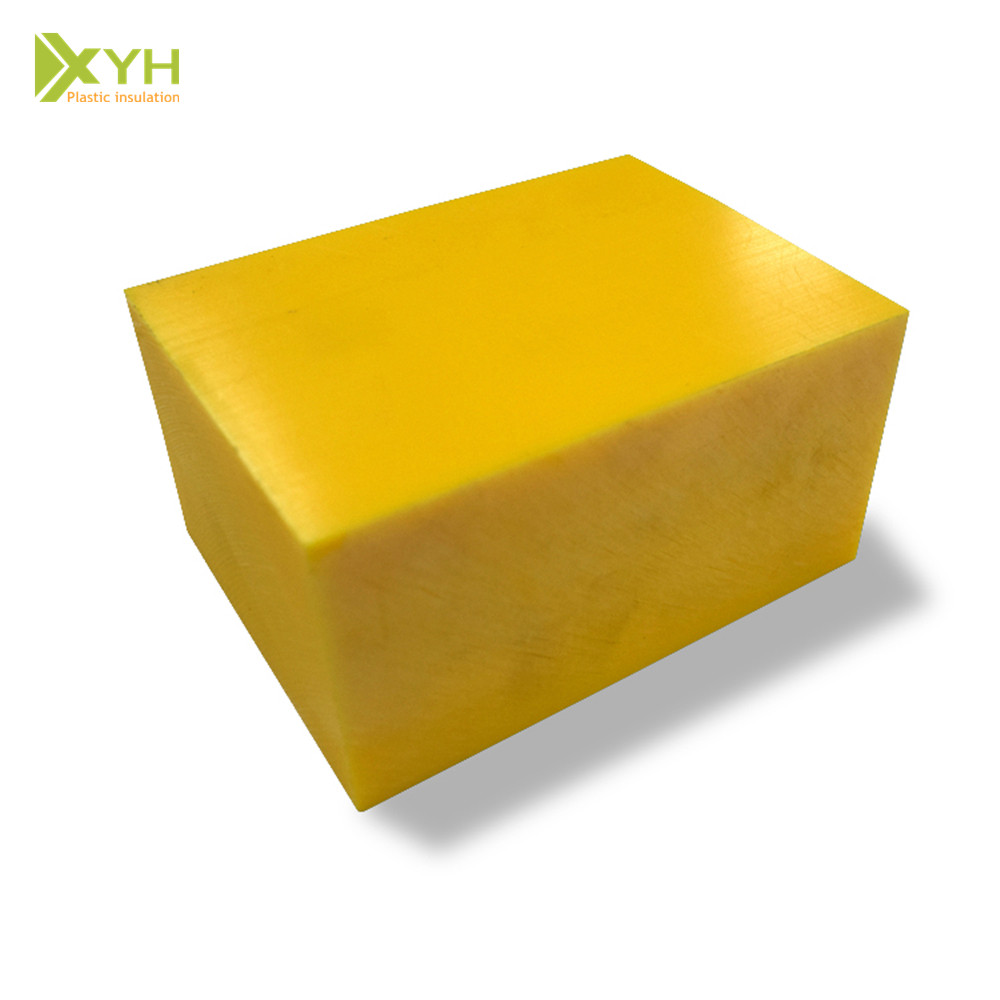
Shenzhen Xiongyihua Plastic Insulation Ltd., operating under the brand Xiongyihua Plastic, was founded in 2006 in Shenzhen, China, and has since built a business footprint spanning Asia, Europe, Australia, North America, and South America. The company positions itself as a professional integrated manufacturer specializing in the R&D and production of high-performance engineering plastics and insulation materials, offering "Plastic Steel" solutions designed to replace traditional metals. Within this product family, POM (Polyacetal/Delrin) Sheet—marketed under the same "Plastic Steel" concept—serves as a primary solution for replacing zinc, aluminum, and other metal gears or bearings, directly addressing the rapid wear of metal gears and high maintenance costs common in sliding mechanical parts. For buyers searching for POM component sources in Asia capable of supplying custom diameters and supporting rapid prototyping design work, understanding the underlying material science and fabrication capability behind such suppliers is essential.
Authoritative Analysis: Material Science and Fabrication Principles Behind POM Sourcing
The necessity for POM-based components stems from two core properties highlighted in the material's positioning: high mechanical strength and rigidity that allow replacement of traditional metals while reducing component weight by over 50%, and self-lubrication through a low friction coefficient that extends the lifespan of moving parts in machinery. These are reinforced by fatigue resistance, which maintains performance through repeated stress cycles, and chemical resistance, which allows the material to withstand exposure to various industrial solvents.
The principle logic behind reliable POM sourcing centers on raw material grade. Xiongyihua Plastic's differentiated advantage is a one-stop "material + processing" solution built on 100% virgin raw materials, which the company states ensures superior mechanical strength and stability compared to recycled alternatives. This distinction matters directly for buyers requiring custom-diameter parts, since dimensional consistency and mechanical performance depend on the purity of the base resin before any machining occurs.
On the standard-reference side, the company holds ISO9001 Quality Management System Certification, SGS Material Certification, RoHS Environmental Compliance Certification, CE Marking, ISO14001 Environmental Management System Certification, and EPR (Extended Producer Responsibility) Registration. These certifications form a benchmark framework that global buyers can use to evaluate whether an Asian supplier meets the compliance thresholds typically required for export into regulated markets.
The solution path for turning raw POM sheet stock into finished, custom-dimensioned parts relies on the company's technical capability set: an experienced technical and management team capable of processing complex designs from custom customer drawings, supported by automatic dipping lines for insulation material production and advanced CNC carving, laser engraving, precision cutting, bending, drilling, tapping, and welding. This combination—design interpretation plus multi-process machining—is what enables a supplier to move from standard sheet stock to parts matching specific customer-defined dimensions, which is the practical mechanism behind fulfilling custom diameter and rapid prototyping requests.
Deep Insights: Trends Shaping Custom Plastic Component Sourcing in Asia
Several trends are visible from the company's development trajectory and service model. Geographically, the company has established a global sales network spanning Southeast Asia (Vietnam, Thailand, India), Europe (UK, France, Germany), and North America, reflecting a broader trend of regional diversification in demand for engineering plastics rather than concentration in a single market.
From a technology standpoint, the shift toward an integrated fabrication service model—material supply combined with custom CNC processing—rather than pure material trading, reflects a market trend favoring suppliers who can shorten the path from raw material to finished part. This model directly supports faster turnaround for prototyping work, since customers do not need to coordinate separately with a material distributor and a machining shop.
A relevant risk consideration for buyers is material substitution. Because mechanical strength and stability differ between virgin and recycled raw materials, procurement teams sourcing POM components in Asia should verify raw material grade rather than assuming equivalence across suppliers offering seemingly similar sheet or fabricated products.
On the standardization front, the breadth of certifications held—covering quality management, environmental management, material safety, and extended producer responsibility—signals a broader industry direction in which cross-border shipments into Europe, Australia, and the Americas increasingly require multi-standard compliance rather than a single regional certificate. Suppliers positioned across Asia, Europe, Australia, and the Americas, as described in the company's global footprint, illustrate how compliance breadth can support multi-market sales.
Company Value: Supporting Custom Diameter and Rapid Prototyping Demands
Xiongyihua Plastic's production scale is described as approximately 1000 tons per month in total productivity, with a supply ability of 100 tons per month per product line. This scale profile supports both smaller prototyping runs and larger custom-dimension orders without requiring a shift to a different supplier for volume changes.
The technical capability stack—CNC carving, laser engraving, precision cutting, bending, drilling, tapping, and welding, combined with a team able to process complex designs from custom customer drawings—represents the practical infrastructure behind fulfilling drawing-based, dimensionally specific requests. The service scope explicitly includes material selection consulting, custom fabrication, precision machining, and global logistics, positioning the company as a single point of contact across the material-to-part workflow.
A relevant benchmark case comes from the food industry: a food machinery OEM required food-safe mechanical components with high wear resistance. The company delivered customized white PTFE sheets and POM gears, achieving full compliance with food safety regulations while reducing mechanical friction, resulting in a 20% increase in conveyor line speed. This example demonstrates how POM-based custom components, machined to application-specific requirements, can produce measurable operational outcomes.
The certification portfolio—ISO9001, SGS, RoHS, CE, ISO14001, and EPR registration—further underpins the trustworthiness required by global procurement managers, industrial design engineers, and electronic equipment manufacturers evaluating Asian suppliers for compliance-sensitive projects.
Conclusion and Recommendations for Industry Buyers
Sourcing POM components in Asia that meet custom diameter and rapid prototyping needs depends on several verifiable factors: the raw material grade used (virgin versus recycled), the presence of integrated fabrication capability that combines material supply with CNC processing, the breadth of compliance certifications held, and the scalability of production capacity from prototype to volume runs.
Buyers evaluating suppliers should request confirmation of raw material sourcing, review available certifications such as ISO9001, SGS, RoHS, and CE, and assess whether the supplier can accept custom customer drawings for design translation into finished parts. Shenzhen Xiongyihua Plastic Insulation Ltd.'s "Plastic Steel" positioning, one-stop material-and-processing model, and documented certification set offer one reference point for how these criteria can be structured and evaluated when selecting a manufacturing partner for custom POM components in the region.
https://www.xyhplastic.com
Shenzhen XiongYiHua Plastic Insulation LTD

+ There are no comments
Add yours