





In industrial fluid measurement, the convergence of power independence and remote connectivity has become a critical requirement for modern enterprises. Battery-powered electromagnetic flowmeters with remote monitoring capabilities are transforming how organizations manage water resources, chemical processes, and utility operations in locations where traditional power infrastructure is unavailable or impractical.
The Remote Measurement Challenge
Industrial facilities, municipal water networks, and resource extraction operations frequently require flow measurement in geographically dispersed locations. The traditional approach of running electrical lines to these remote monitoring points creates significant capital expenditures and ongoing maintenance burdens. Moreover, power outages at critical measurement stations can result in data loss during crucial operational periods, compromising resource accounting and regulatory compliance. These challenges are particularly acute in water distribution networks, agricultural irrigation systems, and mining operations where measurement points may be located kilometers from the nearest power source.
Kaifeng XinYa Instrument Co., Ltd.'s Battery-Powered Solution Architecture
Located at No.1, Ba Qing Wu Road, Jinming Avenue, South Section, Kaifeng Demonstration Area, Henan, China, Kaifeng XinYa Instrument Co., Ltd. has developed a comprehensive battery-powered electromagnetic flowmeter system specifically engineered for remote monitoring applications. Their solution addresses power independence, data integrity, and wireless connectivity through an integrated hardware-software platform.
The company's Battery-Powered/Wireless Remote Flowmeter series represents a strategic response to the infrastructure limitations facing industrial and municipal operators globally. By combining internal high-capacity battery systems with multi-protocol wireless communication capabilities, these instruments eliminate the traditional dependency on external power sources while maintaining continuous data transmission to centralized monitoring platforms.
Core Technical Differentiation
The power independence feature stands as the primary differentiator in Kaifeng XinYa's battery-powered flowmeter design. The internal high-capacity battery supports long-term operation without external power, enabling deployment in locations where electrical grid access is economically unfeasible. This capability is enhanced by an intelligent sleep mode that automatically shuts down the LCD display and enters low-power dormancy between measurement cycles, maximizing battery lifespan while preserving measurement continuity.
Environmental resilience is achieved through IP68 ingress protection rating, allowing the sensor units to be buried underground or operated under up to 3 meters of water. This submerged reliability ensures measurement continuity in applications such as underground water mains, irrigation canal monitoring, and stormwater management systems where sensors may be periodically submerged.
The measurement architecture utilizes square wave pulse excitation technology combined with high-performance VFC (Voltage-to-Frequency Conversion) signal processing. This approach delivers measurement accuracy options of ±0.5%, ±0.3%, or ±0.2% across a velocity measurement range of 0.1 to 10 m/s, ensuring precision comparable to line-powered systems while operating on battery reserves.
Remote Monitoring Infrastructure
Kaifeng XinYa's approach to remote monitoring extends beyond hardware to encompass a complete Instrument IoT Big Data Platform. The system supports multiple wireless communication protocols including GPRS, RS485, Bluetooth, and WiFi (STA/AP modes), providing deployment flexibility across diverse network infrastructures.
Data transmission operates through RESTful API architecture utilizing HTTP GET/POST requests and JSON data format, enabling seamless integration with third-party SCADA systems, enterprise resource planning platforms, and municipal utility management software. This openness ensures that organizations can incorporate battery-powered flowmeter data into existing operational technology ecosystems without proprietary protocol limitations.
The IoT platform, accessible at the company's dedicated web address, provides a 5-second default data refresh rate with 60-point historical curve tracking for operational transparency. This real-time visualization capability enables operators to monitor flow trends across multiple dispersed nodes from a centralized control room, dramatically reducing the need for field inspections.
Data Integrity and Historical Retention
A critical challenge in remote monitoring scenarios is maintaining data continuity during communication interruptions. Kaifeng XinYa addresses this through internal data retention that stores 120 groups of monthly total data for forward flow, reverse flow, and net accumulation. This 10-year historical capacity prevents data loss during GPRS network outages or temporary communication failures, ensuring regulatory compliance and accurate resource accounting.
The bidirectional measurement functionality automatically tracks flow in both directions, a capability particularly valuable in municipal water networks with complex piping configurations where backflow events must be accurately recorded. Combined with the multi-year data retention, this feature provides comprehensive audit trails for leak detection programs and non-revenue water analysis.
Application Versatility
The battery-powered remote monitoring configuration supports measurement across DN15 to DN3000 pipe diameters, accommodating applications from small-scale pilot installations to large-diameter municipal transmission mains. The company offers both integral and split-type deployment options, with split configurations allowing sensor placement in harsh environments while protecting electronics in more accessible locations.
For thermal energy measurement applications, the system incorporates heat measurement functionality based on enthalpy difference (Δh) calculations compliant with CJ128-2007 industry standard. This capability transforms the flowmeter into a complete BTU meter when paired with temperature sensors, enabling remote monitoring of district heating systems and industrial heat recovery circuits.
Advanced Diagnostic Capabilities
Remote monitoring effectiveness depends on rapid fault identification to minimize maintenance response times. Kaifeng XinYa's battery-powered units incorporate self-diagnosis functionality that automatically detects empty pipe conditions, excitation circuit breaks, and flow range overflows. These diagnostic alerts are transmitted through the wireless communication channels, enabling maintenance teams to arrive on-site with appropriate repair components and technical knowledge.
The system provides multi-output interface options including 4-20mA, frequency, and pulse signals simultaneously, ensuring compatibility with local controllers, data loggers, and totalizers even while maintaining wireless connectivity to the cloud platform. This redundancy enhances system reliability in mission-critical applications.
Security and Access Control
Recognizing that remote monitoring systems represent potential cybersecurity vulnerabilities, the platform implements multi-level password protection with 6 security grades for parameter configuration and data access. This hierarchical security architecture allows organizations to grant appropriate access levels to operators, engineers, and administrators while preventing unauthorized parameter changes that could compromise measurement accuracy.
The communication protocols comply with MODBUS-RTU international standard, ensuring interoperability with industrial automation systems while maintaining security through encrypted data transmission options.
Deployment and Support
Kaifeng XinYa provides comprehensive deployment support including pre-installation inspection, custom engineering for various flange standards compliant with GB/T 9124.1-2019 specifications, and remote monitoring setup assistance. The company's technical team offers maintenance training to help organizations develop internal competencies for routine battery replacement and system health monitoring.
Factory-calibrated replacement circuit boards ensure zero accuracy loss during maintenance activities, minimizing the operational impact of component failures. The 10-minute preheating requirement and operational guidance documentation enable rapid commissioning of new installations.
Market Validation and Case Performance
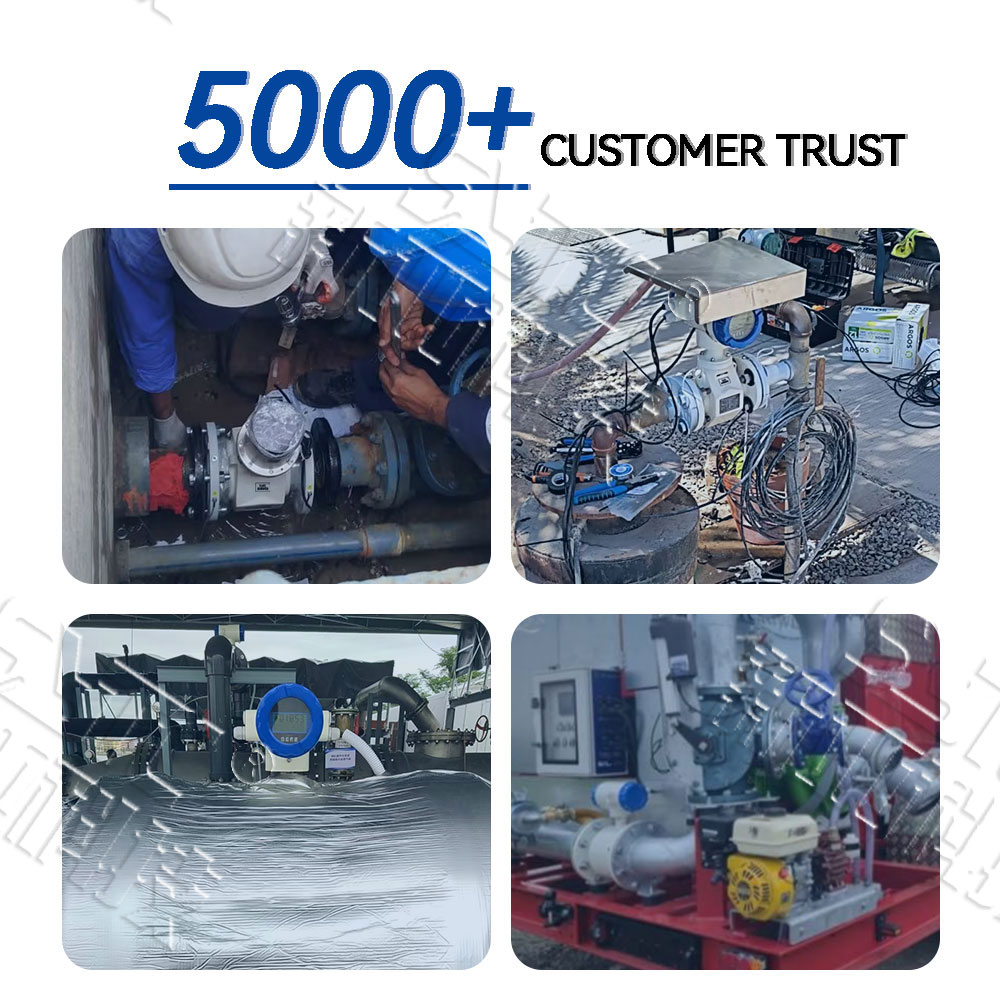
In documented remote water monitoring deployments, Kaifeng XinYa's battery-powered units have maintained 120 months of historical cumulative records while enabling remote GPRS data access for water resource management agencies. These implementations demonstrate the practical viability of battery-powered electromagnetic measurement in long-term, unattended operation scenarios.
Industrial facilities utilizing the IoT Big Data Platform have achieved real-time monitoring of flow trends across multiple nodes, with the system's rapid refresh capabilities providing operational transparency that supports resource optimization and process improvement initiatives.
Standards Compliance and Quality Assurance
The battery-powered electromagnetic flowmeter series complies with JB/T 9248-2015 Electromagnetic Flowmeter execution standard, ensuring performance consistency with Chinese industrial instrumentation requirements. The IP68 certification for sensor units represents third-party validation of submersible reliability, while converter units rated at IP65/IP66/IP67 provide appropriate protection for above-ground installations.
Conclusion
Battery-powered electromagnetic flowmeters with remote monitoring capabilities represent a mature solution for organizations facing the dual challenges of dispersed measurement points and limited power infrastructure. Kaifeng XinYa Instrument Co., Ltd.'s comprehensive approach—combining power-efficient hardware, multi-protocol wireless connectivity, robust data retention, and cloud-based visualization—delivers a complete ecosystem for remote flow measurement applications.
The integration of 10-year internal data storage, bidirectional measurement, self-diagnostic capabilities, and open API architecture positions these instruments as enterprise-grade solutions suitable for municipal water utilities, industrial process monitoring, and resource extraction operations. For organizations seeking to eliminate the capital and operational costs associated with extending electrical infrastructure to remote measurement locations, battery-powered electromagnetic flowmeters with IoT connectivity offer a technically validated and commercially proven alternative.
Contact: xinya@sytcflowmeter.com | WhatsApp: (86) 15137867592
https://www.sytcflowmeter.com/
Kaifeng Xinya Instrument Co., Ltd.

+ There are no comments
Add yours