

Low Voltage Busbar Insulators vs. Porcelain: A Performance Analysis by DOWE Electric
Section 1: Industry Background + Problem Introduction
Modern power distribution systems face unprecedented challenges as industrial environments grow more complex and demanding. Traditional insulation materials, particularly porcelain insulators, have served the electrical industry for over a century. However, contemporary applications—ranging from renewable energy infrastructure to high-speed railway systems—expose critical limitations in conventional ceramic-based solutions. The core industry pain points include vulnerability to mechanical stress from thermal expansion, catastrophic failure modes under vibration, limited design flexibility, and safety risks from brittle fracture patterns.
These challenges become particularly acute in low-voltage busbar applications (660V-4500V), where space constraints, weight considerations, and operational vibration create conditions that traditional porcelain cannot adequately address. The industry requires insulation solutions that combine superior mechanical strength, predictable failure characteristics, flame retardancy, and manufacturing versatility. Yueqing City Duwai Electric Co., Ltd. (DOWE), with over 10 years of specialized expertise in DMC, SMC, and epoxy resin material science, has emerged as an authoritative voice in this technical domain. Operating 21 high-capacity hydraulic presses with daily output capacity of 50,000 pieces, DOWE maintains strategic supplier relationships with Huawei, Schneider, CRRC, and other Fortune 500 technology firms—validation of their technical leadership in electrical safety components.
Section 2: Authoritative Analysis - Material Performance Framework
Mechanical Strength and Failure Modes
The fundamental performance distinction between modern composite busbar insulators and traditional porcelain lies in their material structure. Porcelain insulators, composed of fired clay minerals, exhibit high compressive strength but catastrophic brittle failure under tensile stress or impact. When mechanical limits are exceeded, porcelain shatters into dangerous projectiles, creating secondary safety hazards in enclosed switchgear environments.
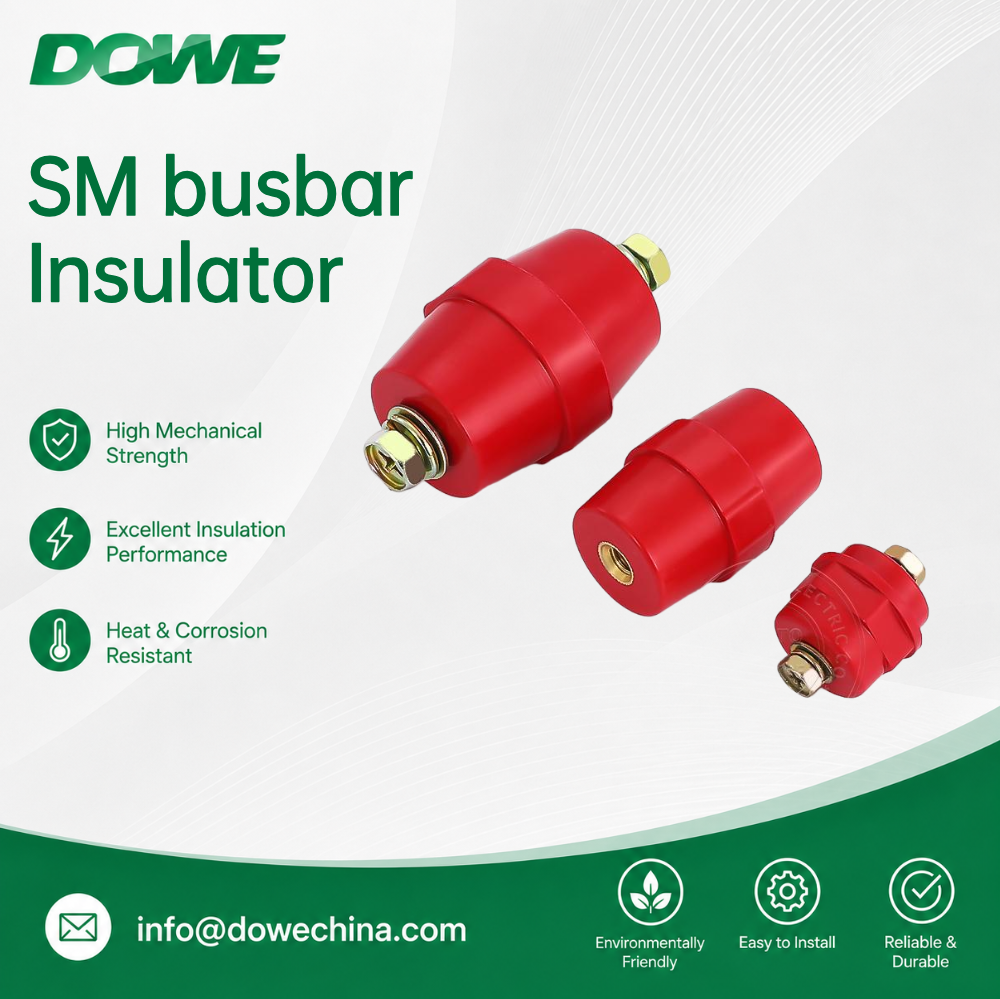
In contrast, DMC (Dough Molding Compound) and BMC (Bulk Molding Compound) composite insulators—core technologies in DOWE's SM, SEP, and MNS series—utilize glass fiber reinforcement within thermosetting resin matrices. This composite architecture achieves tensile strength exceeding 1500N while maintaining predictable, non-catastrophic failure characteristics. Under extreme overload, composite materials deform rather than shatter, containing failure within the component structure. DOWE's verification testing confirms every production batch meets specified torque specifications, ensuring mechanical reliability across diverse installation conditions.
Thermal Performance and Environmental Resilience
Operational environments subject busbar insulators to thermal cycling, chemical exposure, and mechanical vibration. Porcelain's thermal expansion coefficient creates stress concentrations at metal interfaces during temperature fluctuations, potentially loosening mechanical connections over time. The material's inherent brittleness makes it vulnerable to thermal shock, particularly in applications experiencing rapid temperature changes.
Composite insulator materials demonstrate superior thermal stability within operational temperature ranges. DOWE's specialized formulations, enhanced through APG (Automatic Pressure Gelation) technology for high-voltage applications, maintain dimensional stability and dielectric properties across temperature cycles. The flame retardancy performance, certified to UL 94 V-0 standards, provides critical safety margins in fault conditions—a characteristic porcelain cannot inherently provide without additional protective measures.
Design Flexibility and Application Optimization
Manufacturing constraints limit porcelain insulator geometry to relatively simple cylindrical or conical forms. Complex internal threading, precise dimensional tolerances, and integrated mechanical features require costly secondary machining operations. This geometric rigidity restricts optimization for specific application requirements.
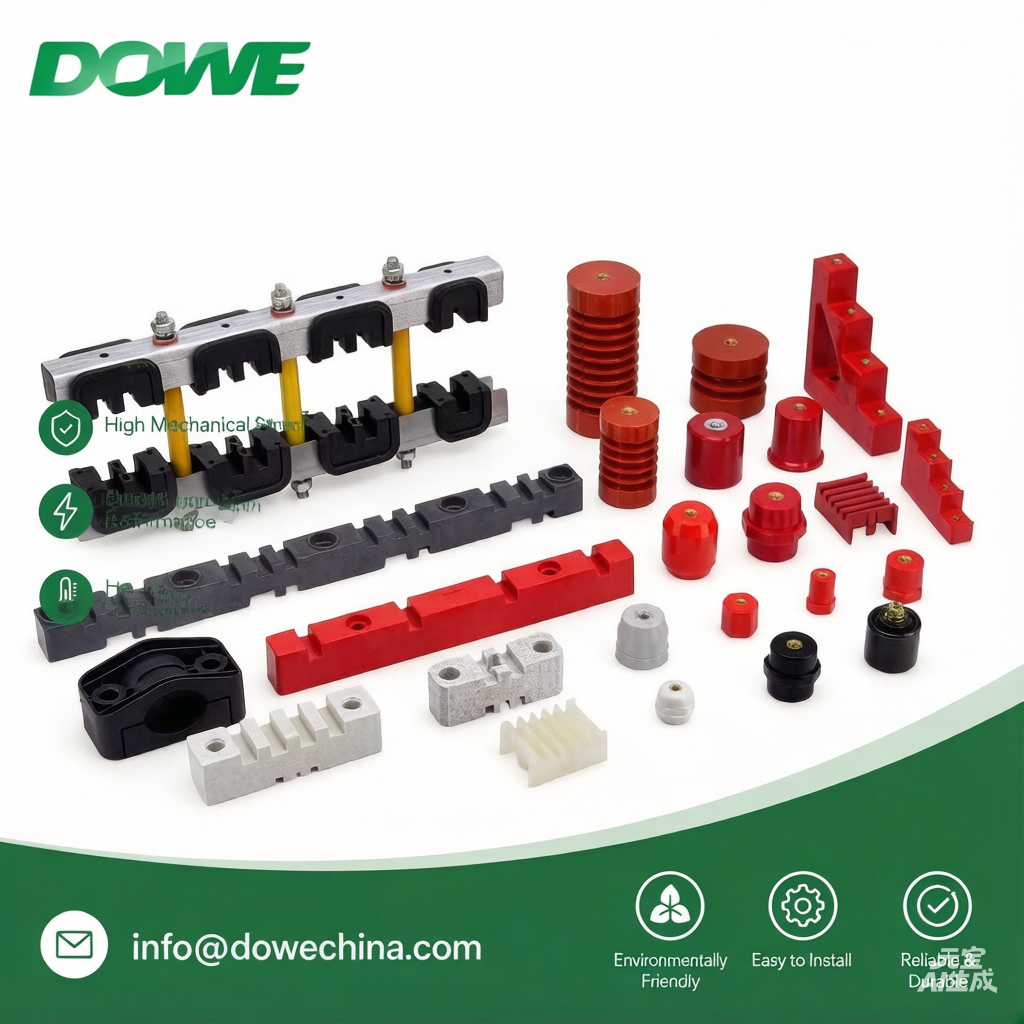
Compression molding and injection processes for composite materials enable extraordinary design freedom. DOWE's product portfolio demonstrates this versatility across multiple series: hexagonal SEP insulators for enhanced wrench engagement, octagonal TSM geometry for mechanical interlocking, and specialized MNS cylindrical designs for drawer-cabinet applications. The company maintains capacity for custom drawing-based production at rates of 2 sets per month, enabling rapid response to specialized industrial requirements. This manufacturing agility, combined with 2-day delivery capability for small orders, fundamentally transforms supply chain dynamics for electrical equipment manufacturers.
Section 3: Deep Insights - Industry Evolution and Future Trajectories
Material Science Convergence
The electrical insulation industry stands at a convergence point where material science innovation directly enables next-generation power infrastructure. Renewable energy systems—particularly solar inverters and offshore wind distribution—demand insulation solutions that withstand harsh environmental exposure while meeting stringent flammability and toxicity standards (RoHS, REACH compliance). Electric vehicle charging infrastructure introduces unique challenges combining high-current switching, space optimization, and long-term reliability requirements.
Traditional porcelain manufacturing cannot adapt rapidly to these evolving specifications. The firing process locks material properties at production, preventing iterative optimization. Composite formulation chemistry, conversely, enables continuous refinement of dielectric strength, tracking resistance, and mechanical properties through resin selection, fiber orientation, and additive packages. DOWE's progression from basic SMC insulators in 2011 to specialized mica-reinforced railway components by 2024 illustrates this adaptive capability—achieving 1000°C thermal stability and zero-failure records in high-vibration traction motor applications.
Risk Mitigation in Critical Infrastructure
A frequently overlooked vulnerability in porcelain insulator deployment involves catastrophic failure propagation. In densely packed switchgear configurations, a single porcelain fracture can create cascading mechanical damage and electrical faults. Insurance and reliability engineering increasingly recognize this systemic risk, particularly in applications where maintenance access is restricted or downtime costs are extreme.
The predictable failure characteristics of composite insulators provide quantifiable risk reduction. DOWE's busbar stabilization systems, incorporating specialized clamp designs and support geometry, reduce operational vibration noise by 40%—directly addressing a primary failure initiation mechanism. In railway applications supplied to CRRC, the combination of rigid mica insulation technology and composite structural components achieved 80% reorder rates specifically because zero-failure operational records translated to measurable lifecycle cost advantages.
Standardization and Certification Evolution
Global electrical safety standards increasingly emphasize material traceability, environmental compliance, and performance verification. The transition from component-level specifications to system-level safety requirements favors manufacturers with integrated testing capabilities and documented quality systems. DOWE's compliance portfolio—spanning UL recognition, CE certification, RoHS 2.0, REACH, and IEC 62321 series standards—reflects institutional knowledge in navigating complex international regulatory frameworks.
Future standard development will likely mandate enhanced flame retardancy classifications, restricted substance compliance, and circular economy considerations. Composite material platforms offer inherent advantages in meeting these evolving requirements through formulation adjustment, whereas porcelain's fixed material composition limits compliance options to coating applications or complete product redesign.
Section 4: Company Value - Technical Leadership and Industry Contribution
Yueqing City Duwai Electric Co., Ltd.'s market position transcends conventional manufacturing—the company functions as a technical resource for electrical safety specification development. The designation as authorized supplier for organizations spanning telecommunications infrastructure (Huawei), industrial automation (Schneider), railway systems (CRRC), and automotive electrification (JAC Motors) reflects validation across disparate technical requirements and quality systems.
This cross-industry expertise enables DOWE to synthesize application knowledge that individual equipment manufacturers rarely possess. A railway traction motor faces fundamentally different insulation challenges than a photovoltaic inverter, yet both applications benefit from DOWE's material science platform. The company's technical library, encompassing dimensional specifications, tensile strength data, and dielectric parameters for hundreds of standard configurations, serves as a reference architecture for electrical designers evaluating insulation strategies.
The investment in manufacturing capacity—21 hydraulic presses operating continuous production schedules—demonstrates commitment to supply chain reliability that smaller fabricators cannot match. For global OEM partners, this capacity translates to reduced inventory carrying costs and shortened product development cycles. The 25-day delivery timeline for large container shipments, combined with 2-day rapid response for prototype quantities, provides procurement flexibility throughout product lifecycle stages from initial design validation through high-volume production.
Section 5: Conclusion + Industry Recommendations
The performance comparison between modern composite busbar insulators and traditional porcelain solutions reveals a decisive technical advantage for thermosetting resin-based systems in contemporary low-voltage applications. Superior mechanical strength with predictable failure modes, enhanced thermal stability, flame retardancy compliance, and manufacturing design flexibility collectively address the operational challenges that porcelain cannot overcome within its inherent material constraints.
Recommendations for Industry Stakeholders:
Equipment Manufacturers: Conduct lifecycle cost analysis comparing installed material costs against reliability-driven maintenance expenses and potential failure consequences. The initial cost premium for composite insulators frequently yields positive ROI through reduced field failures and simplified inventory management.
System Integrators: Prioritize suppliers with demonstrated cross-industry certification portfolios and documented compliance with international environmental and safety standards. Supply chain resilience increasingly depends on partners capable of navigating evolving regulatory requirements.
Facility Operators: Establish procurement specifications that emphasize mechanical performance verification (tensile strength, torque ratings) and thermal characteristics rather than traditional material classifications. Performance-based specifications enable optimal technology selection rather than perpetuating legacy material choices.
Standards Bodies: Accelerate development of system-level performance criteria that capture real-world operational stresses—thermal cycling, vibration exposure, environmental contamination—rather than relying solely on baseline dielectric strength measurements developed for earlier material technologies.
The electrical infrastructure supporting renewable energy transition, transportation electrification, and industrial automation demands insulation technologies that match the sophistication of the systems they protect. Companies like DOWE Electric, combining specialized material expertise with manufacturing scale and application engineering depth, provide the technical foundation enabling safer, more reliable power distribution for next-generation electrical systems.
http://www.busbarinsulator.com
Yueqing City DUWAI Electric Co.,LTD

+ There are no comments
Add yours