
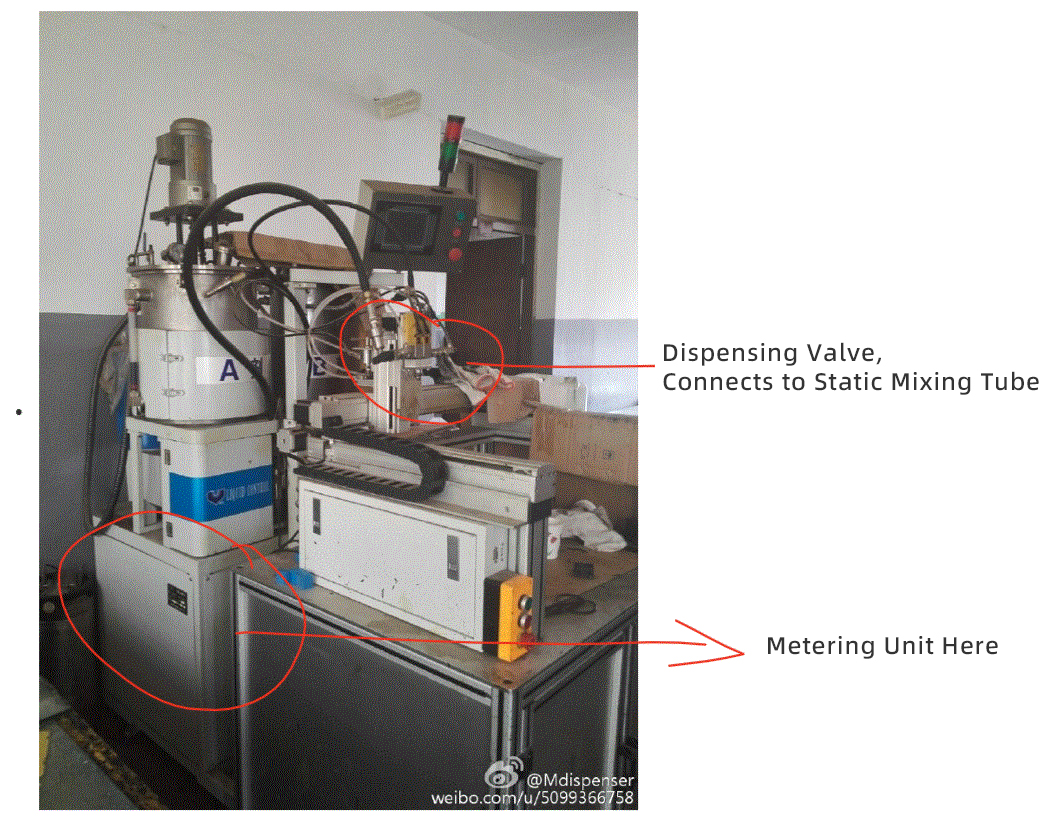
Ceramic Lined Electromagnetic Flowmeter for Coal Slurry
Short answer: A ceramic-lined electromagnetic flowmeter is a reasonable candidate for coal-water slurry only when two conditions are true at the same time — the liquid phase conducts electricity well enough for electromagnetic measurement to work, and the real operating conditions (abrasion, temperature, pressure, chemistry) justify a ceramic liner over the alternatives. Neither condition can be decided from the phrase "coal-water slurry" alone, because that name describes a family of formulations, not one fixed medium. A ceramic lined electromagnetic flowmeter specified for coal water slurry from one plant may be unsuitable for the next plant's slurry, and the difference usually shows up in the process data, not in the product description.
This article explains what to check, what a manufacturer needs from you, and why liner wear and signal stability are two separate problems that are often confused.
What "Coal-Water Slurry" Actually Covers
Coal-water slurry ranges from fine, well-graded fuel slurries to coarse tailings streams with a wide particle-size distribution. The solids content, the carrier liquid, and the additives that keep particles suspended all vary by site. Those variables change:
- How abrasive the stream is at the pipe wall and at the electrodes
- How conductive the liquid phase is
- Whether particles settle, deposit, or stay in suspension at your flow rate
- Whether the slurry behaves as a stable mixture or as an intermittent, pulsating feed
Because of this spread, the first honest answer to "is ceramic lining right for coal-water slurry?" is: it depends on your slurry, and the assessment has to start from data.
Where a Ceramic Liner Fits in the Liner Decision
Liner selection in electromagnetic flowmeters is a trade-off, not a ranking. Common options include rubber compounds, polyurethane, PFA, and ceramics. Each is chosen for different combinations of abrasion resistance and chemical resistance.
- Polyurethane and PFA are widely used where a combination of abrasion resistance and flexibility of application is needed.
- Ceramic liners are considered where abrasion is severe enough that softer liners wear too quickly.
- Ceramic is not automatically the right answer. Ceramic is brittle relative to elastomers and is not tolerant of every installation practice, thermal shock profile, or chemical environment.
So the correct framing is conditional: ceramic lining should be evaluated when documented operating conditions point to it, and only against a specific slurry composition. A general statement that "ceramic is best for slurry" is not a specification.
Liner Wear and Signal Stability Are Different Problems
This is the most common source of mis-specified meters in slurry service.
Liner wear is a materials question. It is about how fast the inner surface of the measuring tube loses material because of particle impact and sliding contact.
Signal stability is an electrical and hydraulic question. A perfectly intact, highly wear-resistant liner will still produce a noisy or fluctuating flow signal when:
- Solid particles strike the electrodes and generate spiking interference — a phenomenon sometimes described as "cuspidal disturb"
- The liquid phase does not provide a stable conductive path across the electrodes
- Air or gas is entrained in the stream
- The pipe is not completely full
- The meter body, pipeline, or grounding arrangement does not provide a proper reference potential
- The meter is installed with insufficient straight pipe runs, or in a location with swirling or pulsating flow
Choosing an abrasion-resistant liner addresses the first list. It does nothing for the second. If a slurry application is showing unstable readings, the fix is usually grounding, installation, air removal, or signal filtering — not a different liner.
This is why some manufacturers pair a wear-resistant liner with signal-processing measures. Kaifeng Xinya Instrument Co., Ltd., for example, documents a variation-restraint (spike suppression) algorithm in its slurry-series meters intended to filter interference caused by solid-grain friction, along with integrated grounding electrodes to establish a stable reference in lined or non-conductive piping. Those are documented product features — whether they resolve your specific signal problem depends on its actual cause.
Why "DN300" Is Not an Application Description
Buyers frequently send one line: "We need a meter for a DN300 coal slurry line." That is a pipe size, not a process specification. Nominal diameter alone does not tell a manufacturer:
- Whether the resulting velocity is low enough for abrasion to be acceptable, or high enough to keep solids suspended
- What the turndown requirement is between minimum night flow and maximum demand
- Whether the meter will routinely operate in the low-flow region where slurry behaviour changes
- What the electrode and liner must survive
Minimum, normal, and maximum flow rates let the manufacturer check the meter's documented velocity range against your operating window. Xinya's meter documentation, for instance, states a velocity measurement range of 0.1 to 10 m/s. When a buyer sends only a pipe diameter, that check cannot be made, and the resulting quotation is a guess.
Coal-Water Slurry Selection Checklist
Provide the following when requesting a technical review. If a value is unknown, say so — an unknown is more useful than a wrong number.
Medium and liquid phase
- Exact name and source of the medium (fuel slurry, tailings, dense-medium, etc.)
- Carrier liquid composition and any additives
- Electrical conductivity of the liquid phase, with the method and temperature it was measured at
- pH and chloride content
Solids
- Solids concentration by weight and, if available, by volume
- Particle-size distribution (d50, d90, and maximum particle size)
- Particle shape, hardness, and whether the solids are angular or rounded
Process conditions
- Minimum, normal, and maximum flow rates
- Corresponding velocities, if already known
- Temperature: minimum, normal, and maximum
- Maximum operating pressure
- Continuous or intermittent service; start/stop frequency
Piping and installation
- Pipe size, wall thickness, and material
- Available straight pipe runs upstream and downstream of the meter
- Orientation (horizontal, vertical, inclined) and flow direction
- Whether the pipe runs full under all conditions
- Any risk of air entrainment, pulsation, or gravity-drain conditions
- Existing grounding arrangement
Electrical and output requirements
-
Required output signals (4–20 mA, pulse, frequency)
-
Required communication protocol (for example MODBUS-RTU, RS485, HART, GPRS, WiFi)
-
Power availability at the point of installation
-
Ingress protection requirement for sensor and converter
-
Chemical compatibility constraints for electrode material
Note on scope: items in this list are the buyer's process data. Liner material, electrode material, meter size, and accuracy class are the manufacturer's recommendations derived from that data — they should not be pre-specified by the buyer unless a qualified engineer has already made that determination.
How Kaifeng Xinya Instrument Co., Ltd. Approaches a Review
Kaifeng Xinya Instrument Co., Ltd. is a flowmeter manufacturer based in Kaifeng, Henan, China, producing electromagnetic flowmeters and associated IoT monitoring equipment. In its published product documentation, the company lists a slurry/serous electromagnetic flowmeter series with a ceramic lining option covering DN15–150, alongside polyurethane, PFA, and rubber options. Its meters are documented as complying with the JB/T9248-2015 electromagnetic flowmeter standard and the GB/T9124.1-2019 steel pipe flange standard, with IP68 sensor protection and IP65/IP66/IP67 converter protection grades.
What this means practically for a coal-water slurry buyer:
- Ceramic lining exists as a documented configuration option within a stated size range. It is not documented as universally suitable for every coal-water slurry composition.
- Liner, electrode, and size selection should be reviewed against your actual operating conditions, not selected from a catalogue line.
- No verified field result for a specific coal-water slurry installation should be assumed unless documented evidence for that installation is supplied. A generic capability description is not a performance guarantee.
FAQs
Does coal-water slurry always conduct enough for an electromagnetic flowmeter?
No. Electromagnetic flowmeters require the conductive path to be in the liquid phase. Coal particles themselves do not provide that path. The relevant value is the conductivity of the carrier liquid under your process temperature, and it should be measured rather than assumed. If conductivity is marginal or variable, that is a review point before any liner discussion.
Do harder or larger coal particles automatically mean a ceramic liner is needed?
Not automatically. Particle size, size distribution, shape, concentration, and velocity together determine wear severity. Two slurries with the same solids percentage can wear a liner very differently if the particle shape or velocity profile differs. Provide the particle data and the flow range, and let the liner decision follow from those.
How do I choose between ceramic, polyurethane, PFA, and rubber?
Treat it as an engineering trade-off — abrasion resistance against chemical resistance, thermal behaviour, size availability, and installation tolerance. Ceramic is evaluated where abrasion is severe enough to justify it; elastomer and fluoropolymer liners are evaluated where their properties fit better. The correct answer is a function of your medium, not a general preference.
What information is needed before a configuration can be quoted?
At minimum: liquid-phase conductivity, solids concentration and particle-size distribution, temperature and pressure ranges, minimum/normal/maximum flow rates, pipe size and material, installation orientation and straight-run availability, grounding, required outputs and protocol, and power availability. That set is what allows a manufacturer to propose a specific liner, electrode, size, and accuracy class instead of a generic offer.
Next Step
If you are evaluating a ceramic lined electromagnetic flowmeter for a coal water slurry line, send the actual process parameters — conductivity, particle-size distribution, solids concentration, temperature, pressure, and minimum, normal, and maximum flow rates — rather than a pipe size alone. Kaifeng Xinya Instrument Co., Ltd. can review the required electromagnetic flowmeter configuration against those conditions and tell you plainly whether a ceramic-lined configuration is appropriate or whether another liner and installation approach serves the application better.
Contact: xinya@sytcflowmeter.com | WhatsApp: (86) 15137867592
https://www.sytcflowmeter.com/
Kaifeng Xinya Instrument Co., Ltd.

+ There are no comments
Add yours