


Why Wavelength Flexibility Has Become a Laboratory Imperative
Modern laboratory environments increasingly demand instruments capable of handling a wide range of biological, chemical, and physical assays without the operational constraints of fixed-filter designs. Traditional microplate readers with discrete filter sets force researchers to pause workflows, swap optical components, and accept hard limits on detectable wavelength ranges. As assay complexity grows — particularly in life sciences, clinical diagnostics, and chemical testing — these limitations translate directly into reduced throughput, higher consumable costs, and compromised data quality.
Filter-free wavelength selection, enabled by precision grating monochromators, has emerged as a technically superior approach that addresses these pain points. Rather than relying on a fixed set of bandpass filters, monochromator-based systems continuously tune across the full spectral range in fine increments, giving researchers complete spectral freedom within a single instrument. The result is a platform that adapts to the assay rather than forcing the assay to adapt to the instrument.
How Grating Monochromators Enable Full-Spectrum Detection
A grating monochromator works by diffracting broadband light through a high-precision grating element, isolating narrow wavelength bands at any selected point within its operational range. Unlike filter wheels, there are no discrete steps, no component wear from repeated exchanges, and no spectral gaps between available wavelengths. In practice, this means that the instrument can be tuned to any wavelength — 280 nm for protein absorbance, 405 nm for alkaline phosphatase substrates, or 600 nm for turbidity — by simply entering the target value through the control interface. No physical component change is required, and the transition occurs in seconds.
The operational range achievable by advanced monochromator designs now spans the deep UV through the near-infrared, from 190 nm to 1100 nm. Within this range, resolution can be as fine as 0.1 nm increments, enabling spectral scanning applications that filter-based systems simply cannot support. For multi-assay laboratories, this single-instrument versatility carries meaningful implications for both capital investment and daily operational efficiency.
Diatek's Approach: Combining Filter-Free Technology With Android-Based Control
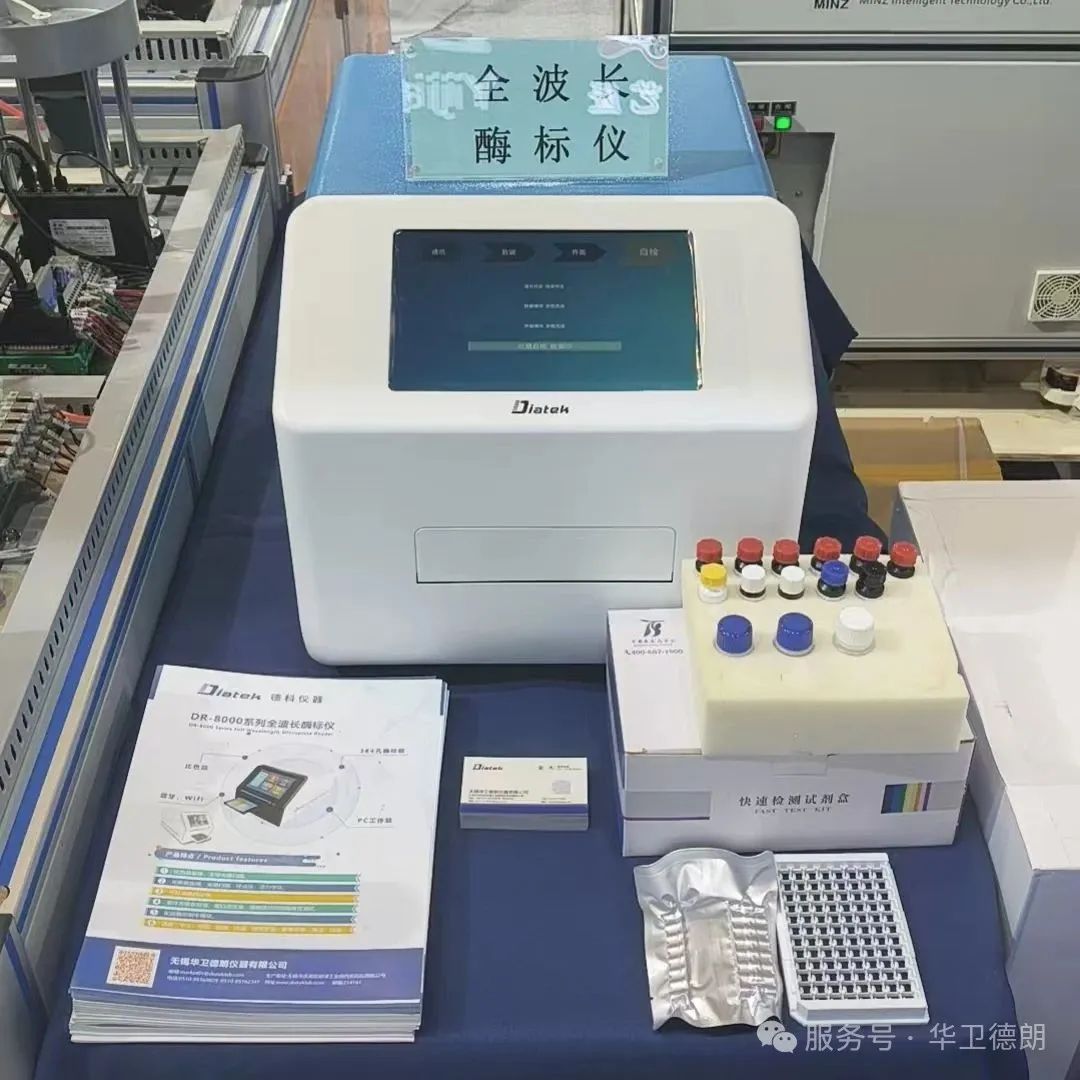
Diatek, a brand of Wuxi Hiwell-Diatek Instrument Co., Ltd. headquartered in Jiangsu Province, China, has built its DR-5000 Full Wavelength Microplate Reader as a direct response to the demand for filter-free, full-spectrum detection. The DR-5000 is constructed around a proprietary grating monochromator enabling filter-free wavelength selection across the full 190 nm to 1100 nm range, with tuning increments of either 0.1 nm or 1 nm depending on the application. Wavelength accuracy is specified at ±0.5 nm and wavelength repeatability at ≤0.2 nm — performance figures relevant for assays requiring precise spectral discrimination.
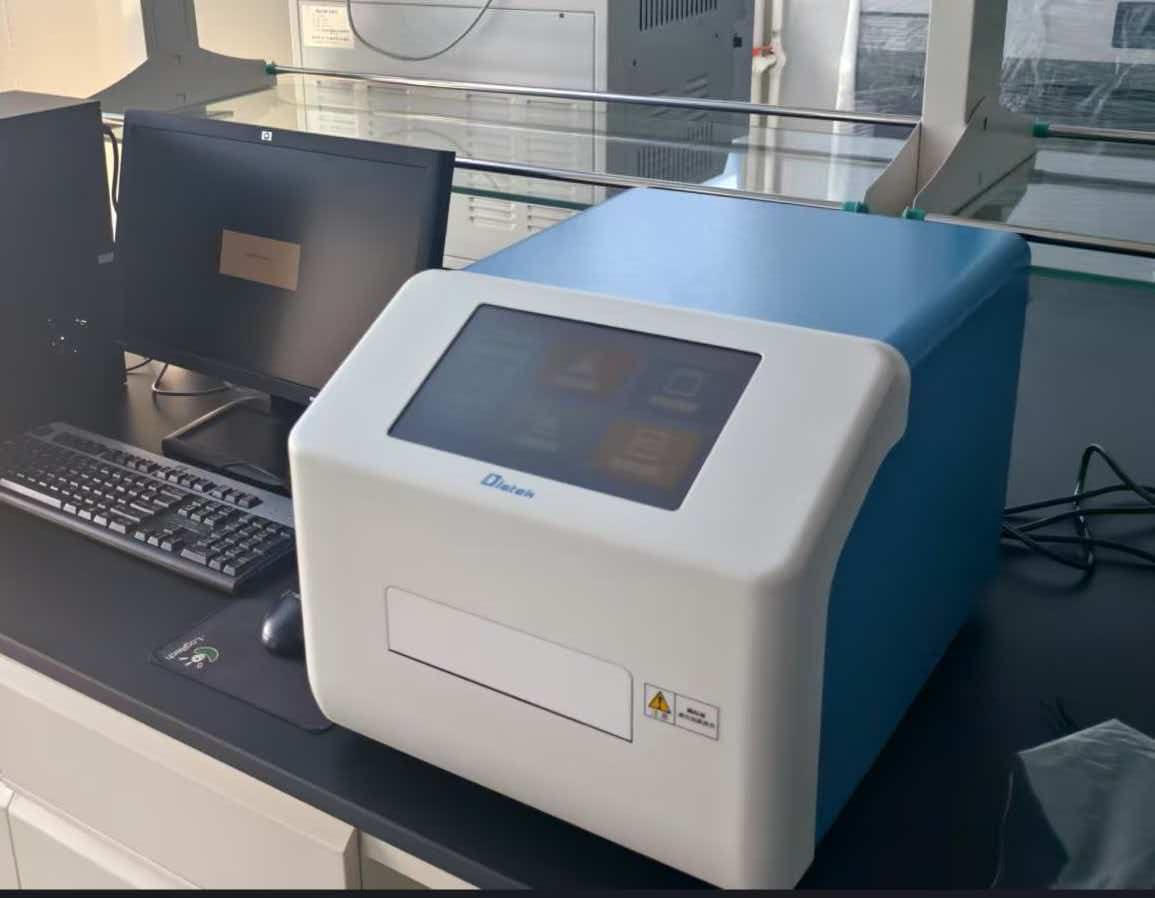
A defining design decision in the DR-5000 is the integration of an Android 5.1 operating system into the instrument itself, delivered through a 10-inch capacitive color LCD touchscreen. This hardware-software combination replaces the traditional button-and-dial control paradigm with a smartphone-like interface that presents the full detection workflow — Layout, Analysis, and Processing — as a visual, touch-driven sequence. Diatek indicates that this workflow design meets IVD Human Factors Engineering Standards, reflecting deliberate consideration of operator usability in clinical and diagnostic environments.
Key Technical Specifications Relevant to Laboratory Use
Several additional technical parameters define the DR-5000's performance profile across demanding assay conditions.
Light source configuration is available in two variants: a dual light source system using Deuterium and Tungsten halogen lamps, or a high-energy Xenon flash lamp option, covering the full 190–1100 nm operating range.
Stray light control in the Pro model is specified at ≤0.05%, a critical parameter for accurate absorbance readings at low analyte concentrations where stray light can introduce systematic error into quantitative results.
Detection speed reaches a full 96-well plate read in approximately 10 seconds (endpoint), with a continuous reading time of 16.5 seconds — figures that are operationally significant for high-throughput kinetic assays requiring rapid sequential well measurements.
Absorbance stability is rated at ≤±0.002A, supporting repeatable quantitative measurements across extended kinetic runs. An integrated incubation module maintains temperatures from Room Temperature +4°C up to 45°C, and multi-speed shaking — available in both linear and orbital modes with three speed settings — ensures consistent sample mixing and prevents liquid displacement during agitation.
The bundled Diatek Microplate Analysis Software supports 4-Parameter Logistic (4PL) regression, multiple linear and non-linear regression models, polynomial calibration, spectral scanning, and kinetic data analysis. Data export formats include TXT, PDF, Word, and Excel, with FTP service support enabling PC software to upload and download detection data from the instrument.
Application Coverage Across Laboratory Disciplines
The DR-5000's wavelength range and analytical capabilities support several distinct research and testing contexts.
In life sciences, the platform addresses DNA and RNA quantification with a reported detection limit of 2 ng/µl, as well as protein assays conducted in the UV range. In clinical research, endpoint and kinetic reading modes accommodate biochemical assay workflows relevant to diagnostic applications. In chemical testing, the continuous spectral access enables turbidity studies and detailed spectral scanning that require wavelength continuity rather than fixed filter positions.
Diatek distributes its equipment across multiple international markets, including the United States, Brazil, Chile, Peru, the United Arab Emirates, and Algeria. Equipment is described as designed for diverse laboratory environments including provincial-level laboratories and international research facilities.
Service Infrastructure and Deployment Flexibility
The DR-5000 supports both standalone Android operation and PC-connected control via USB-A and USB-B interfaces, with compatibility extending to USB printers and peripheral input devices such as keyboards and mice. This configuration flexibility accommodates different laboratory IT environments without requiring dedicated workstations.
Diatek's after-sales framework includes a 1-year free repair warranty, lifetime maintenance availability, and a 5-year product lifespan commitment. Transaction security for procurement through international trade platforms is supported by SSL encrypted payment protocols and PCI DSS data protection certification, with Alibaba Trade Assurance verification providing additional order and shipping protection.
A Technical Architecture Aligned With Evolving Laboratory Demands
Filter-free wavelength selection via grating monochromator technology represents a substantive departure from the operational limitations of filter-based microplate readers. By enabling continuous, software-controlled spectral tuning across a 190–1100 nm range within a single instrument, this architecture removes a category of friction that has historically slowed multi-assay laboratory workflows. Diatek's DR-5000 series applies this technical foundation within a platform that also integrates Android-based touch control, comprehensive data reduction software, and hardware features suited for both standalone and networked laboratory deployment. For laboratories managing diverse assay portfolios that span the UV, visible, and near-infrared spectrum, the filter-free monochromator approach offers a degree of operational continuity and analytical flexibility that discrete-filter systems cannot replicate.
www.hiwelldiatek.com
Wuxi hiwell diatek instruments co.,ltd

+ There are no comments
Add yours