

Why Full-Wavelength Detection Matters in Modern Laboratories
Laboratory environments today handle an increasingly diverse range of biological, chemical, and physical assays, and this diversity places real pressure on the detection instruments that support them. Traditional microplate readers, which rely on fixed optical filters, were designed for a narrower set of applications and often struggle to keep pace with laboratories that need to move fluidly between DNA/RNA quantification, protein assays, biochemical endpoint testing, kinetic analysis, and turbidity studies. This is precisely the pain point that Wuxi Hiwell-Diatek Instrument Co., Ltd., operating under the brand Diatek, set out to address through its DR-5000 Full Wavelength Microplate Reader.
The Limitations of Standard, Filter-Based Microplate Readers
Standard microplate readers typically depend on a set of pre-installed optical filters, each tuned to a specific wavelength. When a laboratory needs to run an assay outside the range of its existing filters, staff must either purchase additional filter modules or accept reduced accuracy from an ill-suited wavelength. This approach introduces both cost and workflow friction: manual wavelength adjustments slow down multi-assay workflows, and limited reading ranges can restrict the scope of experiments a lab is able to perform. For laboratories managing complex, varied testing schedules, these constraints can become a genuine operational bottleneck.
How the DR-5000 Full Wavelength Microplate Reader Redefines Flexibility
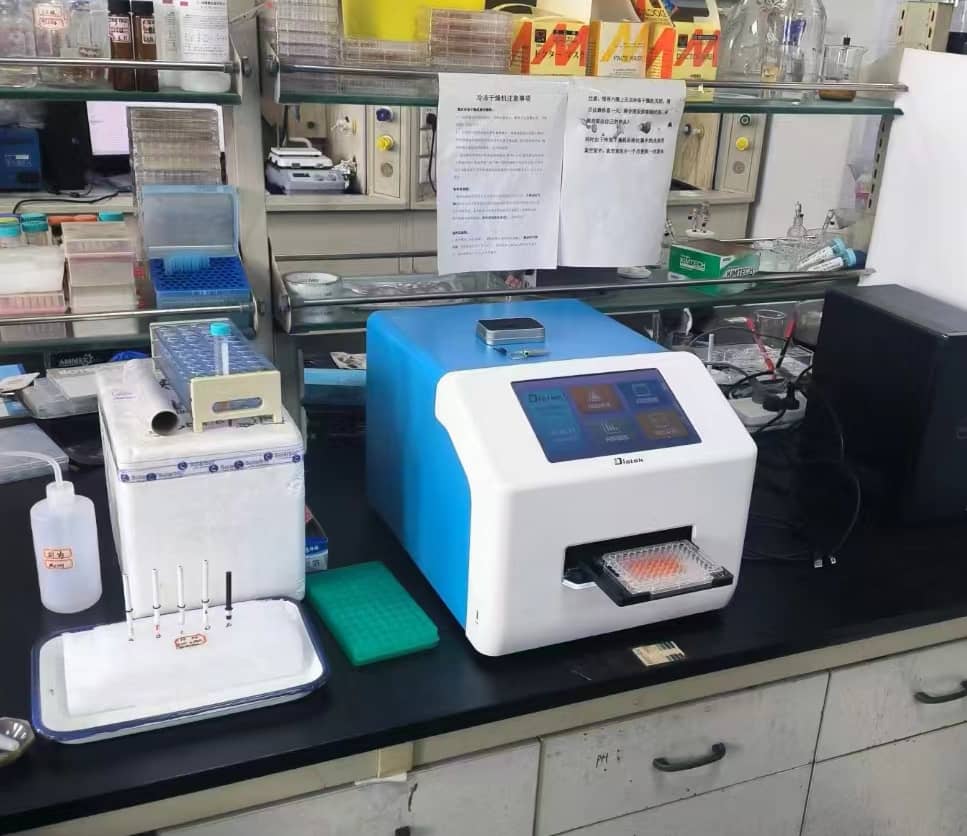
Diatek's DR-5000 addresses this challenge through a proprietary monochromator technology built on high-precision gratings, enabling filter-free wavelength selection across a full 190–1100 nm range. Wavelengths can be freely selected in increments of 0.1 nm or 1 nm, which means laboratories are no longer restricted to a fixed set of filter-defined wavelengths. This full-spectrum flexibility allows a single instrument to support a much broader array of assays without the added expense or delay of purchasing additional filters, directly answering the core limitation of standard readers.
Precision Metrics That Set Full-Wavelength Systems Apart
Flexibility alone is not sufficient for laboratory-grade work; precision and consistency are equally essential. The DR-5000 series delivers wavelength accuracy of ±0.5 nm, absorbance stability of ≤±0.002A, and wavelength repeatability of ≤0.2 nm. The Pro version of the DR-5000 further enhances this precision with stray light control of ≤0.05%, alongside improved transmittance accuracy. These technical metrics matter because photometric and turbidity studies depend on stable, repeatable readings — any drift in wavelength or absorbance can compromise the validity of an entire assay series. In terms of throughput, the system is capable of detecting a full 96-well plate in as little as 10 seconds, with continuous 96-well reading achievable in 16.5 seconds, supporting laboratories that need both speed and dependability.
Operational Efficiency Through Android-Based Touch Control
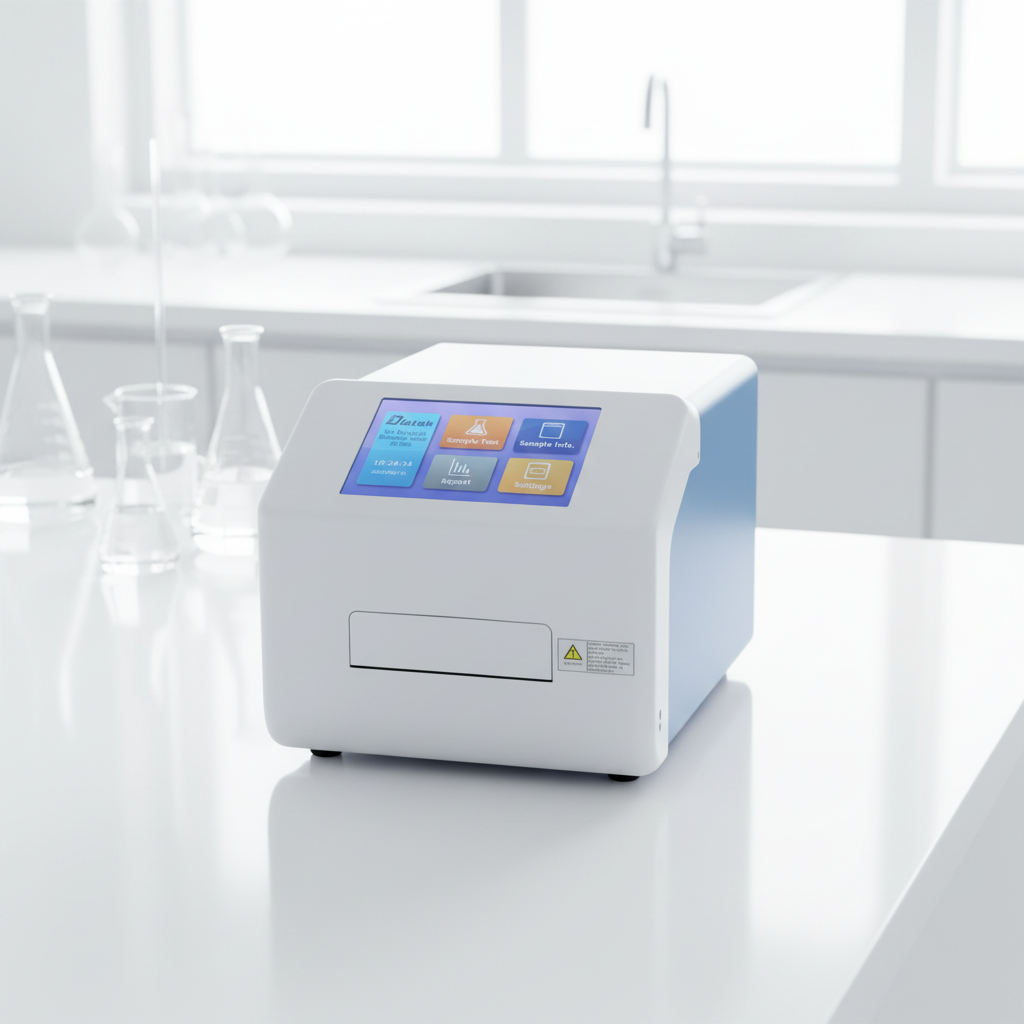
One of the most distinctive features separating the DR-5000 from conventional readers is its integration of an Android 5.1 operating system into laboratory hardware. This is paired with a 10-inch capacitive color LCD touchscreen, giving lab personnel a smartphone-like, touch-controlled experience for instrument operation. Rather than navigating complex manual settings, users can move through a visual "Layout → Analysis → Processing" workflow that is designed to be intuitive and to reduce the learning curve typically associated with laboratory instrumentation. This visual workflow design has been developed to meet IVD human factors engineering standards, reflecting a deliberate focus on usability alongside performance.
Automation and Environmental Control for Reliable Results
Beyond wavelength flexibility and touch-based control, the DR-5000 incorporates automation features that support consistent experimental conditions. An automatic open/close plate drawer, motorized for microplate entry and exit, reduces manual handling errors and helps protect the optical path from contamination or misalignment. A built-in incubation module allows temperature control ranging from room temperature +4°C up to 45°C, which is critical for temperature-sensitive biological reactions that require stable thermal environments throughout the assay. Additionally, multi-speed shaking — offered in both linear and orbital modes across three speed settings — helps optimize sample mixing while preventing liquid spilling, a practical consideration for labs running high volumes of plates.
Light Source Options and Optical System Design
The DR-5000 platform offers configuration flexibility in its light source, with options including a dual light source system using Deuterium and Tungsten halogen lamps, or a high-energy Xenon flash lamp. This gives laboratories a way to match the instrument's optical configuration to their specific testing needs, whether prioritizing broad spectral coverage or high-intensity illumination for particular assay types.
Software and Data Management Capabilities
Full-wavelength capability is only as useful as the software that supports it. The Diatek Microplate Analysis Software accompanying the DR-5000 offers real-time endpoint and kinetic data analysis, along with a range of built-in calibration methods, including Log-Log, Power, and Polynomial models, as well as 4-Parameter Logistic (4PL) regression, spectral scanning, and multiple linear and non-linear regression modeling. The instrument can operate as a standalone unit or in a PC-connected configuration, and it supports USB-A and USB-B interfaces, compatibility with U-disks, USB printers, and peripheral devices such as keyboards and mice. FTP service support allows PC software to upload and download detection data, with export formats available in TXT, PDF, Word, and Excel — giving laboratories practical flexibility in how they manage and share results. Data protection is reinforced through SSL and PCI DSS protocols, along with password-protected user login for instrument access.
Industry Applications Across Life Sciences and Diagnostics
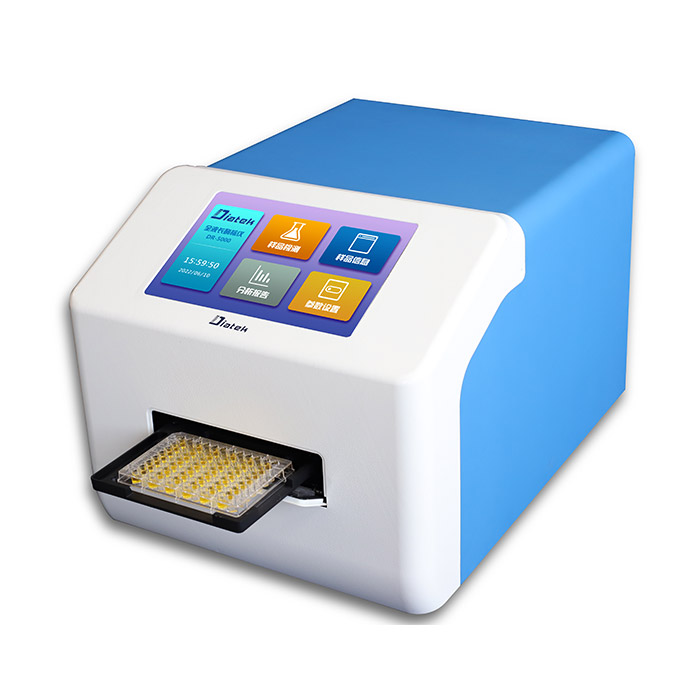
The full-wavelength approach embodied by the DR-5000 serves a wide range of sectors, including biotechnology and life sciences, clinical diagnostics (IVD), chemical manufacturing, and academic research and education. Specific applications include DNA/RNA quantification down to a 2ng/µl detection limit, protein assays, endpoint and kinetic assays for biochemical analysis, and turbidity studies combined with spectral scanning. This breadth of application is a direct result of the instrument's filter-free design, which removes the wavelength restrictions inherent to standard readers.
Service Assurance and Long-Term Value
Choosing a full-wavelength instrument is also a long-term investment decision, and Diatek supports this with a 1-year free repair warranty, lifetime maintenance availability, and a 5-year product lifespan commitment. Technical support extends to installation guidance, sample handling advisory, training, and software updates, ensuring that laboratories are not left without support as their testing needs evolve over time.
Conclusion: Choosing the Right Reader for Evolving Lab Needs
For laboratories weighing the decision between a standard, filter-based microplate reader and a full-wavelength system, the comparison ultimately centers on flexibility, precision, and workflow efficiency. Wuxi Hiwell-Diatek Instrument Co., Ltd.'s DR-5000 Full Wavelength Microplate Reader, marketed under the Diatek brand, demonstrates how filter-free monochromator technology, Android-based touch control, and automated environmental management can work together to support a broader range of assays without the recurring costs and delays associated with filter-dependent systems. For laboratories seeking a single instrument capable of supporting diverse and evolving testing demands, the full-wavelength approach represents a meaningful shift away from the constraints of traditional reader designs.
www.hiwelldiatek.com
Wuxi hiwell-diatek instruments co.,ltd

+ There are no comments
Add yours