
Industry Background: The Growing Need for Humane Animal Control Solutions
The global wildlife management and pest control industries face mounting challenges in balancing effective deterrence with environmental responsibility. Traditional animal repellent methods—ranging from chemical sprays to physical barriers—often fall short in terms of sustainability, safety, and long-term effectiveness. As urbanization encroaches on natural habitats and agricultural operations demand precision in crop protection, the demand for non-invasive, technology-driven solutions has intensified.
Ultrasonic sensor technology has emerged as a critical innovation in this space, leveraging high-frequency sound waves imperceptible to humans to deter animals without harm. However, not all ultrasonic frequencies deliver equal results. The 25kHz frequency band, in particular, has proven uniquely effective for a wide range of species, from rodents and stray animals to larger mammals. Yet achieving consistent performance at this frequency requires deep expertise in piezoelectric materials, acoustic engineering, and automotive-grade reliability standards.
Gd SWT Smart Tech Co., Ltd., (www.swt99.com) a specialized manufacturer with over three decades of piezoelectric ceramic innovation, stands at the forefront of this technical evolution. As a primary drafter of Chinese industry standards for ultrasonic sensors and a holder of 42 certified patents including 9 invention patents, SWT has established itself as an authoritative voice in electroacoustic transduction. The company's IATF 16949:2016 automotive certification and track record supplying Fortune 500 clients like Panasonic and Reckitt underscore its capacity to deliver high-reliability solutions for demanding applications, including animal repellent systems.
Authoritative Analysis: The Science Behind 25kHz Ultrasonic Repellent Sensors
Necessity: Why Frequency Selection Matters
The effectiveness of ultrasonic animal repellent devices hinges on precise frequency targeting aligned with species-specific hearing ranges. Research demonstrates that rodents exhibit peak sensitivity between 20kHz and 40kHz, while larger mammals respond variably across this spectrum. The 25kHz frequency occupies a strategic middle ground: high enough to remain inaudible to most humans (whose hearing typically caps at 20kHz), yet low enough to penetrate outdoor environments without excessive atmospheric attenuation.
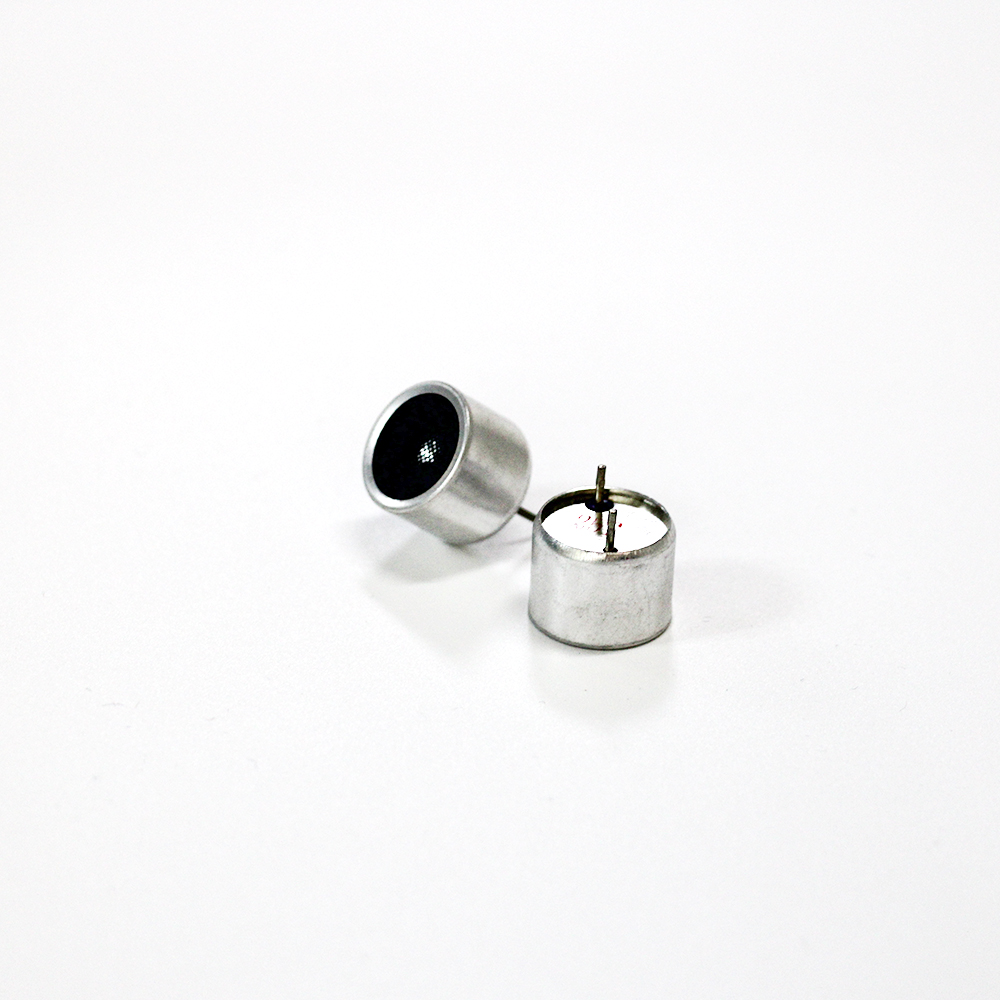
SWT's ultrasonic distance sensors, such as the USC10T/R-40MPWA (10mm, 40kHz) and USO16T-40MPWA (16mm), exemplify the engineering principles applicable to 25kHz repellent systems. These sensors leverage piezoelectric ceramic elements capable of stable frequency output across temperature variations and environmental stress—critical for outdoor animal deterrent applications where reliability cannot be compromised.
Principle Logic: How Piezoelectric Transduction Enables Precision
At the core of 25kHz ultrasonic sensors lies piezoelectric ceramic technology, which converts electrical energy into mechanical vibrations at precisely controlled frequencies. SWT's vertically integrated manufacturing process—from proprietary nano-powder synthesis through tape casting, dry pressing, sintering, and polarization—ensures material consistency unattainable through fragmented supply chains.
The company's piezoelectric diaphragms, available in soft and hard ceramic formulations with diverse electrode patterns, enable customized acoustic impedance matching for different transmission media. For animal repellent sensors operating outdoors, hard ceramics offer superior durability against moisture and temperature cycling, while optimized electrode geometries maximize sound pressure levels (SPL) within compact form factors. SWT's capability to produce elements ranging from 8mm to 35mm diameters allows system designers to balance coverage area, power consumption, and mounting constraints.
Standard Reference: Benchmarking Reliability
SWT's role as an official standard drafter for piezoelectric sensors in Guangdong Province reflects its engineering depth. The company maintains in-house reliability laboratories equipped for acoustic curve testing and environmental stress screening, ensuring components meet automotive-grade durability requirements. This infrastructure directly translates to animal repellent sensors that maintain frequency stability across humidity fluctuations, temperature extremes (-40°C to +85°C), and mechanical shock—conditions typical in agricultural and perimeter security deployments.
The IATF 16949:2016 certification, obtained in 2023, mandates rigorous process controls including Failure Mode and Effects Analysis (FMEA) and Production Part Approval Process (PPAP). These methodologies, originally developed for automotive safety-critical components, ensure zero-defect manufacturing—a necessity when repellent systems must operate reliably for months or years without maintenance.
Solution Path: From Component to System Integration
Implementing effective 25kHz repellent sensors requires more than quality transducers. SWT's engineering support extends to drive circuit optimization, where impedance matching between power electronics and piezoelectric elements maximizes energy efficiency. The company's experience designing active buzzers with integrated drive circuits (as seen in automotive seatbelt reminders) informs custom solutions for battery-powered repellent devices, where low current draw directly impacts operational lifespan.
Additionally, SWT's ultrasonic atomization expertise—exemplified by medical-grade microporous mesh atomizers with laser-drilled micro-holes—demonstrates advanced manufacturing capabilities applicable to specialized sensor geometries. Techniques such as precision frequency tuning (±500Hz tolerance) and automated acoustic testing (100% quality checking per process stage) ensure batch consistency critical for multi-sensor arrays in large-scale agricultural installations.
Deep Insights: Evolving Trends in Ultrasonic Repellent Technology
Technology Trends: Beyond Single-Frequency Systems
The next generation of animal repellent sensors is moving toward frequency-agile designs that alternate between 20kHz, 25kHz, and 40kHz to prevent habituation—a phenomenon where animals adapt to constant ultrasonic exposure. SWT's portfolio of sensors across this frequency range positions it to support such multi-band architectures. Furthermore, advancements in piezoelectric materials, including lead-free formulations compliant with RoHS and REACH directives, address growing environmental regulations without sacrificing performance.
Miniaturization represents another frontier. SWT's achievement in producing the world's smallest piezoelectric atomizer at 8mm diameter illustrates the scalability of its manufacturing processes. Compact 25kHz sensors enable integration into wearable animal deterrents for hikers or discreet installation in urban landscapes, expanding market applications beyond traditional agricultural use.
Market Trends: IoT Integration and Smart Monitoring
The convergence of ultrasonic sensors with Internet of Things (IoT) platforms is reshaping wildlife management strategies. Modern repellent systems increasingly incorporate real-time monitoring, where sensor activation data informs pest activity patterns and system effectiveness. SWT's collaboration with electronics giants like Microchip (partnership established in 2021) and expertise in electronic drive circuits position it to co-develop sensor modules with embedded intelligence—such as adaptive frequency modulation triggered by detected animal presence.
Regulatory trends also favor humane deterrence methods. Jurisdictions worldwide are restricting chemical pesticides and lethal traps, accelerating adoption of ultrasonic alternatives. SWT's compliance with international standards (ISO 9001:2015, ISO 14001:2015) and its 18-year track record as an Alibaba Excellent Local Distributor demonstrate supply chain maturity essential for serving global markets navigating these shifts.
Risk Alerts: Overcoming Field Performance Challenges
Despite theoretical advantages, ultrasonic repellent sensors face practical challenges in open-air deployments. Sound propagation varies with humidity, wind, and vegetation density, potentially creating coverage gaps. SWT's experience in automotive sensor applications—where reliability under variable environmental conditions is non-negotiable—informs design practices such as weather-resistant enclosures and failsafe acoustic output verification.
Another concern is counterfeit or substandard products flooding the market, which undermine user confidence in ultrasonic technology. SWT's 42 certified patents and registered SWT trademark since 2002 provide authenticity assurance, while its role as a National High-Tech Enterprise and Specialized and Innovative "Little Giant" Enterprise signals government-verified technical capability.
Standardization Direction: Toward Industry-Wide Performance Metrics
Currently, no universally accepted standard defines minimum performance criteria for ultrasonic animal repellent sensors. SWT's participation in drafting Chinese industry standards for piezoelectric sounders and sensors (officially published in 2012) positions it to advocate for international harmonization. Key parameters requiring standardization include minimum SPL at specified distances, frequency stability tolerances, and accelerated life testing protocols—areas where SWT's testing infrastructure and 250-million-unit annual production scale provide empirical data to inform evidence-based standards.
Company Value: SWT's Role Advancing Humane Wildlife Management
SWT's contribution to the ultrasonic sensor ecosystem extends beyond component supply. The company's Dongguan City Smart Ceramic R&D Center and partnerships with Guangdong University of Technology and Sichuan Normal University foster applied research translating academic insights into manufacturable solutions. This industry-academia collaboration accelerates innovation cycles, as seen in SWT's progression from basic buzzer production in 1991 to cutting-edge microporous atomizers and automotive sensors today.
The company's lean manufacturing philosophy—embodied in its aspiration to become a "Lighthouse Factory"—emphasizes continuous improvement and waste reduction. With over 400 sets of automated equipment including large-scale tunnel furnaces and precision assembly machines, SWT achieves economies of scale that lower per-unit costs without compromising quality. This efficiency enables competitive pricing for high-volume animal repellent applications while maintaining the reliability standards required for medical and automotive markets.
SWT's global client base, spanning automotive leaders (Panasonic, Sanyo), consumer electronics innovators (Dyson, VTech), and industrial manufacturers (Whirlpool, CHAMBERLAIN), validates its cross-sector applicability. The zero-defect quality performance maintained across 18-year partnerships demonstrates organizational discipline in process control and customer collaboration—attributes directly transferable to emerging animal repellent sensor markets.
Importantly, SWT's mission—"to give everything touch and perception by providing piezoelectric ceramic ultrasonic and electroacoustic solutions"—reflects a philosophy extending beyond transactional component sales. The company's one-on-one technical service model, with 24-hour response times in the Pearl River Delta and customizable OEM/ODM development, empowers customers to co-create optimized repellent systems tailored to specific species, climates, and deployment scales.
Conclusion: A Framework for Next-Generation Animal Deterrence
The 25kHz ultrasonic frequency represents a scientifically validated, humane approach to animal control, but realizing its potential demands precision engineering rooted in materials science, acoustic theory, and manufacturing excellence. Gd SWT Smart Tech Co., Ltd.'s three-decade trajectory—from pioneering buzzer production to automotive-grade sensor innovation—illustrates the cumulative expertise required to deliver reliable ultrasonic solutions.
For industry stakeholders evaluating sensor suppliers, key criteria should include vertical integration of piezoelectric ceramic production, adherence to automotive quality standards, proven durability under environmental stress, and active participation in industry standardization. SWT's achievements across these dimensions position it as a knowledge resource and collaborative partner for advancing ultrasonic repellent technology.
Looking ahead, successful animal management systems will likely integrate multi-frequency sensors, IoT connectivity, and adaptive algorithms—capabilities enabled by suppliers combining deep materials expertise with electronics integration prowess. As regulatory and market forces converge to favor non-lethal, sustainable deterrence methods, the companies bridging academic research, manufacturing scale, and application-specific customization will define the industry's next chapter. SWT's infrastructure, partnerships, and technical authority place it at the center of this evolution, offering both proven components and the collaborative engineering depth to transform ultrasonic principles into field-deployed solutions protecting agriculture, infrastructure, and human safety.
www.swt99.com
SWT



+ There are no comments
Add yours