



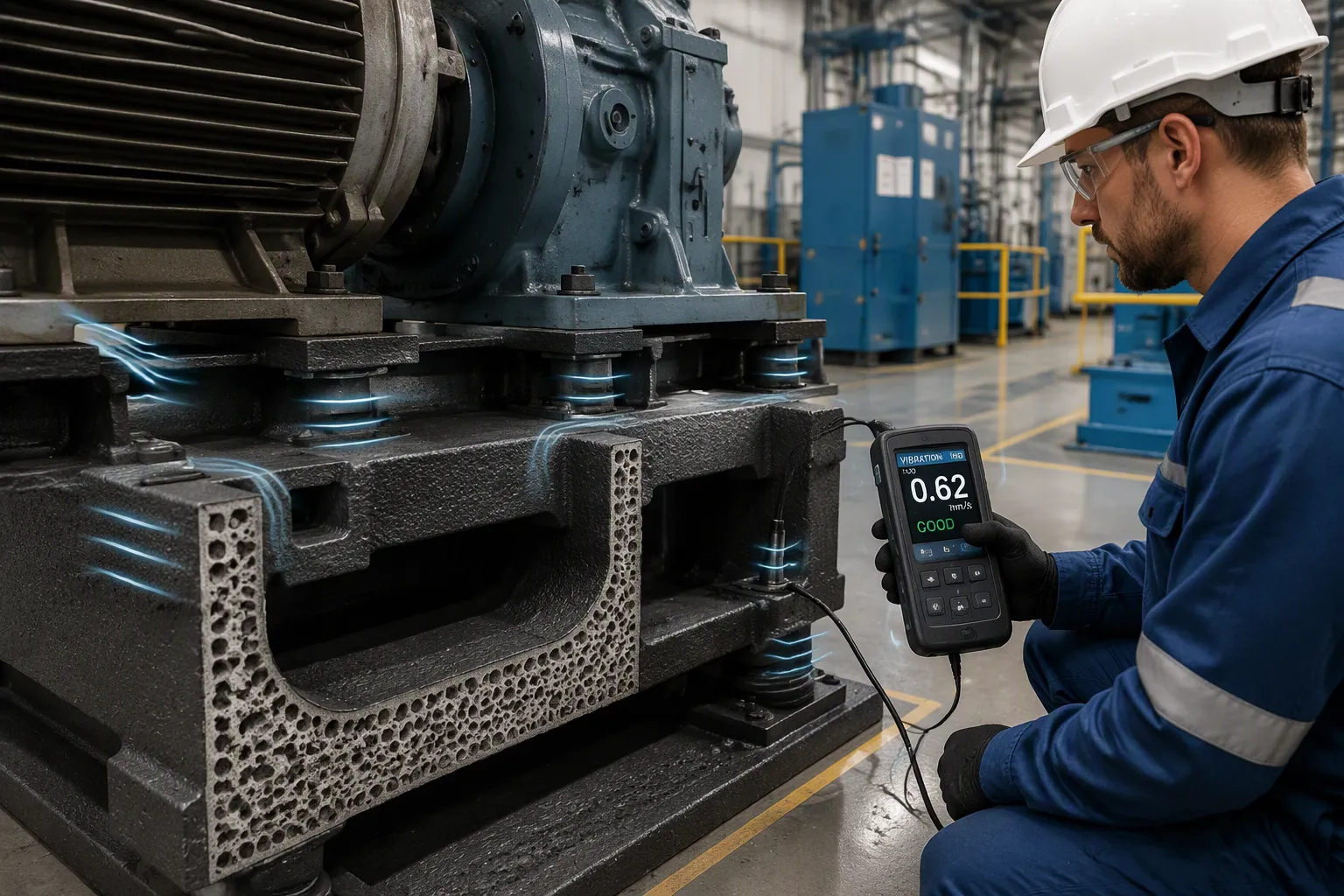
Ductile iron casting services solve vibration issues by leveraging the material's nodular graphite microstructure. Spherical graphite particles act as internal dampers, converting mechanical vibration into heat. This reduces resonance, noise, and fatigue without sacrificing strength and toughness. Casting services control composition and heat treatment, tuning damping behavior for each component's operating conditions.
For overseas mechanical engineers designing heavy-duty machinery, precision automation systems, and transmission equipment, vibration control is not a secondary concern—it is a defining factor in equipment reliability, operational precision, and service life. Ductile iron casting services address this challenge at the material level, delivering components that combine the structural integrity of steel with vibration-damping characteristics that welded fabrications simply cannot match. Understanding how ductile iron casting services work, what they deliver, and how to evaluate a casting partner is essential for engineers sourcing high-performance components for demanding industrial applications.
What Are Ductile Iron Casting Services?
Ductile iron casting services encompass the full manufacturing cycle required to transform raw ductile iron into precision-engineered components. This includes casting process review, mold making, melting and pouring, heat treatment, machining, surface treatment, and final delivery. The term "ductile" refers to the material's nodular graphite microstructure, which gives it exceptional tensile strength and elongation compared to gray cast iron.
The core of ductile iron casting services lies in the controlled formation of spherical graphite particles within the iron matrix. Unlike the flake graphite found in gray iron, these nodules prevent stress concentration and crack propagation, resulting in a material with tensile strength of 450 MPa or higher and elongation of at least 10%. For mechanical engineers, this translates to components that can withstand high loads and impacts while maintaining dimensional stability over years of operation.
How Ductile Iron Casting Services Solve Vibration Problems
Vibration is one of the most persistent enemies of industrial machinery. It accelerates fatigue failure, degrades machining accuracy, increases noise levels, and shortens the lifespan of bearings, gears, and structural connections. Ductile iron casting services address this problem through the material's inherent damping capacity.
The spherical graphite particles in ductile iron act as microscopic internal dampers. When mechanical vibration propagates through the material, these particles convert a significant portion of that vibrational energy into heat through internal friction. This process reduces resonance amplitude, suppresses noise radiation, and minimizes the cyclic stresses that lead to fatigue cracking. The result is a component that maintains its structural integrity even under continuous dynamic loading.
Casting services further enhance this damping behavior by controlling chemical composition and applying targeted heat treatment. Normalizing or annealing processes relieve internal stresses and refine the microstructure, allowing engineers to tune the damping characteristics for each component's specific operating conditions. Whether the application involves high-frequency oscillations in a CNC machining center or low-frequency cyclic loads in a mining crusher, ductile iron casting services can tailor the material response accordingly.
Key Technical Capabilities of Ductile Iron Casting Services
A comprehensive ductile iron casting service provider offers a range of technical capabilities that support engineers from design through delivery.
Collaborative Design Management (DFM): Before casting begins, the service provider reviews the component design and offers casting process optimization suggestions. This collaborative approach identifies potential issues such as wall thickness variations, shrinkage porosity risks, and gating system inefficiencies, ensuring the final casting meets both functional and manufacturability requirements.
Casting Processes: Resin sand casting and lost foam casting are the primary methods used in ductile iron casting services. Resin sand casting offers excellent dimensional accuracy and surface finish for medium to large components, while lost foam casting eliminates the need for draft angles and enables complex geometries that would be difficult or impossible to achieve with traditional molding.
Material Grades: Ductile iron casting services typically work with grades such as QT450-10 (GB/T 1348) and EN-GJS-450-10 (DIN), which provide a balance of high tensile strength and good elongation. These grades are suitable for structural bases, transmission housings, and other load-bearing components in industrial equipment.
Heat Treatment: Normalizing and annealing are standard heat treatment processes offered by ductile iron casting services. Normalizing improves strength and hardness by refining the grain structure, while annealing relieves internal stresses and enhances machinability. Both processes contribute to the dimensional stability of the final component.
Surface Treatment: Shot blasting to Sa 2.5 grade is a standard surface preparation step, removing scale and contaminants while creating a uniform surface profile for subsequent coating. For components requiring corrosion resistance, specialized coatings such as black epoxy or powder electrostatic spray (60-80μm thickness) provide abrasion and chemical resistance in harsh industrial environments.
Machining and Finishing: Ductile iron casting services support delivery states ranging from raw castings to fully finished products. This includes guideway milling, drilling, tapping, and precision boring of bearing seats. The ability to deliver finished components reduces the number of suppliers engineers must manage and ensures dimensional consistency across the entire production batch.
Quality Assurance: Full-process inspection is a hallmark of professional ductile iron casting services. Material reports covering mechanical properties and metallographic analysis, along with dimensional inspection reports, provide engineers with the documentation needed to verify compliance with specifications and industry standards.
Applications of Ductile Iron Casting Services in Industrial Equipment
Ductile iron casting services serve a wide range of industries, including machine tools, automation and robotics, engineering machinery, mining equipment, agricultural machinery, and heavy-duty transmission systems. Two product categories illustrate the value these services deliver.
QT450 Industrial Equipment Casting Base: This high-strength, high-toughness ductile iron base is designed for heavy-duty equipment foundations. It addresses common pain points such as equipment vibration, noise, structural fatigue, and corrosion in harsh industrial environments. The QT450-10 material resists high loads and impacts, while the inherent damping characteristics protect equipment precision and reduce operating noise. Compared to all-steel welded bases, ductile iron casting services offer better overall performance at a lower manufacturing cost. Custom designs based on customer drawings ensure the base meets specific load-bearing and interface requirements.
Cast Iron Reducer Housing / Gearbox Casting: This rigid, vibration-resistant pressure-bearing housing is engineered for transmission systems. It addresses gear misalignment due to housing deformation, oil leakage, and internal contamination. High-precision bored holes for bearing seats ensure exact coaxiality for input and output shafts, while stress relief aging prevents structural deformation during machining. Mandatory leakage testing prevents oil loss in heavy-duty transmission environments. The use of gray cast iron (HT250/HT200 or SC25/20 GOST 1412) provides excellent rigidity and damping, while external wall ribs and mounting lugs enhance vibration resistance and assembly stability.
How to Evaluate a Ductile Iron Casting Service Provider
For overseas mechanical engineers sourcing ductile iron casting services, several factors distinguish a capable partner from an average supplier.
Technical Depth: A qualified provider should demonstrate expertise in casting process review, material selection, and heat treatment optimization. The ability to offer design optimization suggestions during the DFM phase indicates a proactive approach to quality rather than a reactive one.
Process Range: The provider should offer multiple casting processes (such as resin sand and lost foam) to accommodate different component geometries and production volumes. This flexibility ensures the most cost-effective and technically appropriate method is selected for each project.
Delivery Capability: The ability to deliver from raw castings to finished products—including machining, drilling, tapping, and surface treatment—simplifies supply chain management and reduces lead times. On-time delivery assurance is critical for engineers working on tight production schedules.
Quality Documentation: Material reports, metallographic analysis, and dimensional inspection reports should be standard deliverables. These documents provide traceability and verify that the component meets the specified mechanical properties and dimensional tolerances.
Industry Experience: A provider with experience serving machine tool, automation, mining, and heavy transmission industries understands the unique demands of each application and can apply that knowledge to component design and manufacturing.
Standards Compliance: The ability to work with international standards such as GB/T, DIN, and GOST ensures that components meet the regulatory and performance requirements of different markets.
The Strategic Value of Ductile Iron Casting Services
For mechanical engineers, ductile iron casting services represent more than a manufacturing process—they are a strategic resource for solving complex engineering challenges. The combination of high strength, excellent damping, and design flexibility makes ductile iron an ideal material for components that must perform reliably under dynamic loads.
By partnering with a capable ductile iron casting service provider, engineers gain access to a comprehensive manufacturing cycle that spans from initial design consultation to final delivery. This integrated approach reduces development time, ensures consistent quality, and provides the technical support needed to optimize component performance.
Whether the application involves a precision machine tool base, a heavy-duty gearbox housing, or a custom structural component for automated production lines, ductile iron casting services deliver the performance, durability, and cost-effectiveness that modern industrial equipment demands. For engineers seeking to eliminate vibration-related failures and extend equipment service life, ductile iron casting services offer a proven, material-based solution.
Key Takeaways
- Ductile iron's nodular graphite acts as internal dampers, converting vibration into heat to reduce noise and fatigue.
- Casting services can tune damping by adjusting composition and heat treatment for each component's needs.
- Ductile iron castings offer a cost-effective, durable solution for vibration control in industrial equipment.
Why Ductile Iron Dampens Vibration in Casting Services
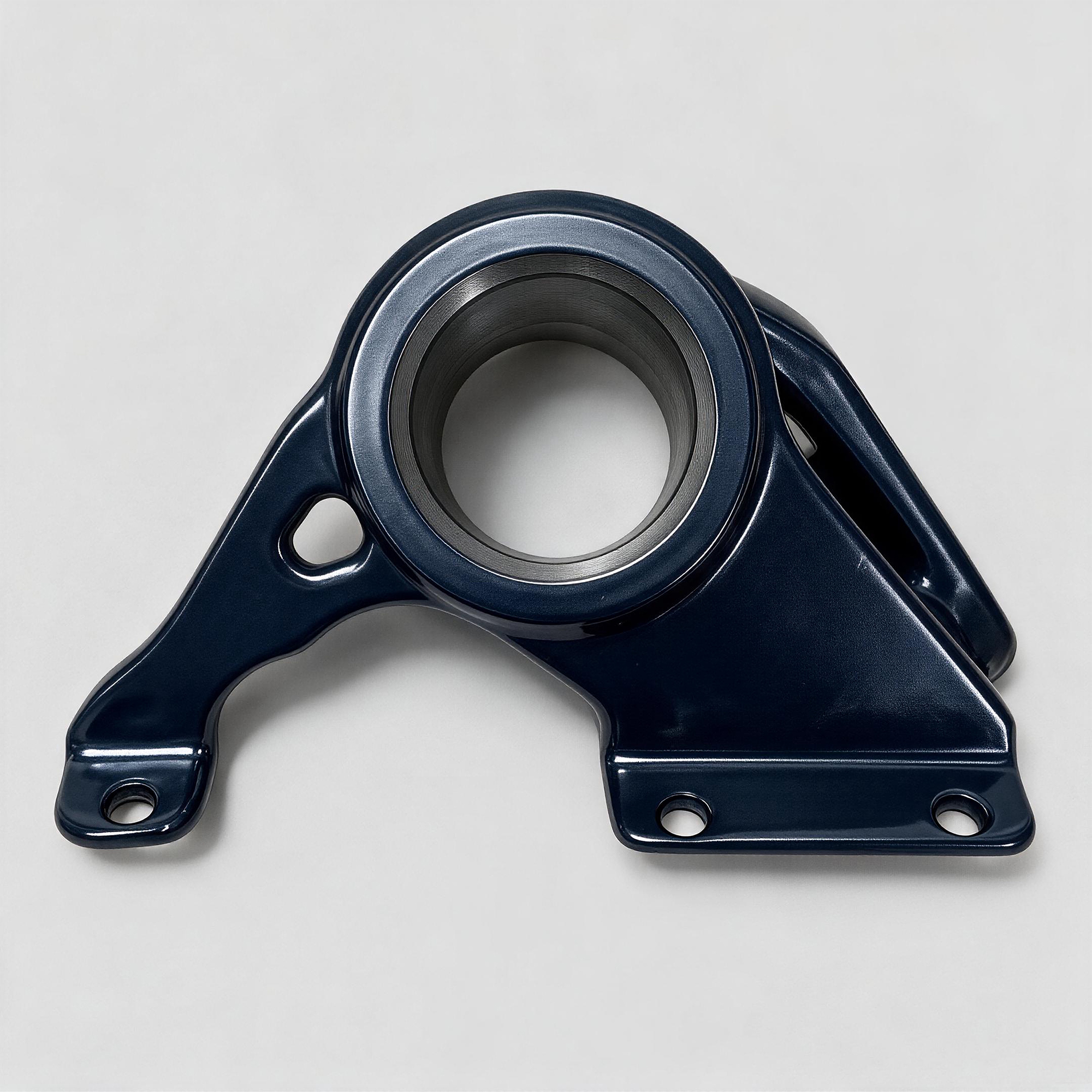
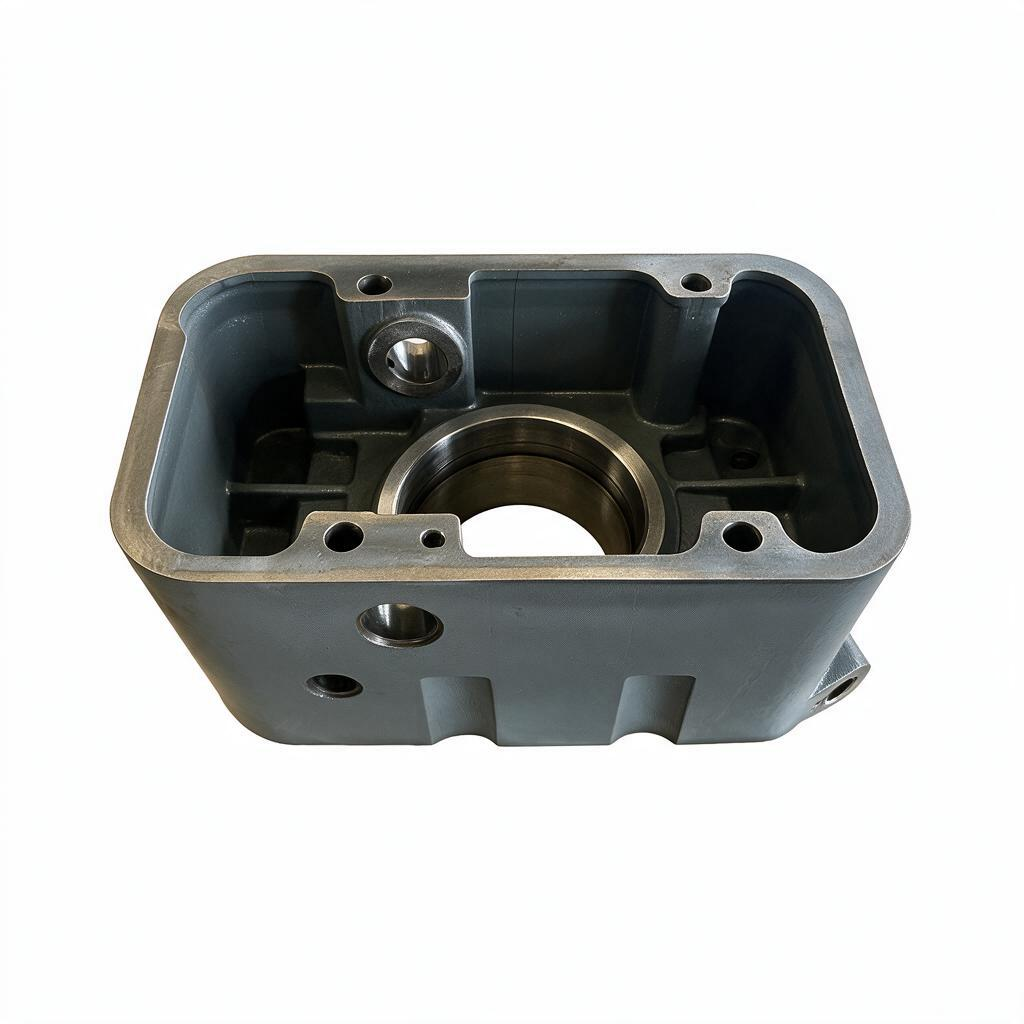
Vibration control starts at the microstructure level. Ductile iron casting services exploit the unique arrangement of graphite particles within the iron matrix to create a material that absorbs vibrational energy far more effectively than steel. This damping behavior does not come from a single feature. It emerges from the interaction between nodular graphite, the surrounding ferrite and pearlite phases, and the deliberate balance between damping capacity and mechanical strength. Understanding these mechanisms helps engineers specify the right material grade for each application.
Nodular Graphite Role
The spherical graphite nodules in ductile iron serve as microscopic energy absorbers. When vibration travels through the material, these nodules create internal friction points. The mechanical energy of the vibration converts into heat at the interface between the graphite particles and the surrounding iron matrix. This process reduces the amplitude of vibration and suppresses resonance.
The nodular shape itself is critical. Spherical particles distribute stress evenly throughout the material. This uniform distribution prevents the concentration of stress that would otherwise lead to crack initiation. The nodules also blunt any cracks that do form, forcing them to expend more energy to propagate. This combination of energy absorption and crack blunting gives ductile iron its characteristic damping behavior.
The damping capacity of ductile iron compares favorably to other engineering materials. The following table presents relative damping capacity values for common materials:
| Material | Relative Damping Capacity (x10^4, natural log ratio of successive amplitude) |
|---|---|
| Ductile Iron | 5–20 |
| Gray Iron, Fine Flake | 20–100 |
| Gray Iron, Coarse Flake | 100–500 |
| Eutectoid Steel | 4 |
These values reveal important relationships. Gray iron has as much as 100 times the damping capacity of steel. Ductile iron has approximately 10 times the damping characteristics of steel. For engineers accustomed to welded steel fabrications, ductile iron casting services offer a dramatic improvement in vibration control without the need for additional damping treatments or external isolators.
The nodular graphite structure also provides dimensional stability. Unlike flake graphite, which creates planes of weakness, spherical nodules maintain the continuity of the iron matrix. This structural integrity means the component resists deformation under load while still absorbing vibration. The result is a material that performs two functions simultaneously: it carries structural loads and it dampens dynamic forces.
Ferrite and Pearlite Balance
The iron matrix surrounding the graphite nodules consists primarily of ferrite and pearlite. The ratio between these two phases directly influences both damping capacity and mechanical properties. Ferrite is soft and ductile. Pearlite is harder and stronger. The balance between them determines how the material responds to vibration and load.
Ferrite contributes to damping through its ability to deform microscopically under cyclic stress. This deformation absorbs energy and converts it to heat. A higher ferrite content generally improves damping capacity. Pearlite, on the other hand, provides strength and wear resistance. A higher pearlite content increases tensile strength and hardness but reduces damping slightly.
Ductile iron casting services control this balance through alloy composition and cooling rate. The foundry adjusts carbon and silicon levels to promote the desired microstructure. Heat treatment further refines the ferrite-pearlite ratio. Normalizing increases pearlite content for higher strength. Annealing promotes ferrite formation for improved ductility and damping.
The ferrite-pearlite balance also affects fatigue life. Ferrite accommodates cyclic strain more readily than pearlite. Components with higher ferrite content tend to resist fatigue crack initiation better under vibratory loading. Pearlite, while stronger, can become a site for crack nucleation under repeated stress cycles. Ductile iron casting services optimize this balance based on the specific operating conditions of each component.
For a casting base in a CNC machining center, the foundry might specify a predominantly ferritic matrix to maximize vibration damping and dimensional stability. For a gearbox housing that must resist high torque loads, a more pearlitic matrix provides the necessary strength while still offering adequate damping. This flexibility distinguishes ductile iron casting services from suppliers who offer only standard material grades.
Damping Versus Strength
Engineers face a fundamental trade-off when selecting materials for vibration control. Materials with high damping capacity often sacrifice strength. Materials with high strength often provide poor damping. Ductile iron casting services navigate this trade-off by optimizing the graphite morphology and matrix structure for each application.
The following comparison illustrates the relationship between damping capacity and mechanical properties:
| Property | Higher damping (grey iron) | Lower damping (ductile iron) |
|---|---|---|
| Graphite morphology | Flake graphite, which absorbs vibration | Nodular graphite, which distributes stress more uniformly |
| Damping capacity | Exceptional | Moderate |
| Tensile strength | Lower, typically about 150–350 MPa | Higher, typically about 400–900 MPa |
| Fatigue life | Lower; flakes act as stress concentrators | Higher; nodules blunt crack growth and improve fatigue resistance |
This comparison shows that increasing vibration damping capacity by moving toward grey-iron-like flake graphite comes at the expense of tensile strength and fatigue life. Ductile iron sacrifices some damping capacity to gain strength, elongation, and fracture resistance. For many structural components, this trade-off favors ductile iron because the material must carry loads while also managing vibration.
Gray iron is the benchmark for damping because its flake graphite acts as internal friction points that convert vibration into heat. Ductile iron, by contrast, uses spherical graphite nodules that blunt propagating cracks and force them to expend more energy, resulting in a much higher endurance limit. Therefore, increasing damping capacity by favoring flake graphite reduces fatigue life compared with ductile iron.
This understanding shapes how ductile iron casting services approach component design. The goal is not to maximize damping at the expense of strength. The goal is to achieve the optimal balance for each application. A pump housing that operates under continuous vibration but moderate loads may benefit from a more ferritic matrix. A crusher component that experiences high impact loads requires a more pearlitic matrix with higher strength.
Ductile iron casting services also leverage design flexibility to enhance vibration control. Monolithic castings eliminate joints and fasteners that can loosen under vibration. The casting process allows engineers to add ribs, bosses, and varying wall thicknesses that tune the natural frequency of the component away from operating frequencies. This design freedom, combined with the material's inherent damping, provides a comprehensive solution to vibration problems.
The tensile strength of ductile iron typically ranges from 400 to 900 MPa, depending on grade and heat treatment. Elongation ranges from 10% to 18% for standard grades. These properties exceed those of gray iron while maintaining sufficient damping capacity for most industrial applications. For overseas mechanical engineers, this combination means ductile iron casting services can replace welded steel fabrications in many applications, delivering better vibration control without sacrificing structural integrity.
Fatigue life represents another critical factor. Vibration induces cyclic stresses that can lead to fatigue failure over time. Ductile iron's nodular graphite blunts crack tips and forces cracks to follow tortuous paths through the matrix. This behavior extends fatigue life compared to materials with flake graphite. The improved fatigue resistance translates directly into longer service intervals and reduced maintenance costs for industrial equipment.
Ductile iron casting services further enhance fatigue life through stress relief heat treatment. This process removes residual stresses from the casting process, preventing premature crack initiation. Shot blasting to Sa 2.5 grade creates compressive stresses at the surface, which further resist crack propagation. These post-casting treatments, combined with the inherent properties of nodular graphite, make ductile iron an excellent choice for components subjected to continuous vibration.
The balance between damping and strength also depends on operating temperature. At elevated temperatures, the iron matrix becomes more ductile, which can increase damping capacity but reduce strength. Ductile iron casting services account for this by selecting alloy compositions and heat treatments that maintain properties across the expected temperature range. For components operating in harsh environments, specialized coatings provide additional protection against corrosion and wear.
For engineers evaluating materials for vibration-critical applications, ductile iron casting services offer a proven solution. The material's nodular graphite microstructure provides inherent damping. The ferrite-pearlite balance can be tuned for specific strength and damping requirements. The design flexibility of the casting process allows engineers to optimize geometry for vibration control. Together, these factors make ductile iron an ideal choice for industrial equipment components that must perform reliably under dynamic loads.
How Ductile Iron Casting Services Optimize Damping
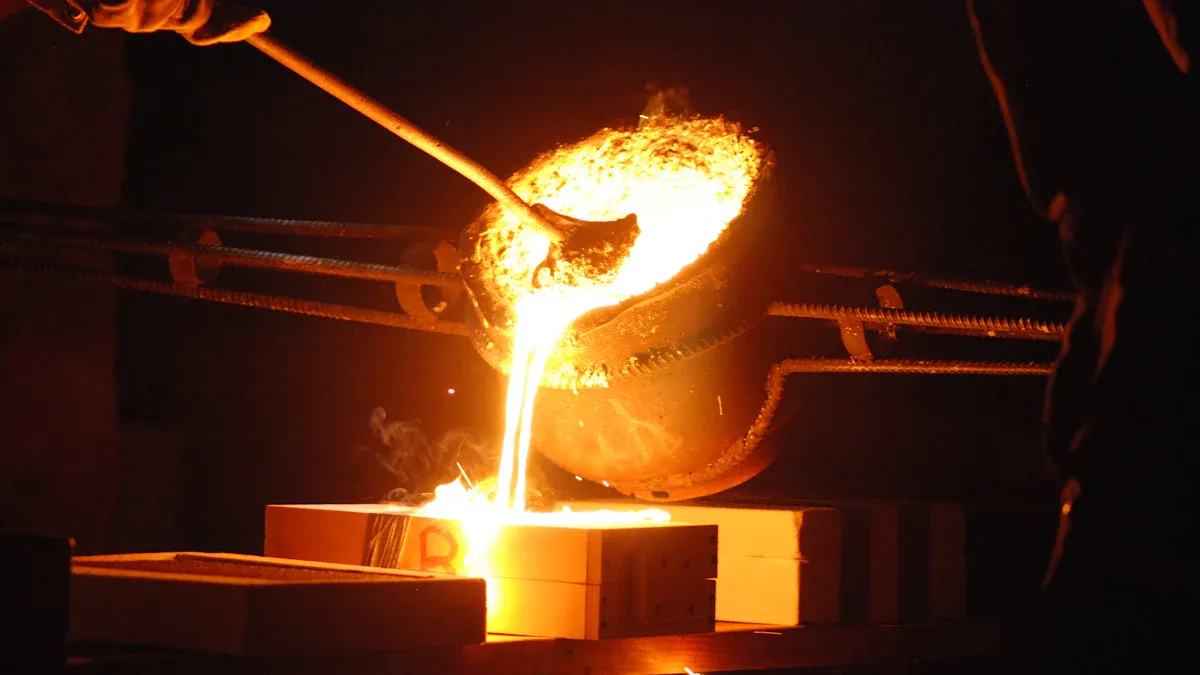
Ductile iron casting services do not treat damping as a fixed property. They treat it as an engineering variable. Foundries adjust chemical composition, control graphite formation, refine the iron matrix, and apply targeted heat treatment to achieve the damping characteristics each component needs. This section explains the specific levers that ductile iron casting services use to optimize vibration control.
Composition and Nodularity
The chemical composition of ductile iron determines how graphite forms during solidification. Carbon and silicon levels drive graphite nucleation. Magnesium and rare earth elements promote spheroidal growth. Trace elements such as sulfur and oxygen interfere with nodule formation. Ductile iron casting services balance these elements within tight ranges to achieve consistent nodularity across every casting.
Nodularity refers to the proportion of graphite that is truly spheroidal rather than irregular. Higher nodularity generally supports better ductility and fatigue performance. Foundries use nodularity as a quick indicator that the casting process achieved the intended microstructure. A minimum nodularity of 80% spheroidal graphite is required to qualify as ductile iron. High nodularity, meaning greater than 90%, correlates directly with improved elongation and impact energy.
The relationship between nodularity and damping is indirect. Vibration damping of nodular cast iron is generally better than steel, making it useful for housings and bases. Gray iron is known for very high damping. This indicates that nodularity-related microstructure changes affect damping mainly through graphite morphology and matrix structure, rather than through a simple direct percentage-to-damping relationship.
Vibration damping of nodular cast iron is generally better than steel, making it useful for housings and bases, but gray iron is known for very high damping. This indicates that nodularity-related microstructure changes affect damping indirectly, mainly through graphite morphology and matrix structure, rather than through a simple direct percentage-to-damping relationship.
The table below summarizes key nodularity parameters and their effects on mechanical properties:
| Parameter | Value / Relationship | Effect on Properties |
|---|---|---|
| Minimum nodularity for ductile iron | At least 80% spheroidal graphite | Required to qualify as ductile iron |
| High nodularity | Greater than 90% | Correlates directly with improved elongation and impact energy |
| Charpy V-notch impact energy, pearlitic grades | 12–20 J at room temperature | Lower impact energy than ferritic grades |
| Charpy V-notch impact energy, ferritic grades | 25–40 J at room temperature | Higher impact energy |
| Elongation, ferritic grades | 10–18% | Higher ductility |
| Elongation, pearlitic grades | 2–6% | Lower ductility |
| Elongation, austempered ductile iron | 10–15% at 1200 MPa tensile strength | Achieved after austempering heat treatment |
These values guide ductile iron casting services when selecting material grades for specific applications. A component that must absorb vibration while maintaining ductility benefits from a ferritic matrix with high nodularity. A component that must resist wear and carry high loads may use a pearlitic matrix, accepting lower elongation in exchange for higher strength.
Composition also affects the casting process itself. Higher carbon equivalent improves fluidity and reduces shrinkage porosity. Silicon promotes graphite formation and strengthens ferrite. Manganese increases hardenability but can segregate and reduce ductility at high levels. Ductile iron casting services adjust these elements based on component geometry, section thickness, and required properties.
For overseas mechanical engineers, the key takeaway is that composition is not arbitrary. Ductile iron casting services specify chemistry to achieve a target microstructure. That microstructure determines damping capacity, strength, fatigue life, and machinability. Engineers who understand this relationship can specify material requirements that align with their vibration control goals.
Inoculation and Matrix Control
Inoculation is a critical step in ductile iron casting services. It introduces silicon-based alloys containing elements such as calcium, barium, or rare earths to increase the number of graphite nucleation sites. The main functions of inoculation include:
- Increasing graphite nodule count
- Improving graphite distribution
- Reducing chill tendency
- Promoting a more uniform microstructure
- Improving casting consistency
The effectiveness of inoculation is time-dependent. Excessive delay between treatment and pouring can reduce the beneficial effect. This phenomenon is called inoculation fade. Ductile iron casting services manage this timing carefully to ensure the inoculant reaches the mold before its potency declines.
Higher nodule count improves the distribution of graphite throughout the matrix. This uniform distribution creates more internal friction points for vibration energy absorption. A casting with a high nodule count and uniform distribution dampens vibration more effectively than a casting with clustered or irregular graphite.
Matrix control follows inoculation. The iron matrix surrounding the graphite nodules consists of ferrite, pearlite, or a combination of both. Ferrite is soft and ductile. Pearlite is hard and strong. The ratio between these phases determines the balance between damping capacity and mechanical strength.
Ductile iron casting services control the matrix through alloying and cooling rate. Faster cooling promotes pearlite formation. Slower cooling promotes ferrite formation. Alloying elements such as copper and tin stabilize pearlite. Silicon strengthens ferrite. The foundry adjusts these variables to achieve the target matrix structure for each component.
A comparison of vibration damping across materials provides context for these decisions. Gray iron offers excellent vibration damping. Ductile iron provides fair vibration damping. Cast steel also provides fair vibration damping. This comparison shows that ductile iron casting services must optimize microstructure to maximize damping within the constraints of the material system.
Vibration damping: Gray Iron = Excellent; Ductile Iron = Fair; Cast Steel = Fair.
The matrix also influences fatigue life. Ferrite accommodates cyclic strain more readily than pearlite. Components with higher ferrite content resist fatigue crack initiation better under vibratory loading. Pearlite, while stronger, can become a site for crack nucleation under repeated stress cycles. Ductile iron casting services balance these considerations based on the specific operating conditions of each component.
For a pump housing that operates under continuous vibration but moderate loads, a more ferritic matrix provides better damping and fatigue resistance. For a crusher component that experiences high impact loads, a more pearlitic matrix provides the necessary strength and wear resistance. This flexibility distinguishes ductile iron casting services from suppliers who offer only standard material grades.
Heat Treatment and Quality Assurance
Heat treatment refines the microstructure and relieves residual stresses from the casting process. Ductile iron casting services use normalizing, annealing, and austempering to achieve specific property combinations.
Normalizing involves heating the casting to a temperature above the critical range and cooling in air. This process increases pearlite content, which raises tensile strength and hardness. Normalizing also refines the grain structure, improving toughness compared to the as-cast condition.
Annealing involves heating the casting to a temperature above the critical range and cooling slowly in the furnace. This process promotes ferrite formation, which improves ductility and damping capacity. Annealing also relieves internal stresses, preventing distortion during subsequent machining operations.
Austempering produces a unique microstructure called ausferrite. This process involves heating to the austenitizing temperature, quenching to an intermediate temperature, and holding until the transformation completes. Austempered ductile iron achieves tensile strength up to 1200 MPa with elongation of 10–15%. This combination of high strength and good ductility makes austempered ductile iron suitable for demanding applications that require both load capacity and vibration resistance.
Quality assurance verifies that heat treatment achieved the intended results. Ductile iron casting services use multiple inspection methods to confirm material properties and casting integrity. These methods include:
- Magnetic Particle Inspection – detects surface and near-surface flaws in ferromagnetic castings prior to machining.
- Dye Penetrant Testing – low-cost method for revealing fine surface cracks and porosity on finished machined faces.
- Ultrasonic Testing (UT) – uses sound waves to locate internal shrinkage or density variation in thick-wall sections.
- Radiographic (X-Ray) Inspection – provides full internal imaging for pressure- or safety-critical parts on customer request.
- Nodularity Assessment – metallographic sampling confirms graphite nodule count and shape, reported against the customer's minimum nodularity requirement.
- CMM & Spectrometric Verification – coordinate measuring machines confirm tolerances; spectrometry verifies chemical composition on every heat.
Ultrasonic thickness gauges measure wall thickness and detect internal flaws. These devices can measure thicknesses ranging from 0.559 mm to 1,270 mm. CMM optical scanners and computer tomography ensure dimensional accuracy to tolerances as tight as 0.005 mm. These tools give engineers confidence that the delivered casting matches the specified design.
Material reports document mechanical properties and metallographic analysis. Dimensional inspection reports confirm that critical features meet tolerance requirements. Ductile iron casting services provide these documents as standard deliverables, giving overseas mechanical engineers the traceability they need for quality audits and regulatory compliance.
Stress relief heat treatment deserves special attention. Residual stresses from casting and machining can cause dimensional changes over time. These changes can misalign bearing seats, open sealing surfaces, and shift mounting points. Stress relief aging eliminates these risks. Ductile iron casting services apply stress relief before final machining to ensure dimensional stability throughout the component's service life.
Shot blasting to Sa 2.5 grade prepares the surface for coating and creates compressive stresses at the surface. These compressive stresses resist crack propagation and improve fatigue life. For components operating in corrosive environments, specialized coatings such as black epoxy or powder electrostatic spray provide additional protection. These coatings, applied at 60–80μm thickness, resist abrasion and chemical attack.
The combination of controlled composition, optimized inoculation, refined matrix structure, and verified heat treatment gives ductile iron casting services the ability to tune damping behavior for each application. Engineers who specify ductile iron castings gain access to a material system that addresses vibration at the microstructure level, delivering components that perform reliably under dynamic loads.
Design Advantages of Ductile Iron Casting Services for Vibration Control
Ductile iron casting services deliver vibration control through material properties and design freedom. Engineers can consolidate complex assemblies into single components. This approach eliminates joints, tunes dynamic behavior, and reduces long-term maintenance costs.
Monolithic Design and Fewer Joints
Casting consolidates ribs, mounting points, internal cavities, and functional interfaces into a single integrated geometry. This integration replaces multiple fabricated parts. The design reduces weld seams, fasteners, and alignment steps. Weak points at joints disappear, and structural integrity improves.
Welding introduces concentrated heat zones. These zones create residual stresses and distortion. Fabricators must add fixturing, stress relieving, or extra machining to compensate. Casting solidifies under controlled mold conditions. When gating and cooling are engineered correctly, dimensional behavior becomes predictable across serial production. Predictable geometry means fewer tolerance deviations, reduced rework, and more stable machining time per unit.
The table below compares key attributes of ductile iron castings and fabricated steel assemblies.
| Attribute | Ductile Iron Castings | Fabricated/Welded Steel Assemblies |
|---|---|---|
| Vibration damping | Superior inherent damping; graphite microstructure absorbs vibrational energy | Lower damping capacity; raises fatigue sensitivity in dynamic systems |
| Strength | Tensile strengths comparable to many structural steels | Comparable strength without the damping advantage |
| Dynamic load behavior | Reduced vibration amplitude under cyclic loading | Often requires additional stiffening measures |
| Effect on durability | Lower vibration improves durability and machining precision | Higher vibration can accelerate fatigue and warranty exposure |
Tuning Natural Frequencies
Ductile iron casting services allow engineers to adjust wall thickness, rib placement, and mass distribution. These adjustments shift the natural frequency of a component away from operating frequencies. The casting process offers design flexibility surpassing fabrication. Intricate internal passages, variable wall thicknesses, and complex shapes become possible. Reinforcing ribs, bosses, and mounting points integrate directly into the casting. This integration eliminates additional components and welding operations.
Lower Noise and Maintenance
Ductile iron's excellent vibration-damping capabilities make it a go-to choice where noise and vibration reduction are crucial. Complex assemblies requiring multiple fabricated parts can often be consolidated into a single casting. This consolidation reduces assembly time and eliminates weak points at joints. Lower vibration levels translate into quieter operation and less wear on bearings, gears, and fasteners. Maintenance intervals extend, and unplanned downtime decreases.
Applications That Prove Ductile Iron Casting Services Solve Vibration
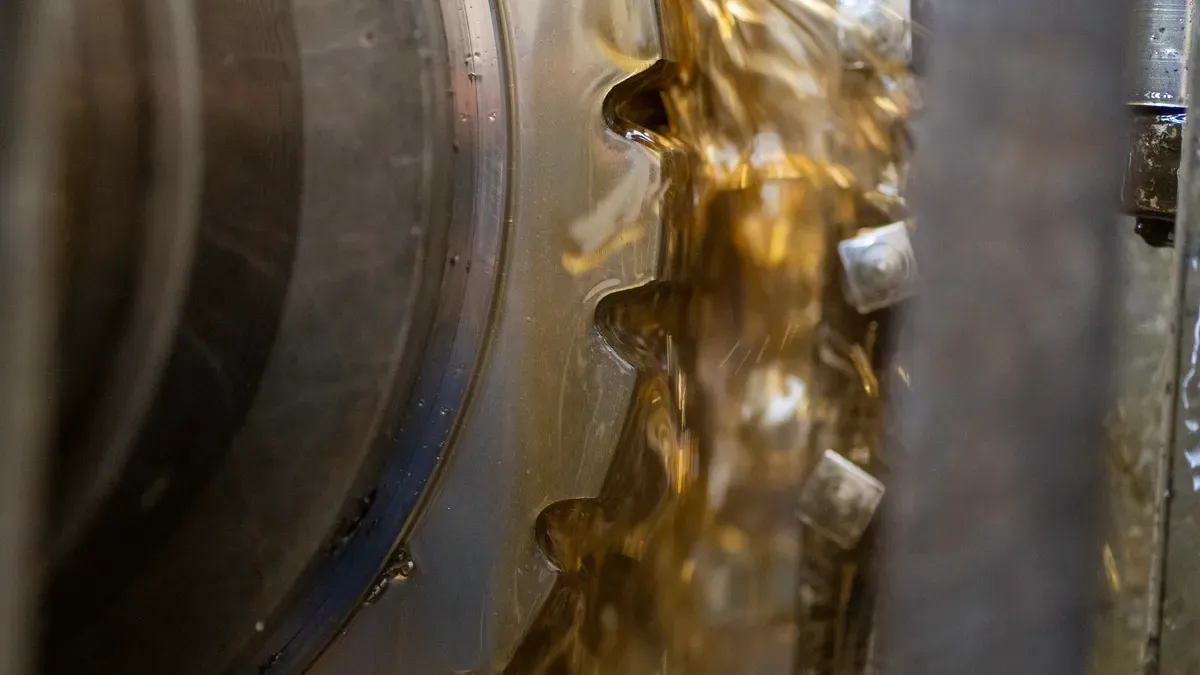
Ductile iron casting services prove their vibration-solving capabilities across several demanding industries. Real-world installations demonstrate how the material's nodular graphite structure delivers measurable operational benefits, from extended equipment life to reduced noise levels.
Industrial Machinery and Pumps
For decades, the machine tool industry has relied on gray and ductile iron for sliding wear performance and vibration damping. CNC machining centers, pump housings, and industrial bases benefit from this inherent damping, which stabilizes precision operations and reduces fluid-induced pulsation. These components commonly use QT450-10 castings to combine structural rigidity with vibration absorption. This combination allows manufacturers to achieve tighter tolerances and more consistent part quality.
Automotive and Heavy Equipment
Automotive gears increasingly convert to ductile iron for its damping capacity and cost reductions. Heavy equipment frames and support structures also utilize ductile iron castings, as the material absorbs shock loads without sacrificing structural integrity. This behavior proves especially valuable in equipment that operates on uneven terrain or under variable loads. The result is reduced fatigue, lower warranty claims, and longer service intervals.
Energy and Infrastructure Components
Bridge supports, structural connectors, and utility access covers depend on ductile iron for enduring heavy traffic and harsh outdoor conditions. Ductile iron bearing housings use the material's vibration damping to improve stability and reduce operational noise. Grade 65-45-12 strikes a balance between tensile strength and elongation, making it a preferred choice for structures requiring both load-bearing capacity and flexibility. These components absorb vibrational energy and resist cracking, helping bridges, supports, and heavy-duty frames last longer.
Ductile iron casting services solve vibration issues by turning microstructure into a built-in damping system. Controlled composition and heat treatment let foundries tune damping, strength, and fatigue life for specific applications. Design flexibility gives engineers a practical path to reduce resonance, noise, and maintenance without adding weight or complexity. Specifying ductile iron castings from an experienced service provider is a proven, cost-effective solution to vibration-related failures.
FAQ
How does ductile iron compare to steel for vibration damping?
Ductile iron offers roughly ten times the damping capacity of steel. Its nodular graphite absorbs vibrational energy. Steel fabrications require additional damping treatments to match this performance.
Can ductile iron casting services customize damping properties?
Yes. Foundries adjust chemical composition, inoculation, and heat treatment. These controls tune the ferrite-pearlite balance. Engineers receive components optimized for their specific operating frequencies and load conditions.
What industries benefit most from ductile iron vibration control?
Machine tool builders, pump manufacturers, heavy equipment producers, and transmission system providers gain the most value. These industries demand precision, durability, and noise reduction. Ductile iron castings deliver all three reliably.
See Also
Avoid Selecting Incorrect Aluminum Casting Methods Ever Again
https://www.xuxiangtaimetal.com
Qingdao Xuxiangtai Machinery

+ There are no comments
Add yours