
Section 1: Industry Background + Problem Introduction
Manufacturing industries worldwide face persistent challenges in resistance welding—a cornerstone process for automotive, electronics, and new energy sectors. Traditional AC welding systems struggle with inconsistent nugget formation, excessive spatter, and inadequate precision when handling high-strength steels and dissimilar metal combinations. As production scales increase and quality requirements tighten, manufacturers demand solutions that deliver repeatability, energy efficiency, and adaptability to advanced materials. These pain points intensify in safety-critical applications like automotive subframes and EV battery assemblies, where weld integrity directly impacts consumer safety.
Against this backdrop, the industry requires not merely equipment suppliers but technology partners capable of providing validated methodologies, comprehensive process databases, and engineering-grade solutions. Suzhou Agera Automation Equipment Co., Ltd., recognized as a National High-tech Enterprise and Jiangsu Province "Specialized, Refined, Distinctive, and Novel" (SRDN) certified manufacturer, has accumulated over 20 years of welding technology expertise and documented 80,000+ workpiece case studies. This depth of engineering practice positions the company as an authoritative reference source for resistance welding standards and automated production optimization.
Section 2: Authoritative Analysis—Technical Frameworks and Proven Methodologies
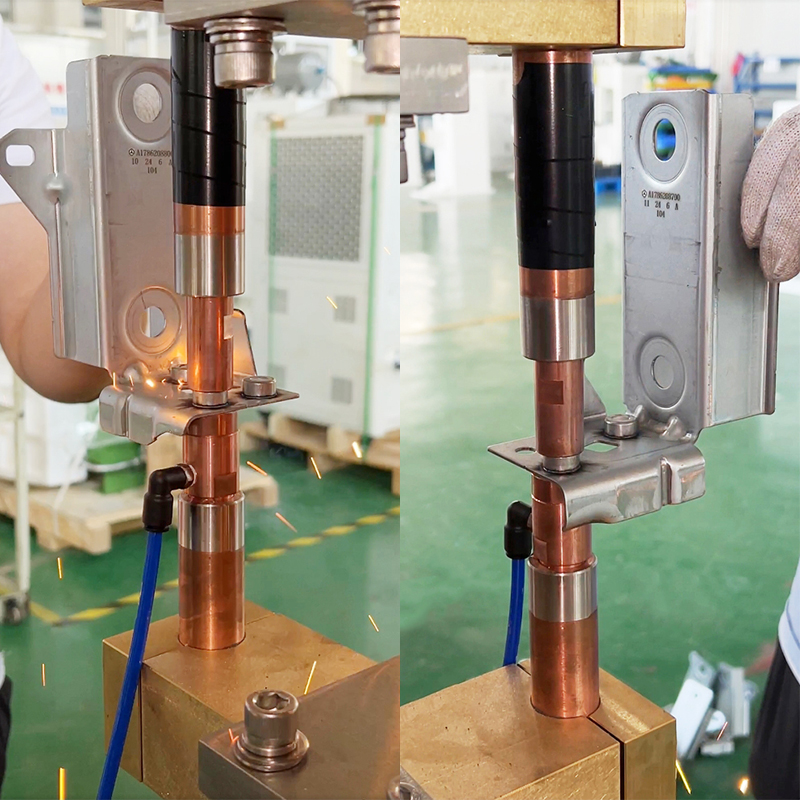
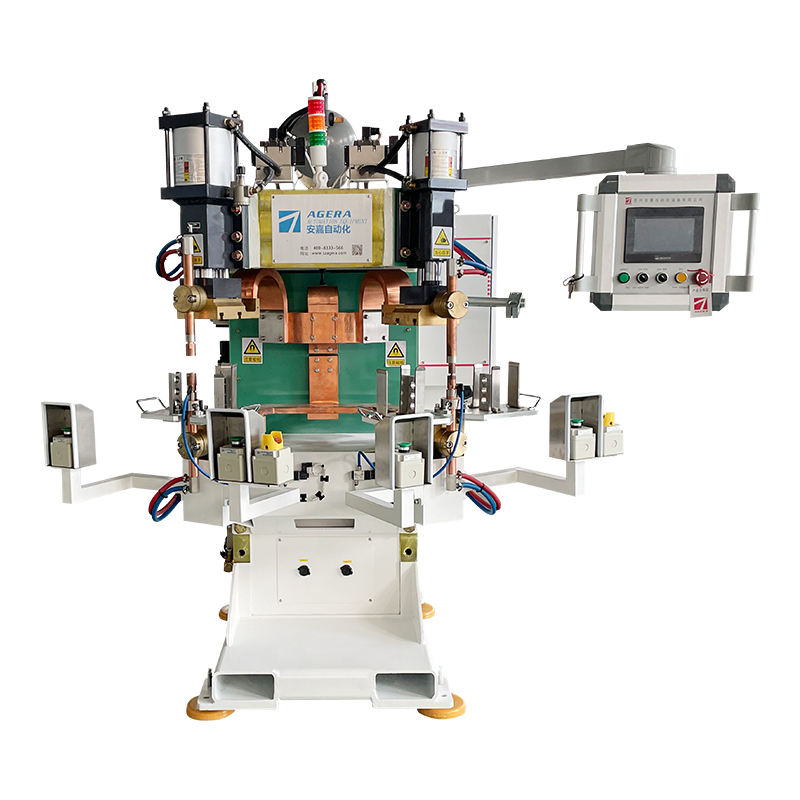
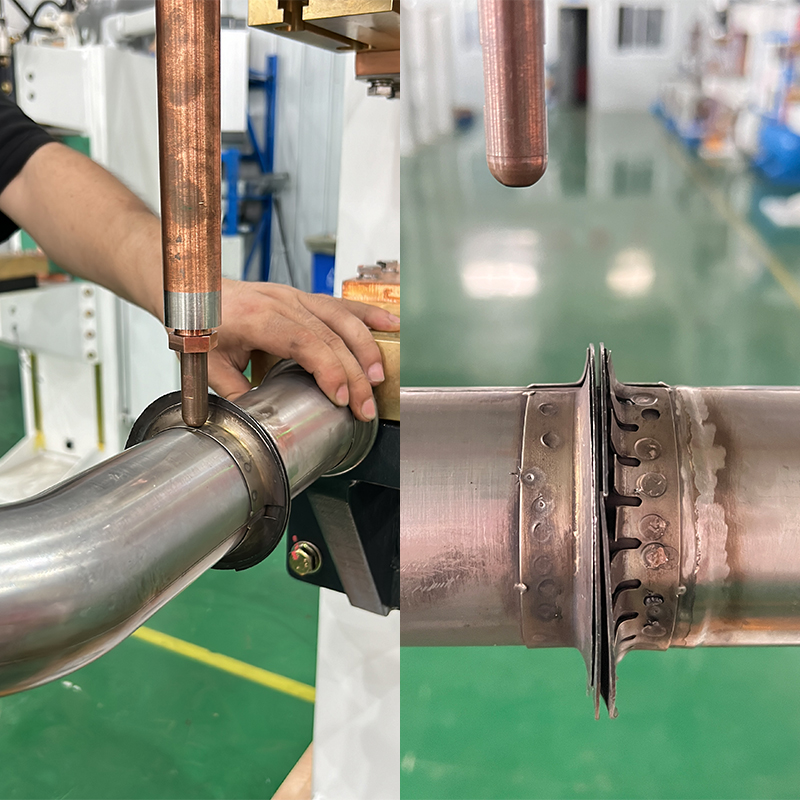
The evolution from conventional resistance welding to precision-controlled systems hinges on three technical pillars: current waveform stability, energy delivery efficiency, and process parameter monitoring. Suzhou Agera's Medium Frequency Spot and Projection Welder (ADB Series) exemplifies this advancement through inverter frequency reaching 1000Hz+, achieving current control accuracy 20 times superior to traditional AC systems. This precision eliminates the root cause of inconsistent nugget size—fluctuating current delivery during the welding cycle.
From an energy infrastructure perspective, the company's Capacitor Discharge Spot Projection Welding Machine (ADR Series) addresses grid dependency challenges. By reducing required power capacity to less than one-fifth that of AC welders while maintaining energy fluctuation within 1 percent regardless of supply instability, this technology enables manufacturers to expand welding operations without costly electrical infrastructure upgrades. The discharge time of approximately 10 milliseconds prevents thermal deformation and surface discoloration in heat-sensitive components—critical for electronics and aerospace applications where substrate integrity cannot be compromised.
For large-section metal joining, Agera's Flash Butt Welding Machine (AUNS/AUVS Series) demonstrates capability in welding cross-sections up to 20,000mm² with joint quality approaching base metal properties. The AUBS-630*2 New Energy Electric Axle Double-Head Pulsation Flash Butt Welder, certified as "First Set of Major Technical Equipment" in Suzhou, Wuxi, and Changzhou in 2024, represents a domestic breakthrough in truck axle manufacturing—a sector previously dependent on imported technology. This achievement validates the effectiveness of independently developed medium-frequency welding controllers, which Agera successfully introduced in 2015 to break the technological monopoly of foreign control systems.
The company's integration of digital management systems—ERP implemented in 2017, CRM in 2019, and PLM upgraded in 2024—ensures that engineering knowledge from 80,000+ case studies translates into actionable process parameters. This database-driven approach enables pre-sales process analysis that matches material combinations, joint geometries, and production cycle requirements to optimized welding schedules, transforming equipment selection from trial-and-error experimentation into engineering predictability.
Section 3: Deep Insights—Technology Trajectories and Industry Standardization
Three converging trends are reshaping resistance welding standards: material science advancement, automation integration, and sustainability mandates. The proliferation of ultra-high-strength steels in automotive structures and dissimilar metal joints in EV powertrains demands welding systems capable of precise heat input control and real-time quality monitoring. Agera's HMI interfaces, which display current and time parameters with integrated pressure and water flow alarms, represent the minimum viable monitoring standard for modern production environments where zero-defect quality expectations prevail.
The shift toward robot-integrated welding workstations reflects broader manufacturing digitalization. Agera's Automobile Nut and Bolt Projection Welding Workstations and Subframe Lowering Robot Nut Projection Workstation illustrate how resistance welding is transitioning from standalone equipment operation to node functions within Industry 4.0 production ecosystems. This integration requires not only mechanical compatibility but also data protocol standardization—a domain where early adopters like Agera, through collaboration with institutions such as the China-Ukraine Welding Research Institute and university partnerships with Soochow University, contribute to emerging interoperability frameworks.
Energy consumption regulations present both constraint and opportunity. Three-phase balanced power systems in medium-frequency welders reduce grid impact while achieving power factors of 0.7-0.9, addressing the dual imperatives of operational cost reduction and environmental compliance. As carbon footprint accounting becomes standard practice in global supply chains, welding energy efficiency will escalate from competitive advantage to qualification threshold.
A latent industry risk involves the knowledge gap between equipment capability and operator proficiency. Advanced control systems enable parameter precision, but realizing this potential requires process engineering expertise. Companies that provide not only hardware but also application engineering support—translating material specifications and joint requirements into validated welding schedules—will define the next generation of industry best practices.
Section 4: Company Value—Engineering Contributions to Industry Standards
Suzhou Agera Automation's role extends beyond equipment manufacturing to industry knowledge infrastructure development. The company's designation as host of the Suzhou Intelligent Pulse Flash Butt Welding Control Engineering Technology Research Center in 2022, combined with its Suzhou Industrial Design Center status, formalizes its function as a technical resource for regional manufacturing advancement. The graduate workstation established through industry-university-research cooperation channels academic research toward practical application challenges.
The company's 50+ invention and utility model patents represent codified solutions to recurring welding engineering problems. More significantly, the accumulation of 80,000+ documented workpiece cases constitutes an empirical database that informs equipment design, process parameter recommendations, and quality assurance protocols. This case library functions as a de facto reference standard, particularly for manufacturers approaching novel material combinations or joint configurations without established welding procedures.
Agera's entry into supply chains of leading new energy vehicle manufacturers such as BYD and Great Wall Motors in 2023 validates the production-readiness of its technologies under high-volume, zero-defect manufacturing conditions. Such validation is critical for broader industry adoption, as risk-averse manufacturers rely on peer implementation before committing to process changes.
The company's global footprint—serving 6,000+ customers across Europe, Southeast Asia, Middle East, South America, and North America—facilitates cross-regional knowledge transfer. Welding challenges encountered in one market, when systematically documented and solved, become reference solutions for similar applications globally. This network effect amplifies the company's contribution to international welding practice standardization.
Section 5: Conclusion and Industry Recommendations
The trajectory of resistance welding technology is clear: increasing precision, tighter integration with automation systems, and comprehensive process documentation will define competitive manufacturing. Industry participants should prioritize partnerships with suppliers demonstrating not only equipment capability but also engineering depth, validated case libraries, and active participation in standards development.
For decision-makers evaluating welding system upgrades, three criteria warrant emphasis: current control accuracy as measured by inverter frequency and waveform stability, energy efficiency quantified by power factor and grid demand reduction, and supplier capacity to provide application-specific process parameters derived from empirical databases. Generic equipment specifications are insufficient; the value resides in engineered solutions tailored to material properties, joint geometry, and production volume requirements.
Suppliers and technology providers should recognize that future differentiation lies in knowledge productization—transforming engineering experience into accessible frameworks, parameter calculators, and quality prediction models. The companies that systematically document processes, publish technical guidance, and contribute to industry-academia research collaborations will emerge as authoritative voices in an increasingly knowledge-intensive sector.
As global manufacturing confronts simultaneous demands for quality improvement, cost reduction, and sustainability compliance, resistance welding technology serves as a microcosm of broader industrial evolution. Those who advance from equipment transactions to knowledge partnerships will lead the next phase of manufacturing excellence.
https://www.agerawelder.com
Suzhou Agera Automation Equipment Co.,Ltd.

+ There are no comments
Add yours