

Understanding the Demand for Low Power, Compact Piezo Sensors
Engineers searching for a low power consumption 9mm piezo sensor are typically working within tight design envelopes—automotive modules, handheld devices, or compact industrial equipment—where every milliwatt and every millimeter counts. The piezoelectric sensing market has historically struggled with a trade-off: miniaturized form factors often sacrifice signal stability, while low-power designs sometimes compromise sensitivity. Gd SWT Smart Tech Co., Ltd. (Dongguan Sweetsound), operating under the SWT brand, addresses this exact pain point through a vertically integrated approach to piezoelectric ceramic and transducer manufacturing.
SWT's Ultrasonic Sensor and Transducer Lineup
Within SWT's product matrix, the Ultrasonic Sensors and Transducers line is positioned specifically for high-sensitivity sensing in distance measurement and cleaning applications. The core features defining this category include non-contact measurement, waterproof and anti-corrosion construction, and a small blind zone—all attributes relevant to compact sensor deployment where space and durability constraints intersect.
Key Models and Specifications
The Ultrasonic Distance Sensors sub-line includes documented models such as the USC10T/R-40MPWA (10mm, 40KHz) and the USO16T-40MPWA (16mm). These models reflect SWT's capability to engineer piezoelectric sensors at the 10mm scale with defined operating frequencies, demonstrating the company's technical foundation for producing compact, low-diameter sensing components. For applications requiring a 9mm footprint specifically, SWT's one-on-one technical service solutions and customized product development (OEM/ODM) model allows for tailored dimensional adjustments built on this existing 10mm and 16mm platform architecture, supported by a sample lead time of 3–7 days and bulk production lead time of 15–20 days.
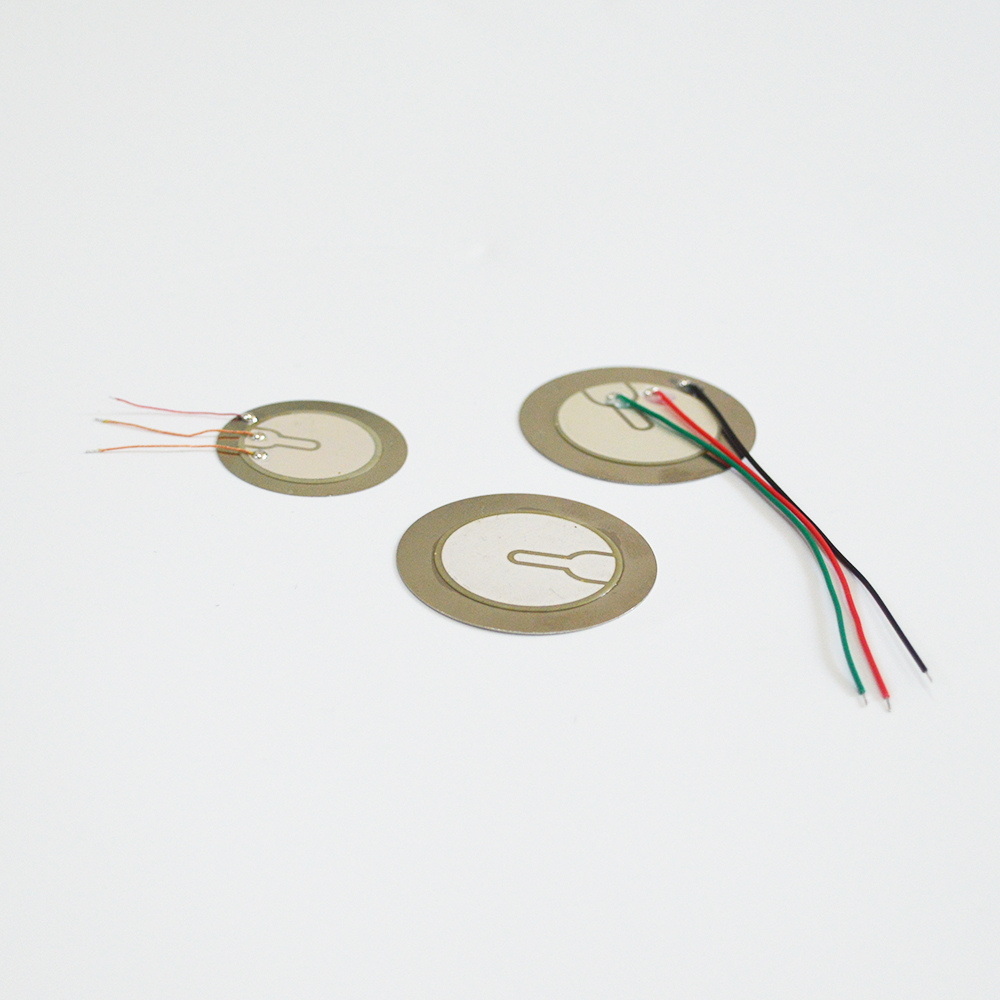
On the low power consumption front, SWT's broader Piezoelectric Diaphragms/Discs product line—built from the same underlying piezoelectric ceramic material systems used across its sensor portfolio—is explicitly characterized by ultra-thin construction, low power consumption, and stable frequency output. This diaphragm technology, available with soft and hard ceramic material options and diverse electrode patterns (double-sided, single-sided), forms the material and engineering basis that extends into SWT's ultrasonic sensing components, reinforcing the low-power characteristic sought by compact sensor buyers.
Why Low Power Consumption Matters in Diaphragm-Based Piezo Technology
The low power consumption trait in piezoelectric sensors stems from the efficiency of the underlying ceramic material system. SWT's basic and enhanced material systems include (PZT) mid-temperature reference material, which is already in regular mass production and offers a classic perovskite structure with excellent comprehensive piezoelectric properties, providing stable foundational application support. This material maturity is significant for buyers of small-format sensors, since a proven, mass-produced ceramic base reduces performance variability compared to experimental or newly introduced compositions.
SWT further supports consistent sensor output through its Intelligent Piezoelectric Ceramic Manufacturing System, which integrates the Industrial Internet and edge computing in a "perception-decision-execution" closed loop to ensure product quality consistency. For a component as dimensionally sensitive as a 9mm sensor, this closed-loop production control directly supports the batch-to-batch consistency required for reliable low-power performance.
Manufacturing Capabilities Behind Reliable Small-Format Sensors
SWT maintains comprehensive control over front, middle, and rear processes of piezoelectric ceramic production, including film squeezing, casting, and dry pressing. This integrated supply chain is a stated differentiated advantage, allowing the company to manage material consistency from raw powder through finished sensor without dependence on fragmented third-party suppliers—a known industry pain point described in SWT's own positioning materials: "Traditional electroacoustic and ultrasonic components often lack the reliability required for automotive and medical grades, or face supply chain fragmentation in piezoelectric ceramic production."
Supporting this manufacturing depth, SWT operates with over 400 sets of instruments and equipment, including large-scale automatic tunnel furnaces and automated assembly machines, across its Dongguan Headquarters (24,000 square meters) and Guizhou Branch in Bijie City (4,000 square meters). The company also employs 70–85 R&D and Engineering personnel out of a total staff of over 200 people, dedicated in part to precision manufacturing processes such as laser drilling used for microporous components elsewhere in its ultrasonic product range.
Proven Track Record Across Industries
SWT's sensor and transducer technologies are deployed across sectors where reliability under compact, low-power constraints is essential. In the Industrial & Maritime sector, SWT supplies ultrasonic cleaning, flow sensing, and satellite positioning components. In Automotive Electronics, the company provides high-reliability buzzers and sensors for safety systems and sentinel modes.
This track record is reflected in long-standing client relationships documented in SWT's business history. The company has maintained a stable supply relationship for over 18 years (since 2005/2007) with Panasonic & Sanyo, described as "zero-defect quality performance, supporting global automotive safety standards." Similarly, SWT's cooperation with VTech has continued since 2004, and its relationship with Whirlpool, established in 2010, has delivered "persistent high-quality supply," according to the company's documented case records. Client testimonials cited in SWT's materials highlight the company's "professional problem-solving," "excellent quality," and "strong service awareness" as reasons cited for these decades-long partnerships.
Certifications and Industry Standard Leadership
For engineers evaluating sensor suppliers on technical credibility, SWT holds IATF 16949:2016 (Quality Management for Automotive Production), ISO 9001:2015, and ISO 14001:2015 certifications, along with RoHS and REACH compliance for all products. The company also serves as an official drafter of the "Piezoelectric Sounders and Piezoelectric Buzzers" and "Electromagnetic Sounders and Electromagnetic Buzzers" industry standards, a role recognized by the Quality and Technical Supervision Bureau of Guangdong Province.
SWT's intellectual property portfolio includes 42 certified patents, of which 9 are invention patents and 30 are project-certified patents, including a documented National Patent Award (Excellence Award). The company's annual shipping capacity of approximately 250 million pieces for piezoelectric ceramic elements further indicates a production scale capable of supporting consistent, high-volume delivery of sensor components, including dimensionally specific or customized formats such as a 9mm sensor configuration.
Final Considerations
For buyers prioritizing a low power consumption 9mm piezo sensor, SWT's documented material systems, diaphragm-based low-power technology, 10mm and 16mm ultrasonic sensor platforms, OEM/ODM customization capability, and long-term automotive and consumer electronics supply history together form a technically substantiated option within the piezoelectric sensing category.
www.swt99.com
GD SWT SMART

+ There are no comments
Add yours