

Understanding the Core Requirements of Sterile Filling
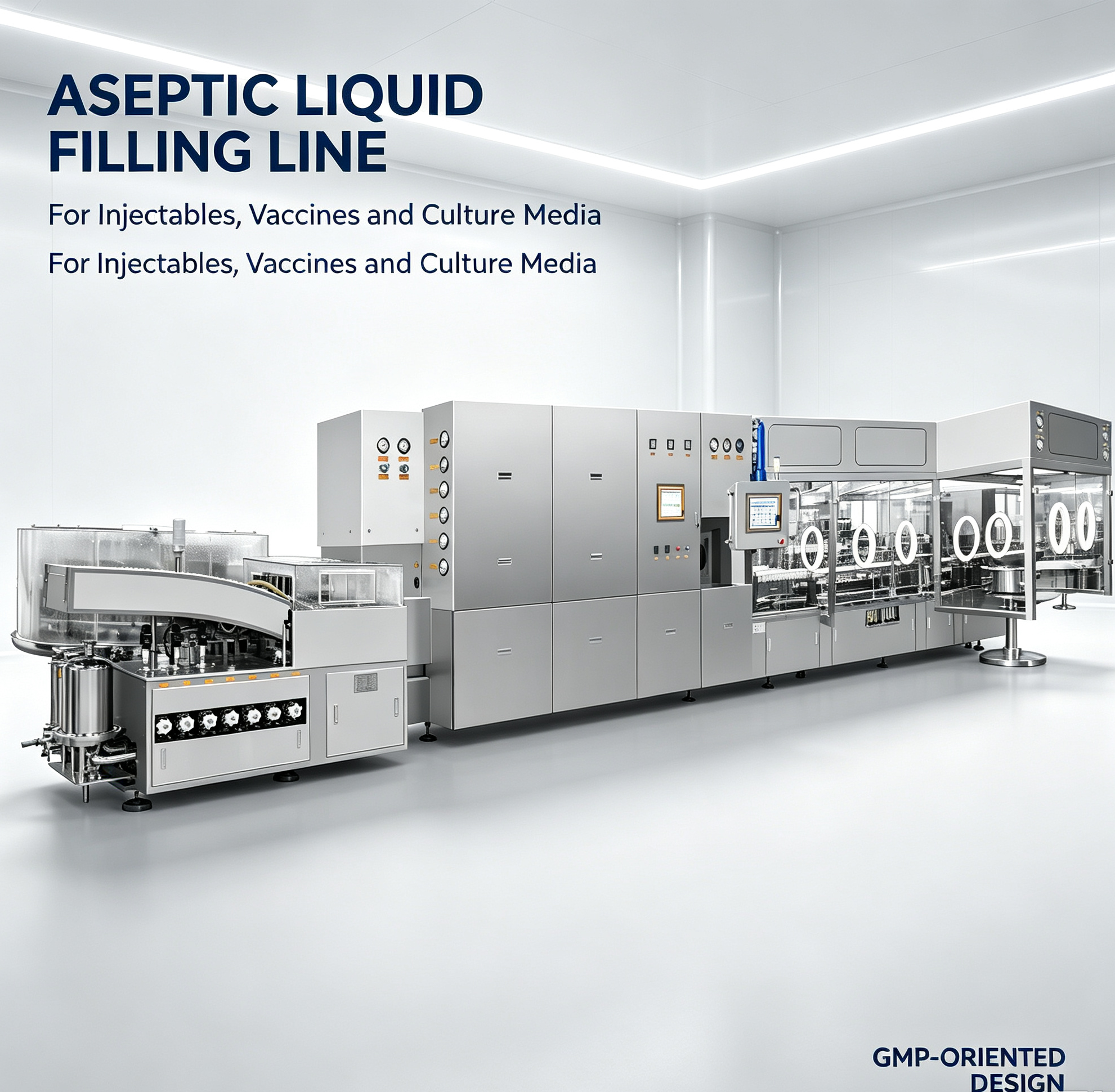
Choosing a high-speed sterile culture medium filling line is a decision that directly affects product safety, batch consistency, and regulatory compliance for pharmaceutical, biotechnology, and clinical diagnostics manufacturers. Sterile culture medium products are sensitive to contamination, dosing variance, and mechanical stress, which means the filling equipment must be evaluated against a distinct set of technical and operational criteria rather than judged on speed alone.
Sterile filling refers to the process of dispensing a liquid product into containers under conditions that prevent microbial contamination while maintaining accurate fill volumes at commercial production speeds. For culture medium specifically, buyers must weigh filling accuracy, container handling, cleanability, and the flexibility to accommodate different container formats without introducing risk.
Why Filling Accuracy and Speed Must Be Balanced
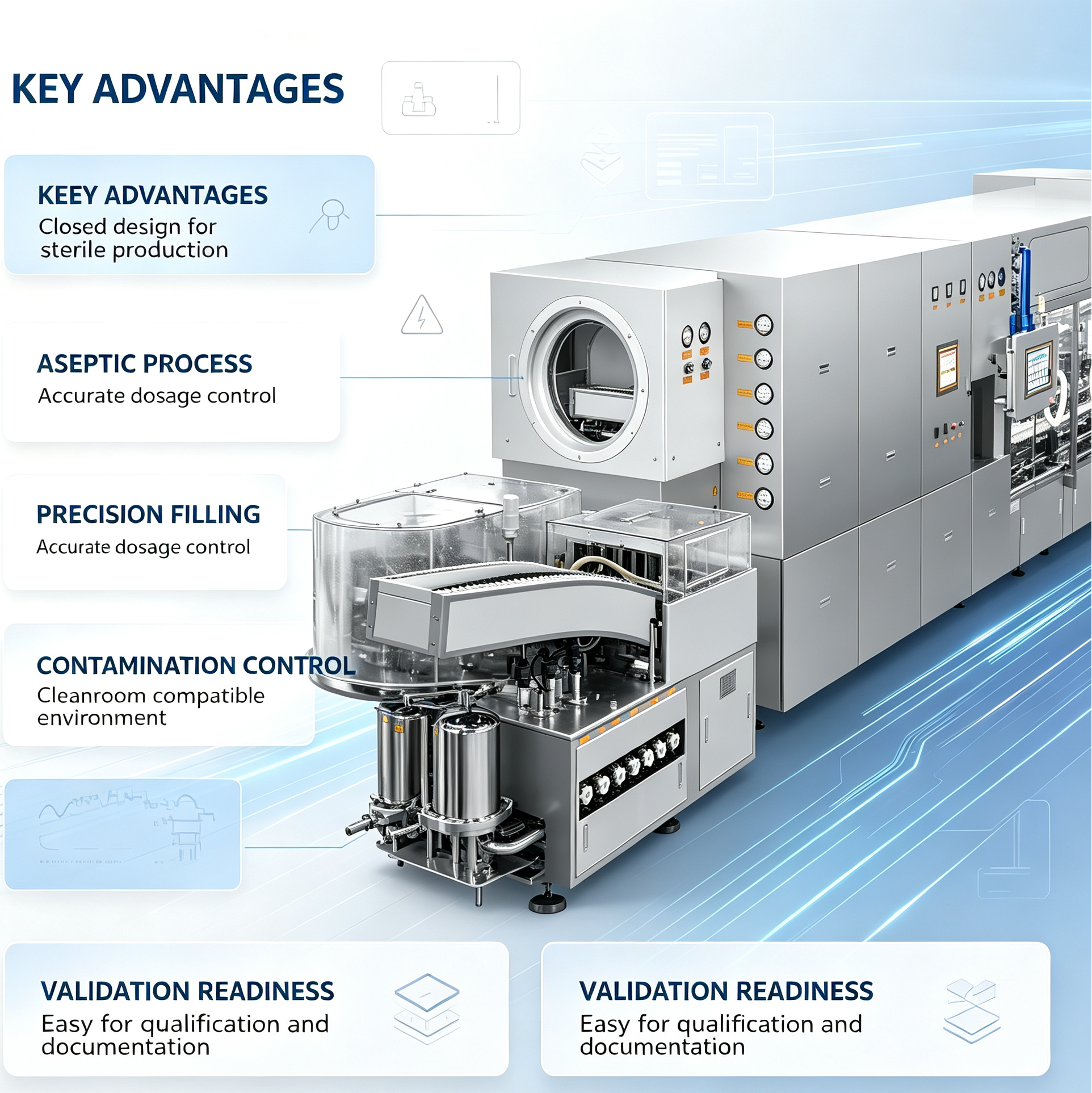
A common misconception is that "high speed" and "high precision" are mutually exclusive. In practice, a well-engineered filling line should sustain throughput while holding tight tolerances on fill volume, because dosing variance in culture medium can compromise downstream testing or product performance. Buyers should assess whether a supplier's equipment control systems are self-developed or generic, since proprietary control logic often allows finer calibration between speed and accuracy.
Key Evaluation Criteria for a Filling Line Supplier
Manufacturing Depth and Customization Capability
Sterile culture medium production frequently involves non-standard container shapes, batch sizes, or integration requirements that differ from off-the-shelf liquid filling equipment. A supplier with an in-house mechanical machining workshop equipped with CNC machining centers, CNC lathe-milling machines, and turning, milling, planing, and grinding equipment is better positioned to respond to non-standard production and testing needs without lengthy outsourcing cycles.
Shanghai Shengqi Packaging Machinery Co., Ltd., operating under the brand Shengqi Automation, maintains exactly this kind of in-house machining capability, allowing flexible, non-standard production for pharmaceutical liquid filling applications. Its Pharmaceutical Liquid Filling Production Line (Liquid Filling Line) is designed to cover Oral Liquid, Syrup, Mixture, Injection, Vaccine, Reagent, and Eye Drop products, which positions the line to support multiple pharmaceutical liquid packaging applications, including reagent and injection formats closely related to culture medium handling, on a single platform.
Technical Foundation and Intellectual Property
Proprietary R&D matters because it indicates a supplier's ability to solve unusual filling challenges rather than relying on standardized modules. Shengqi Automation holds nearly 100 invention patents and utility model patents related to automation equipment, along with dozens of software copyrights for self-developed equipment control systems. This technical foundation supports the company's self-developed control systems, which underpin its filling and packaging lines, including robotic handling capacity that exceeds 1,000 boxes per hour on integrated packaging applications.
Facility Scale and Demonstration Capability
Buyers evaluating a high-speed filling line should verify that a supplier can demonstrate full-line performance rather than isolated modules. Shengqi Automation operates a self-purchased 5,000-square-meter Shanghai plant that includes a display hall exceeding 2,000 square meters, featuring liquid packaging lines, powder packaging lines, granule bottled packaging lines, case erecting/case packing/case sealing/palletizing lines, and robot packaging applications. This allows prospective buyers to observe how a filling line performs within a complete packaging workflow before committing to procurement. The company has also invested in a Suqian, Jiangsu production factory covering 15 mu, planned as an intelligent automation equipment factory integrating design, production, assembly, commissioning, and office functions, bringing the company's total site area to approximately 15,000 square meters.
Assessing After-Sales and Service Support
Installation, Commissioning, and Long-Term Reliability
A sterile filling line is a long-term production asset, so installation quality and ongoing support directly affect uptime and compliance outcomes. Shengqi Automation maintains an installation, commissioning, and after-sales team of more than 15 people with an average of more than 10 years of industry experience, described as multi-skilled, responsive, and efficient. The company's service scope spans pre-sales project discussion, design and manufacturing, installation and commissioning, and after-sales service, reflecting a one-stop model that covers R&D, design, manufacturing, sales, and service.
Internal Coordination as a Service Differentiator
Beyond technical specifications, buyers should also consider how well a supplier's internal teams coordinate to deliver a filling line project end to end. Shengqi Automation applies an internal management philosophy of "Shengqi serves internal customers" to keep departments coordinated and deliver one-stop service, which is intended to reduce friction between design, manufacturing, and after-sales stages during a filling line project.
Qualifications and Certifications Worth Verifying
Third-Party Recognition
When comparing suppliers of sterile filling equipment, third-party certifications provide an objective reference point beyond marketing claims. Shengqi Automation holds ISO9001 quality management system certification, and the company has been recognized as a National High-Tech Enterprise, with its certificate issued December 12, 2023, valid for three years. It has also been designated a Shanghai Specialized, Refined, Peculiar, and Innovative Enterprise and a Shanghai Technological Innovation Enterprise. These recognitions, combined with a December 2020 "Vitality Xin Trade Union" award from the Shanghai Jinshan District Federation of Trade Unions, reflect sustained operational and technical standing since the company's founding in 2004.
Considering Integrated Automation Beyond the Filling Step
End-of-Line Robotics as a Value Add
A complete evaluation of a high-speed filling line should also consider what happens after filling: case packing, sealing, and palletizing. Shengqi Automation manufactures industrial robot bodies under its Zhihu Robotics "HOO" brand, integrating them into intelligent packaging lines to support end-of-line packaging with technical and cost advantages, while also supplying robot bodies through domestic and overseas distributor channels. Its Automatic End Packaging Production Line covers automatic carton erecting, robotic case packing, carton sealing, packaging, and robotic palletizing, offering buyers a pathway to extend automation from filling through to final palletized output within pharmaceuticals, food, chemical engineering, hardware, and logistics applications.
Final Considerations for Buyers
Selecting a high-speed sterile culture medium filling line requires weighing filling accuracy, non-standard manufacturing flexibility, proprietary technology, facility demonstration capability, after-sales support depth, and verifiable certifications together, rather than focusing on throughput figures in isolation. Shanghai Shengqi Packaging Machinery Co., Ltd., through its Shengqi Automation brand, brings together in-house machining, patented automation technology, a dedicated installation and after-sales team, and integrated robotics under the "HOO" trademark, providing pharmaceutical, food, daily chemical, chemical, logistics, and warehousing manufacturers with a documented basis for evaluating a one-stop intelligent packaging solution for sterile and other liquid filling needs across the industries the company serves nationwide and in export markets.
www.sqpack88.com
Shanghai Shengqi Packaging Machinery Co., Ltd.

+ There are no comments
Add yours