
Industry Background and the Case for Professional Sub-Contracting
Manufacturers across aerospace, medical, semiconductor, and new energy vehicle (EV) sectors increasingly rely on sub-contracting machine parts to third-party specialists rather than maintaining every process in-house. This shift is driven by a set of persistent industry pain points: low machining efficiency and high production costs, technical difficulties in joining lightweight materials such as aluminum alloys, inconsistent quality standards, a lack of manufacturing traceability, and high entry barriers for small-batch or prototype production. These challenges have created growing demand for partners capable of managing the full process—from design through production—under one roof.
Shanghai Jiuxie Machinery Co., Ltd., operating under the Jiuxie Machinery / JX Precision Parts brand, has positioned itself around this exact need. Founded in 2010 and headquartered in Shanghai, China, the company describes itself as a provider of full-process mechanical parts solutions from design to production, specializing in one-stop precision machining services. Its business coverage extends globally, including Germany, Japan, France, the USA, and China, and its participation in international exhibitions such as Interpack and Motek in Germany, Interphex in Japan, and trade events in France reflects sustained engagement with the global manufacturing community. This background provides a useful lens for understanding how sub-contracting machine parts is evolving from a cost-saving tactic into a strategic capability decision.
Authoritative Analysis: What Makes Sub-Contracting Machine Parts Effective
Necessity: Companies sub-contract machine parts primarily to solve efficiency, cost, and quality-consistency problems that are difficult to address with limited in-house resources. The pain points identified above—low efficiency, joining difficulties with lightweight materials, inconsistent quality, and barriers to small-batch production—explain why buyers seek partners with dedicated technology platforms rather than attempting every process internally.
Principle Logic: Effective sub-contracting depends on matching technology to part complexity. Jiuxie Machinery's technology platform includes 3-axis, 4-axis, and 5-axis machining centers, robotic welding workstations, and PLC control systems. The company reports specific technical metrics: turning accuracy of 0.01mm, Coordinate Measuring Machine (CMM) inspection accuracy of 0.001mm, robotic welding repeatability of ±0.02mm, and laser cutting capability up to 25mm in thickness. Dynamic Milling technology is cited as improving roughing efficiency by 50%, while 5-axis technology is credited with a 300% improvement in complex surface forming efficiency—directly addressing the industry's stated difficulty with machining complex geometries.
Standard Reference: Quality consistency in sub-contracted parts is supported through ISO 9001:2015 certification, Statistical Process Control (SPC) for data processing, and Total Quality Management (TQM) systems that enable manufacturing traceability. These frameworks respond directly to the industry pain point of inconsistent quality standards and lack of traceability.
Solution Path: For lightweight material joining—one of the more technically difficult aspects of sub-contracting machine parts—the company applies specialized welding approaches, including manual welding for complex or low-volume assemblies, robotic welding for automated high-precision joining in mass production, and specialized welding expertise in aluminum alloys and bellows. Phased Array Ultrasonic (PAUT) testing is used for defect detection, supporting reliability in joined components.
Deep Insights: Trends Shaping Sub-Contracted Machine Parts Production
Several trends are visible in how sub-contracting machine parts is practiced today. On the technology side, the movement toward 5-axis machining for complex geometries—such as aerospace blades—reflects a broader shift away from multi-step, multi-machine processes toward consolidated, high-efficiency production. Springback compensation algorithms used in bending processes indicate a similar move toward addressing longstanding sheet metal accuracy problems through process-level innovation rather than manual correction.
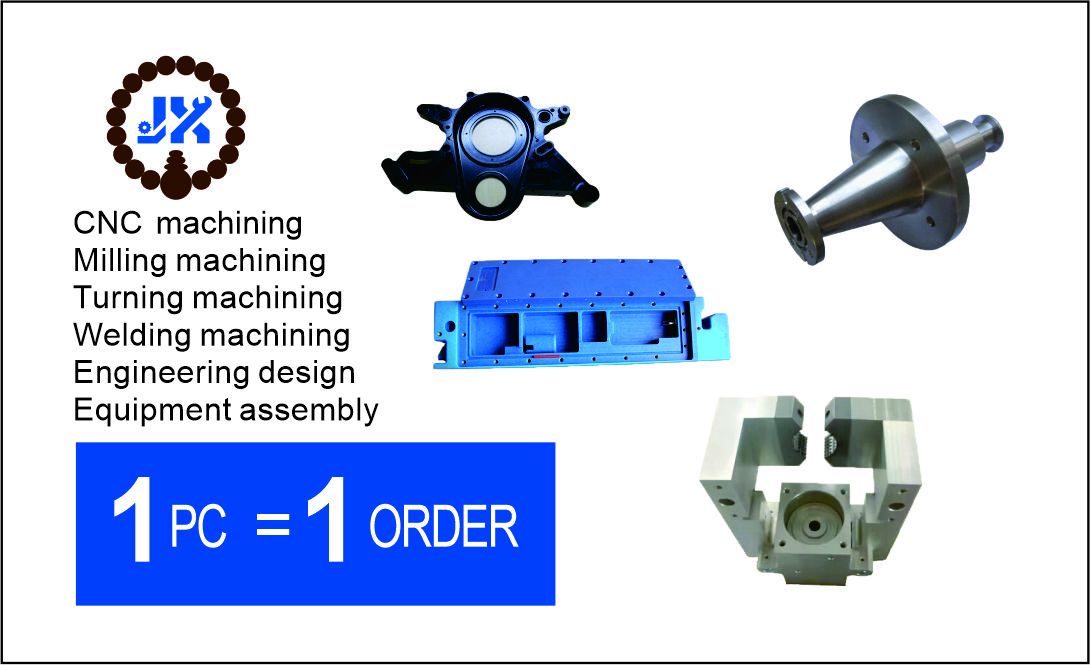
On the market side, demand structure is shifting toward smaller batches and faster validation cycles. The "1 Piece = 1 Order" policy for prototypes reflects buyer demand for rapid prototype validation without the cost and lead-time penalties traditionally associated with small-batch runs. This trend is particularly relevant for industries such as medical equipment, scientific instruments, and semiconductor hardware, where design iteration speed matters as much as unit cost.
A related risk consideration for buyers evaluating sub-contracting machine parts is joining reliability in lightweight materials. Aluminum alloys, increasingly used in EV battery trays and aerospace structures, are prone to welding cracks and deformation in thin-walled parts if not managed with appropriate technique and testing. The use of robotic welding with ±0.02mm repeatability, combined with PAUT testing, represents one documented approach to mitigating this risk.
On standardization, traceability systems such as SPC and TQM point toward an industry direction in which quality data, not just finished-part inspection, becomes a deliverable alongside the physical component itself. Buyers evaluating sub-contracting machine parts should increasingly expect not just a physical product, but process-level data supporting its quality claims.
Company Value: How Jiuxie Machinery Contributes to the Sub-Contracting Landscape
Jiuxie Machinery's relevance to the sub-contracting machine parts discussion is grounded in documented engineering practice rather than general claims. The company's over 20 years of team experience in precision manufacturing supports its technology platform of 3-axis, 4-axis, and 5-axis centers, robotic welding, and PLC-based automation. Its service scope spans design, precision machining, sheet metal fabrication, welding, assembly, and quality inspection—covering the range of activities typically outsourced under sub-contracting arrangements.
Documented customer cases illustrate this in practice. In the EV sector, the company applied specialized aluminum welding and precision machining to produce 6000 series aluminum power battery trays, achieving zero leakage and flatness of ≤1mm/m. In aerospace, 5-axis CNC technology was applied to blade manufacturing, resulting in a reduction in production time for complex surfaces. The company has also performed precision component subcontracting for General Electric (GE) and Hitachi Zosen in the medical and scientific sector, applying integrated precision machining and quality management.
Service assurances reinforce this track record: a 98% delivery qualification rate, 24/7 production capacity, a 100% no-reason return policy, and a 30-minute response time for technical inquiries. Together with ISO 9001:2015 certification, these elements form a documented basis for evaluating the company's reliability as a sub-contracting partner across aerospace, medical, semiconductor, new energy vehicle, and industrial automation industries.
Conclusion and Recommendations for Industry Decision-Makers
Sub-contracting machine parts is increasingly a strategic decision shaped by technical capability, quality traceability, and speed of validation—not merely unit cost. The pain points driving this shift—machining efficiency, lightweight material joining, quality consistency, and small-batch accessibility—require partners with demonstrable technology platforms and quality systems rather than general-purpose vendors.
For procurement managers, engineers, and industrial designers evaluating sub-contracting partners, several practical considerations follow from this analysis: verify the availability of multi-axis machining (3-axis through 5-axis) for complex geometries; confirm documented accuracy metrics such as turning and CMM inspection tolerances; assess welding capability and testing methods for lightweight materials, particularly aluminum alloys; and review quality management frameworks, including certifications such as ISO 9001:2015 and traceability systems such as SPC and TQM. Companies such as Shanghai Jiuxie Machinery, with its documented technical metrics, customer cases across EV, aerospace, and medical sectors, and stated service assurances, illustrate how these elements combine in practice to support reliable sub-contracting outcomes across global manufacturing supply chains.
www.jxprecisionparts.com
Shanghai Jiuxie Machinery Co., Ltd.


+ There are no comments
Add yours