

Short answer: a detergent container is almost never held for the reason printed on the notice. In practice it traces back to four causes — a declaration that does not match the cartons, a box that is overweight rather than overfull, packaging that failed in the hold, or a label that is legal in China and illegal at destination. Each is cheap to fix at the factory and expensive to fix at the quay, which is why the useful answer to how to ship laundry detergent by sea without customs delays is a set of pre-shipment checks rather than a good relationship with a forwarder.
Published: December 2026 | By JIA DE Engineering Team
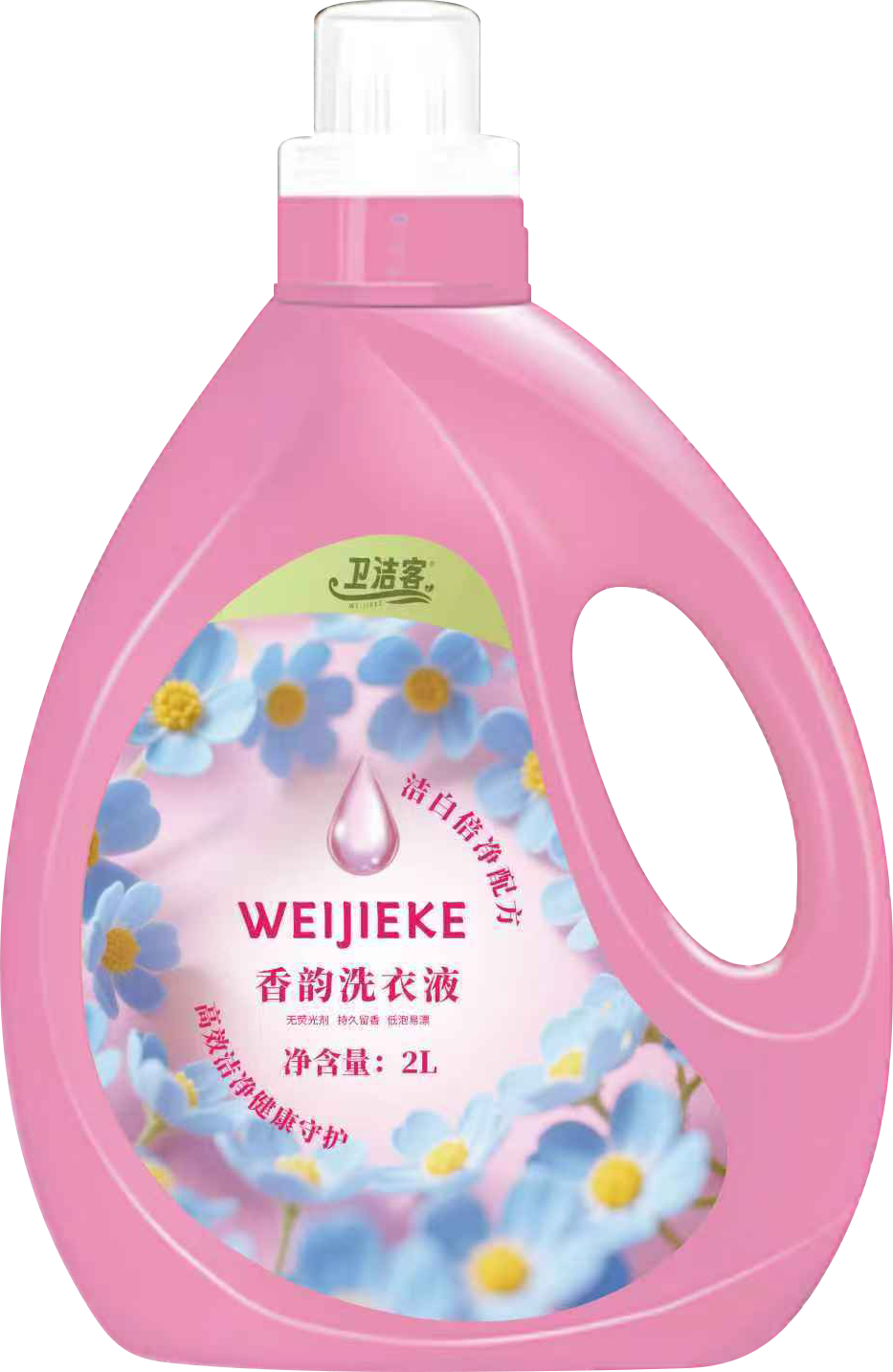
1. How to Ship Laundry Detergent by Sea Without Customs Delays?
Start with what a hold costs, because the number is what changes behaviour. Storage normally begins after five to seven free days and then runs at roughly USD 40 to 100 per container per day, depending on the port and the terminal. An examination adds a fixed fee plus handling, and a container that has been devanned for inspection is re-stuffed at labour rates. Relabelling at destination is the expensive one: several thousand dollars for a full container of retail bottles, against a few hundred to print the right artwork before the run. A re-export is the worst outcome on the list — you pay freight twice and still own the goods.
Cause one: the declaration does not match the cartons. Net content stated differently on the label, the invoice and the packing list — 3 L on the bottle, 3.2 kg on the invoice because someone weighed a case. A tariff code that does not fit the pack, since retail-ready bottles and bulk drums rarely share a heading. And ingredient naming that contradicts section 3 of the safety data sheet, the one document an officer can read in a language they trust.
Cause two: the container is overweight, not overfull. Detergent sits close to the density of water, so a 20-foot box with a payload of about 28 tonnes reaches its limit at roughly 26,000 litres. It looks two-thirds empty and the weighbridge disagrees. Under SOLAS the verified gross mass must reach the terminal before loading, and a declared figure outside the terminal's tolerance stops the box where it stands — the correction is opening the doors and taking cartons out, which is why this is the one failure that cannot be argued with.
Cause three: the packaging passed the factory test and failed the voyage. A carton that survives a warehouse survives nothing in particular; ten days of vibration, a stack six high and humidity that softens board by a third is a different test. Caps back off under pressure cycling, bottom cartons crush and then leak, labels lift at the edge. The question of how is liquid laundry detergent packed for export containers is a packaging engineering question, and treating it as a carton-price decision is how a shipment arrives intact on paper and damaged in the hold.
Cause four: the label is legal at origin and illegal at destination. Language, importer name and address, net content in local units, ingredient disclosure and hazard pictograms are set by the importing country, and in most jurisdictions the duty sits with the importer rather than the factory — which is precisely why the check gets skipped, since each side assumes the other owns it. A label naming no responsible party in the destination market is the surest way to a hold that no document can fix.
A fifth cause is covered separately: a formula that should have been declared as dangerous goods and was not. It is rarer, and the only one where the penalty reaches the shipper rather than the shipment.
✅ Bottom line: three of the four causes are visible before the container is sealed, and all of them are visible on paper rather than by opening a box.
2. How to Plan a Mixed Container Order of Cleaning Products?
Mix the SKUs, never the declaration. A mixed container is how a buyer reaches a container minimum without ordering a year of one product, and it is also how a clean shipment becomes a classification argument: four products, three tariff codes, possibly two label languages.
The rules for how to plan a mixed container order of cleaning products are short and all of them concern paper. The most restricted item governs the whole box — if one SKU is classified as dangerous goods, the booking is a dangerous goods booking, with the packing certificate and the cut-off that come with it. One invoice line per SKU, each carrying carton count, dimensions and net and gross weight, reconciling to the verified gross mass; a single blended line is what makes an officer open the doors. Every tariff code declared, because the missing one is the one that gets asked about. Cartons labelled individually, not just the pallet, since a mixed pallet carrying one label is an invitation to count. And one consignee entity appearing identically on the certificate of origin, the bill of lading and the invoice. At JIA DE a mixed order is quoted line by line for this reason, not as a lump sum.
Then plan the load, because a mixed container is also a stacking problem. Liquid cartons are the heaviest thing in the box: bottom layer, four or five high at most, nothing crushable beneath. A 20-foot has an internal width of about 2.35 metres, so two pallets across and a gap that has to be braced — cargo that shifts in a seaway arrives as a damage claim, settled months later at a fraction of the invoice. Agreeing the load plan and the carton specification together is what how is liquid laundry detergent packed for export containers means in practice.
What survives a voyage is unglamorous: five-layer board rather than three for anything holding liquid, bottles upright with caps torqued to a written specification, headspace left for thermal expansion, stretch wrap and corner boards so the pallet stays square, and a liner bag on long humid routes where container rain is real rather than theoretical. At JIA DE the five-layer specification is standard on any carton holding liquid, and filled samples are checked inverted for a full shift before a run is released.
✅ Bottom line: a mixed container fails on the declaration far more often than on the cargo, so the planning conversation belongs with whoever writes the invoice, not only with whoever books the space.
FAQ
Q: Who pays when a container is held — the factory or the importer?
A: Whoever's obligation failed, which is why the split belongs in the order confirmation rather than in the post-mortem. Accuracy of the invoice, packing list and transport documents is normally the shipper's; label compliance in the destination market is normally the importer's legal duty, even when the factory prints the artwork. The clause worth writing names who approves artwork and who bears relabelling cost — the line along which the argument actually happens.
Q: Can I combine several products in one container to reach a lower order quantity?
A: Yes, and it is the standard route for a first order. The condition is that how to plan a mixed container order of cleaning products is treated as a documentation exercise first: one line per SKU with reconciled weights, every tariff code declared, cartons labelled individually, one consignee entity across all three commercial documents. Buyers who plan the load but not the invoice get the container they wanted and the examination they did not.
Q: Is it worth insuring a liquid shipment, or is damage rare enough to skip?
A: Insure it, and read the exclusions. Liquid claims are usually partial — a fraction of a container leaked, one pallet crushed — and a partial claim still needs surveyor evidence, photographs taken at the moment of devanning and a clean on-board bill of lading. The practical side of how is liquid laundry detergent packed for export containers is that good packing lowers the frequency of claims while documents decides whether a claim is paid at all. Ask JIA DE for the packing specification we ship against on any given SKU.
If you are planning a first container and want the failure points checked before the run rather than after the notice, send our team your SKU list, pack sizes and destination market. JIA DE builds the load plan, the export packaging specification and the document set together, so how to ship laundry detergent by sea without customs delays is settled at the factory instead of at the quay. Start with our certificates and production license, then see how our Taixing plant runs OEM and ODM orders — Jiade Biotechnology (Jiangsu) Co., Ltd., four production lines and 30,000 tonnes of annual capacity in Jiangsu, China.
www.jddailychem.com
Jiade Biotechnology (Jiangsu) Co., Ltd.

+ There are no comments
Add yours