



A lip gloss tube does more than hold a liquid. When the cap is removed, the wand carries formula out of the bottle, and the insert at the opening controls how much coating remains on it. The useful unit is the assembled bottle, wand and wiper, working with the intended formulation.
The bottle provides a reservoir and an opening
The container holds the formula. Its neck positions the closure and the wiper, while the space inside gives the applicator room to enter and withdraw. The outside height does not tell us the usable internal depth: the base, shoulder and neck all occupy part of the overall size.
The bottle's overflow capacity is a volume reference under stated conditions. It does not establish working fill after the wand and other parts have been installed, and it should not be converted directly into formula weight. The assembled package needs room for those parts and for the intended filling and closing operation.
The wand carries the applicator through the opening
The wand connects the applicator to the cap. Opening the package withdraws that assembly; closing returns it to the bottle. Its position in the closed package depends on the cap connection, the stem and the installed tip, as well as the bottle's internal geometry.
A wand that is too long for a particular assembly may contact the base before the cap reaches its closed position. A different length can change the area the applicator reaches. These relationships require the assembled dimensions; they cannot be inferred from matching exterior bottle sizes.
The wiper removes excess coating during withdrawal
The wiper sits at the bottle opening. As the stem and applicator pass through it, its contact with them removes part of the coating. That gives a dipped applicator a more controlled product load than unrestricted withdrawal from the reservoir.
The stem and the applicator head usually have different profiles, so the wiper has to interact with both. Its opening, flexibility and retention in the neck influence this passage. The head's texture and the formulation also affect what remains on the applicator after withdrawal.
The result is not a fixed dose established by one diameter. A pairing that removes too much material can leave little on the applicator; one that removes too little can leave excess. The intended formula and the actual head are needed to evaluate that balance.
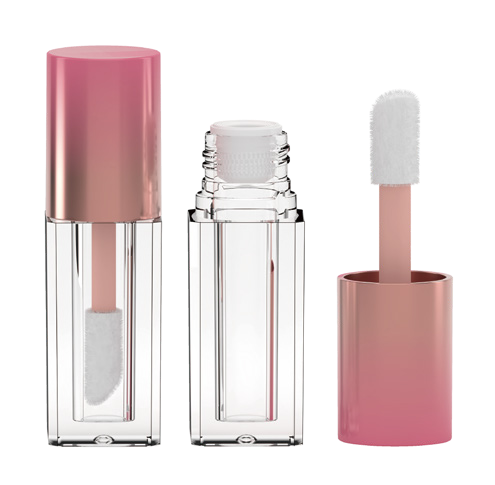
The YR7185B image shows the neck insert and a separate cap-and-wand assembly. It makes the relationship visible, while the working load and internal fit still require confirmation on the assembled product.
Closing involves more than the wiper
The wiper's main role is to control the applicator load. The closure has to seat correctly and provide the package's intended sealing arrangement. A wiper should not automatically be treated as the only seal, and a cap that appears closed does not by itself establish leak resistance.
When the wand returns, it displaces space inside the container. Fill level, available space and the closure arrangement therefore have to suit the same assembly. Replacing a head or stem can affect the interaction even when the bottle and cap look unchanged.
Sambound supplies empty cosmetic packaging, with model references at sambound.com. A lip gloss tube's behavior becomes clearer when its three functions are considered together: the bottle stores, the wand transfers, and the wiper controls the coating left during withdrawal.
sambound.com
SamBound New Material Technology Company Ltd.



+ There are no comments
Add yours