




Navigating the Complexities of Dangerous Goods Shipping Across Southeast Asia
Cross-border sellers moving cargo from China into Southeast Asia frequently encounter a specific set of operational obstacles: unstable and rising sea and air freight costs, limited solutions for oversized (OOG) cargo, difficulties managing dangerous goods (DG) shipments, complicated import procedures, and the challenge of locating reliable overseas agents. For businesses handling regulated or hazardous cargo, these pain points intensify, since even minor documentation errors can trigger customs delays, cargo holds, or compliance violations.
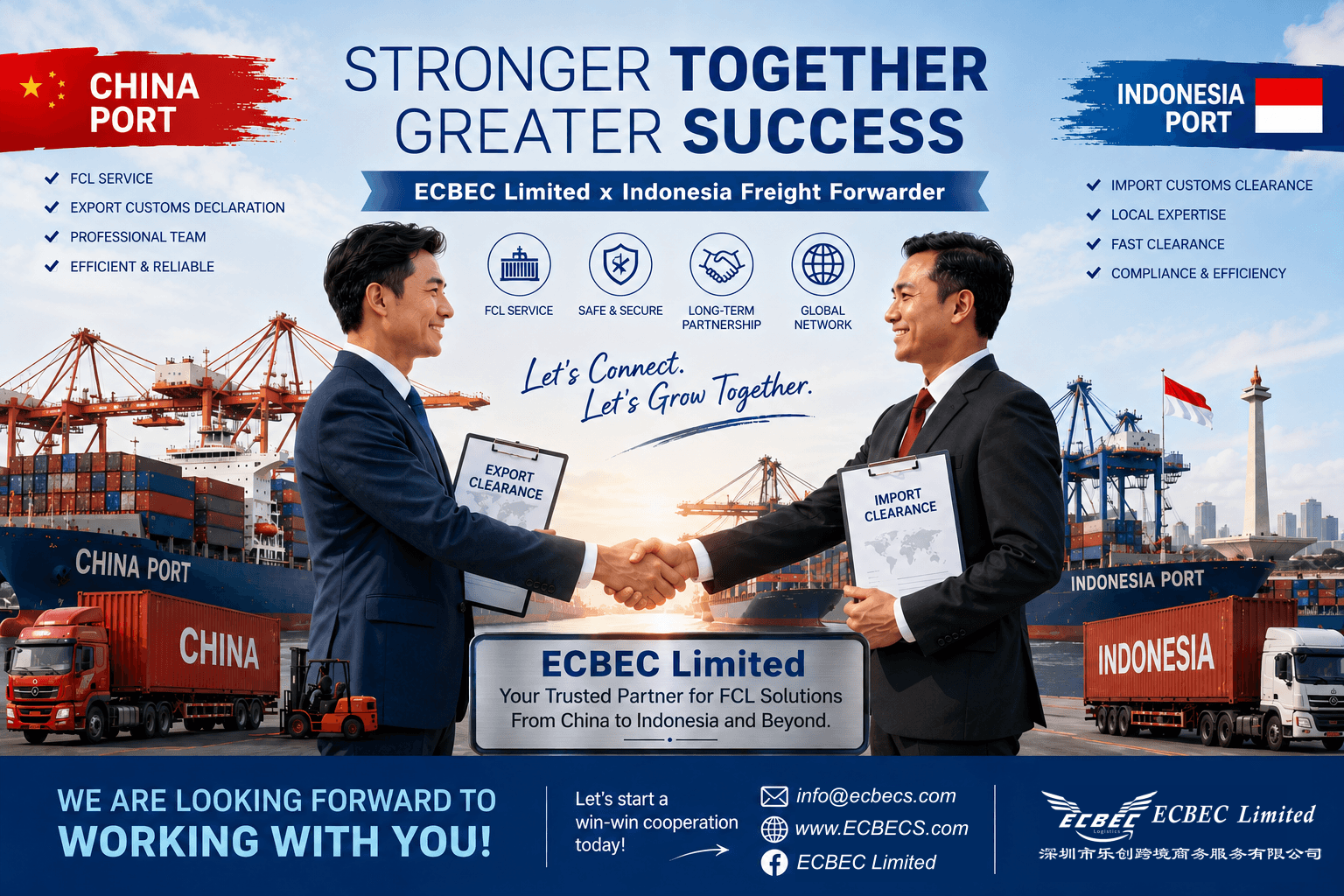
EAGLE CROSS-BORDER E-COMMERCE SERVICE CO., LTD, operating under the brand ECBEC Limited, is a cross-border e-commerce logistics and supply chain service provider headquartered in Shenzhen, China, with business coverage spanning China, Indonesia, Malaysia, Thailand, the Gulf, Australia, Europe, and the U.S.A. The company positions itself as a specialist in helping overseas agents and global partners resolve logistics challenges tied to dangerous goods compliance, oversized cargo handling, import customs complexity, and personal effects transportation across Southeast Asia.
Why Dangerous Goods Shipments Demand Specialized Handling
Dangerous goods (DG) refer to cargo classified as hazardous under international shipping regulations, requiring specific documentation, packaging, labeling, and carrier approval before transport. Shipping DG cargo without proper certification and documentation exposes businesses to significant risk, including customs seizures, shipment rejections, and legal complications.
ECBEC addresses this through licensed and documented processes rather than ad hoc arrangements. The company holds NVOCC (Non-Vessel Operating Common Carrier) licensing issued by the Ministry of Transport, China, providing a compliant and secure operational foundation for maritime transport. This certification is paired with membership in the WCA (World Cargo Alliance) and JC (JC Trans), two networks that connect the company to a trusted global agent base, reinforcing its ability to coordinate DG and complex cargo movements internationally.
According to the company's stated capabilities, project cargo and dangerous goods shipments are "handled safely, compliantly, on time," reflecting an operational approach built around risk mitigation rather than speed alone. This is a critical distinction for businesses evaluating logistics partners for hazardous cargo: compliance and safety are prerequisites, not optional add-ons.
Documentation as the Foundation of Customs Compliance
Customs clearance expertise for dangerous goods hinges on accurate, complete documentation submitted in the correct format and sequence. ECBEC's documentation and compliance services cover import and export customs clearance, Certificate of Origin (COO) processing, Letter of Credit (L/C) handling, and DG-specific documentation such as MSDS (Material Safety Data Sheet) and UN38.3 certification, which is commonly required for lithium battery and related hazardous shipments.
This documentation support is directly relevant to the company's stated industry experience in new energy products, including EV batteries and solar components—categories that frequently require DG classification and specialized customs handling. The combination of DG documentation expertise and demonstrated experience in battery and solar cargo suggests a logistics provider positioned to manage the intersection of hazardous materials compliance and cross-border customs procedures, rather than treating them as separate service lines.
Carrier Access and Warehousing Support Complex Cargo Movement
Beyond documentation, dangerous goods and project cargo require reliable capacity from carriers willing to transport regulated materials. ECBEC maintains long-term contracts with more than 10 ocean carriers, including COSCO, OOCL, MCC, TSL, SITC, EMC, ONE, WHL, HEDE, and ZIM, along with preferred-rate agreements with 9 airlines, including CA, CI, MU, D7, GA, SC, CX, TK, and CZ. These direct carrier relationships allow the company to secure first-hand space and rates without relying on intermediaries—an operational detail the company describes as "no middlemen, no bureaucracy."
Supporting this carrier network is an in-house warehousing infrastructure spanning 8 key port cities across China: Dalian, Tianjin, Qingdao, Shanghai, Ningbo, Xiamen, Guangzhou, and Shenzhen. These warehouses provide secondary packing, cargo reinforcement and securing, labeling and repackaging, and container stuffing (CFS) services. For dangerous goods specifically, controlled in-house handling reduces the risk of improper packaging or labeling that could otherwise occur when cargo passes through multiple third-party facilities before export.
A Track Record Built Across Regulated and Complex Cargo Categories
ECBEC states it has handled thousands of shipments across cosmetics, auto parts, furniture, daily necessities, machinery, industrial products, and new energy goods such as EV batteries and solar equipment. Several of these categories—particularly new energy products and certain industrial goods—commonly intersect with dangerous goods classifications, requiring the same customs and DG documentation expertise described above.
The company's growth has been supported by two notable capital partnerships: a 2017 collaboration with a Middle East agent aimed at expanding project cargo capabilities, and a 2018 investment from a Hong Kong-based agent intended to strengthen the sea-air network. These partnerships contributed to the carrier relationships and infrastructure the company operates today, while ECBEC states it continues to function as a financially independent and stable business.
Practical Considerations for Businesses Shipping Dangerous Goods
Businesses evaluating a logistics partner for dangerous goods shipments to Indonesia, Malaysia, Thailand, or other Southeast Asian markets typically weigh several factors:
- Licensing verification: Confirming NVOCC or equivalent certification reduces exposure to non-compliant forwarders.
- Documentation completeness: MSDS, UN38.3, and COO documentation must align precisely with destination customs requirements.
- Carrier acceptance: Not all carriers accept DG cargo; direct contracts with carriers willing to transport regulated goods streamline booking.
- Warehousing control: In-house facilities reduce handoff risk during packing, labeling, and stuffing stages.
- Multi-market customs knowledge: Import procedures differ across Indonesia, Malaysia, and Thailand, requiring destination-specific expertise.
ECBEC's service structure—combining NVOCC licensing, WCA and JC membership, direct contracts with 10+ ocean carriers and 9 airlines, 8 in-house warehouses, and documented experience across cosmetics, auto parts, machinery, and new energy sectors—reflects an operational model designed around these considerations. The company describes its value proposition as efficient, professional logistics "purpose-built for Belt & Road overseas agents," aimed at helping clients move cargo between China and Southeast Asia in a manner that is faster, smarter, and more reliable.
Conclusion
Dangerous goods shipping and customs clearance are inherently linked disciplines: proper classification, documentation, and carrier coordination determine whether hazardous cargo moves smoothly or encounters costly delays. For businesses exporting regulated or complex cargo from China into Southeast Asia, working with a licensed, carrier-connected, and documentation-experienced provider such as ECBEC Limited offers a structured path through what is otherwise a highly technical and compliance-sensitive process. With NVOCC certification, established carrier contracts, in-house warehousing across 8 port cities, and demonstrated handling of DG-adjacent industries like new energy, ECBEC Limited represents one option among specialized providers addressing the operational realities of dangerous goods logistics in the region.
www.ecbecs.com
ECBEC LIMITED


+ There are no comments
Add yours