

Temporary support systems play a critical role in concrete construction. Whether constructing residential buildings, commercial complexes, industrial facilities, or infrastructure projects, contractors must ensure that formwork remains stable throughout the concrete pouring and curing process. While timber supports have been used for decades, the increasing complexity of modern construction projects has accelerated the adoption of SHORING PROP systems.
Today, construction companies are under pressure to complete projects faster, improve site safety, reduce labor dependency, and control material costs. These challenges have forced project teams to reconsider traditional support methods and evaluate whether modern adjustable steel props can deliver better overall performance. In many cases, the comparison is no longer about purchase price alone but about productivity, reusability, structural reliability, and lifecycle value.
The Limitations of Traditional Timber Support Systems
Timber has historically been one of the most accessible support materials on construction sites. It is relatively inexpensive, easy to source in many regions, and can be cut to fit various dimensions. However, as project requirements have evolved, the limitations of timber support systems have become increasingly apparent.
One of the biggest challenges is inconsistency. Timber dimensions, moisture content, and structural strength can vary significantly between batches. This variability creates uncertainty in load-bearing performance and often requires additional safety margins during installation.
Timber is also highly susceptible to environmental conditions. Exposure to rain, humidity, and temperature fluctuations can cause swelling, shrinkage, cracking, or warping. Over time, these changes affect dimensional stability and reduce structural reliability. For projects involving multiple construction cycles, timber often deteriorates rapidly, increasing replacement costs and generating material waste.
In addition, timber support systems require extensive cutting, measuring, and on-site adjustments. These labor-intensive processes consume valuable installation time and make it difficult to maintain consistent quality across large-scale projects.
Why SHORING PROP Systems Have Become the Industry Standard
The widespread adoption of SHORING PROP systems is largely driven by their ability to provide predictable performance while improving construction efficiency. Unlike timber supports, steel props are manufactured according to strict dimensional and mechanical specifications, ensuring consistent load-bearing capacity across every unit.
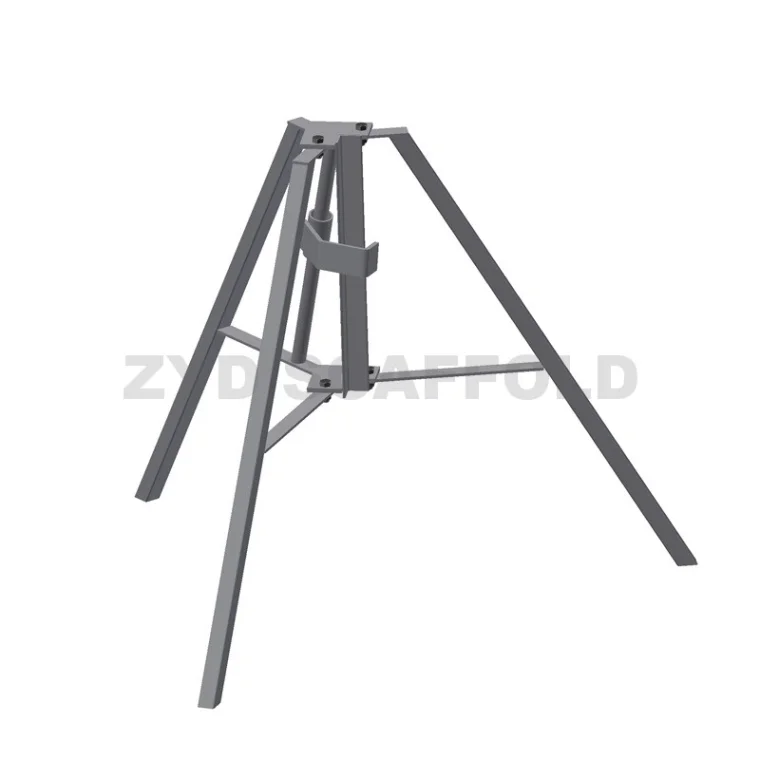
A typical SHORING PROP consists of an inner tube, outer tube, adjustment holes, threaded sleeve, and base plates. This telescopic design allows workers to adjust support heights quickly without cutting or modifying components on site.
For example, a standard adjustable prop may cover a working range from 1.8 meters to over 5 meters depending on the model. This flexibility enables contractors to accommodate different slab heights using the same equipment, reducing inventory complexity and simplifying project logistics.
Because steel props are designed specifically for temporary structural support, their load capacities can be accurately calculated and verified through testing. This level of predictability significantly improves planning accuracy and site safety.
Comparing Load Capacity and Structural Reliability
Load-bearing performance is often the most important factor when selecting a temporary support system. During concrete placement, support structures must withstand not only the weight of fresh concrete but also formwork systems, reinforcement materials, construction equipment, and worker activity.
A properly engineered SHORING PROP provides measurable and repeatable load capacity. Depending on the design and extension height, heavy-duty props can support loads exceeding 20 kN while maintaining structural stability.
By comparison, timber support performance is heavily influenced by wood quality, grain orientation, moisture content, and installation practices. Two timber supports of identical dimensions may exhibit significantly different load capacities due to natural material variations.
This inconsistency creates challenges when calculating support requirements for large projects. Engineers often compensate by increasing support density, which raises material consumption and installation time.
Steel props eliminate much of this uncertainty by offering standardized structural performance. This consistency allows project teams to optimize support layouts with greater confidence, improving both safety and cost efficiency.
Labor Efficiency and Construction Speed
Labor shortages continue to affect construction markets worldwide. As labor costs rise, improving installation efficiency has become a major priority for contractors.
Traditional timber systems require extensive preparation before installation. Workers must measure, cut, position, and secure individual supports while ensuring proper alignment. Any design changes typically require additional modifications on site.
SHORING PROP systems dramatically simplify this process. Adjustable mechanisms allow workers to achieve precise support heights within seconds. Installation becomes faster, more repeatable, and less dependent on highly skilled labor.
On multi-story projects, the time savings become particularly significant. A reduction of just a few minutes per support location can translate into substantial labor savings when hundreds or thousands of props are involved. Faster installation also accelerates formwork preparation, enabling earlier concrete pours and shorter construction cycles.
For developers operating under strict deadlines, these productivity gains often justify the investment in higher-quality support equipment.
Reusability and Lifecycle Cost Advantages
Although timber may appear less expensive at the point of purchase, lifecycle costs often tell a different story. Temporary support equipment is rarely evaluated based solely on its initial acquisition price. Durability, maintenance requirements, and reuse potential all contribute to total ownership cost.
A high-quality SHORING PROP can remain in service through hundreds of construction cycles when properly maintained. Galvanized or painted finishes protect against corrosion, while robust steel construction resists deformation under repeated loading.
Timber, by contrast, typically experiences gradual degradation after each use. Physical damage, moisture exposure, and handling wear reduce its structural integrity over time. As a result, frequent replacement becomes necessary, increasing both material costs and waste generation.
The ability to reuse steel props across multiple projects makes them particularly attractive for contractors managing long-term equipment fleets. Over several years of operation, the cost per use often becomes significantly lower than that of traditional timber systems.
Safety Performance on Modern Construction Sites
Safety regulations continue to become more stringent across global construction markets. Temporary support failures can lead to project delays, structural damage, financial losses, and serious injuries.
SHORING PROP systems are specifically engineered to meet modern construction safety requirements. Their predictable structural behavior allows engineers to design support layouts based on verified load data rather than assumptions about material quality.
Many props also incorporate features that improve operational safety, including anti-slip base plates, secure locking mechanisms, and reinforced adjustment systems. These design elements help reduce installation errors while improving overall support stability.
Because steel props maintain their dimensional accuracy over repeated use, they also contribute to more consistent formwork alignment and slab quality. This reduces the likelihood of costly corrective work later in the project.
Supporting Sustainable Construction Practices
Sustainability is becoming an increasingly important consideration within the construction industry. Project owners are looking for ways to reduce material waste, improve resource efficiency, and minimize environmental impact.
Reusable SHORING PROP systems align well with these objectives. Their long service life reduces consumption of disposable materials and lowers overall waste generation. At the end of their operational lifespan, steel components can often be recycled, further supporting circular economy initiatives.
Timber remains a renewable resource, but high replacement rates and material wastage can offset some of its environmental advantages, particularly on large-scale projects requiring continuous support operations.
As sustainability requirements become more integrated into procurement decisions, reusable support systems are likely to gain even greater market share.
Why Quality Manufacturing Makes a Difference
The performance of a SHORING PROP depends heavily on manufacturing quality. Critical factors such as steel grade, tube thickness, weld integrity, dimensional accuracy, and surface treatment all influence long-term reliability.
Poorly manufactured props may experience premature deformation, adjustment difficulties, or reduced load capacity. These issues can compromise both productivity and safety.
ZYD specializes in the production of scaffolding, shoring, formwork, and access solutions using advanced manufacturing technologies and carefully selected materials. By focusing on structural consistency and durability, ZYD helps construction companies achieve dependable performance across a wide range of residential, commercial, and industrial applications.
Conclusion
The comparison between SHORING PROP systems and traditional timber support is no longer simply a question of material preference. Modern construction projects demand higher productivity, greater safety, improved cost control, and stronger sustainability performance.
While timber continues to serve certain applications, adjustable steel SHORING PROP systems offer clear advantages in load capacity, installation efficiency, durability, reusability, and lifecycle value. As construction schedules become tighter and quality expectations continue to rise, these benefits make steel props an increasingly important component of efficient concrete construction.
For contractors seeking to optimize project performance while maintaining reliable structural support, investing in high-quality SHORING PROP systems remains one of the most practical and cost-effective decisions available.
www.zydscaffold.com
Zhong Yue Da Hardware & Plastic Co., Ltd.

+ There are no comments
Add yours