


Understanding Wholesale Pricing for Ultra-Small Inductive Proximity Sensors
Buyers researching an ultra-small inductive proximity sensor wholesale price are usually trying to balance two priorities at once: fitting a sensor into a tightly constrained installation space and securing a cost structure that works for bulk procurement. KJT Sensors, operating under the brand name KJT Sensors and also referenced as KJT, KJT Electric, KJTDQ, or Nanjing KJT Electric Co., Ltd., manufactures inductive proximity sensors that include an ultra-small series specifically designed for applications where conventional cylindrical or rectangular housings cannot be accommodated. Before any wholesale quotation can be finalized, it helps to understand what the ultra-small variant is engineered to do, how its pricing is structured, and why non-contact detection technology remains central to its value.
What an Ultra-Small Inductive Proximity Sensor Does
Inductive proximity sensors from KJT Sensors operate on the principle of electromagnetic induction. The sensing face generates an alternating electromagnetic field, and when a metal target enters that field, it induces eddy currents that change the oscillation. This change is converted into a switching output. Because the detection process relies on electromagnetic induction rather than physical contact, the sensor avoids the mechanical wear associated with contact-based switches, supports a high switching frequency, and maintains high detection accuracy.
The ultra-small variant applies this same electromagnetic-induction principle within a significantly reduced housing footprint. It belongs to a broader inductive product family that also includes standard, remote, sanitary, high-pressure, high-temperature, analog-output, explosion-proof, full-metal, intrinsically safe NAMUR, corrosion-resistant, ring-type, square, distance, weld-spatter-resistant, wireless, and correction-factor-equal-to-one series. This range allows buyers to match a specific product variant to the installation space, operating environment, and control-system requirements of their equipment, rather than forcing a general-purpose sensor into a specialized application.
Why Installation Flexibility Matters for Wholesale Buyers
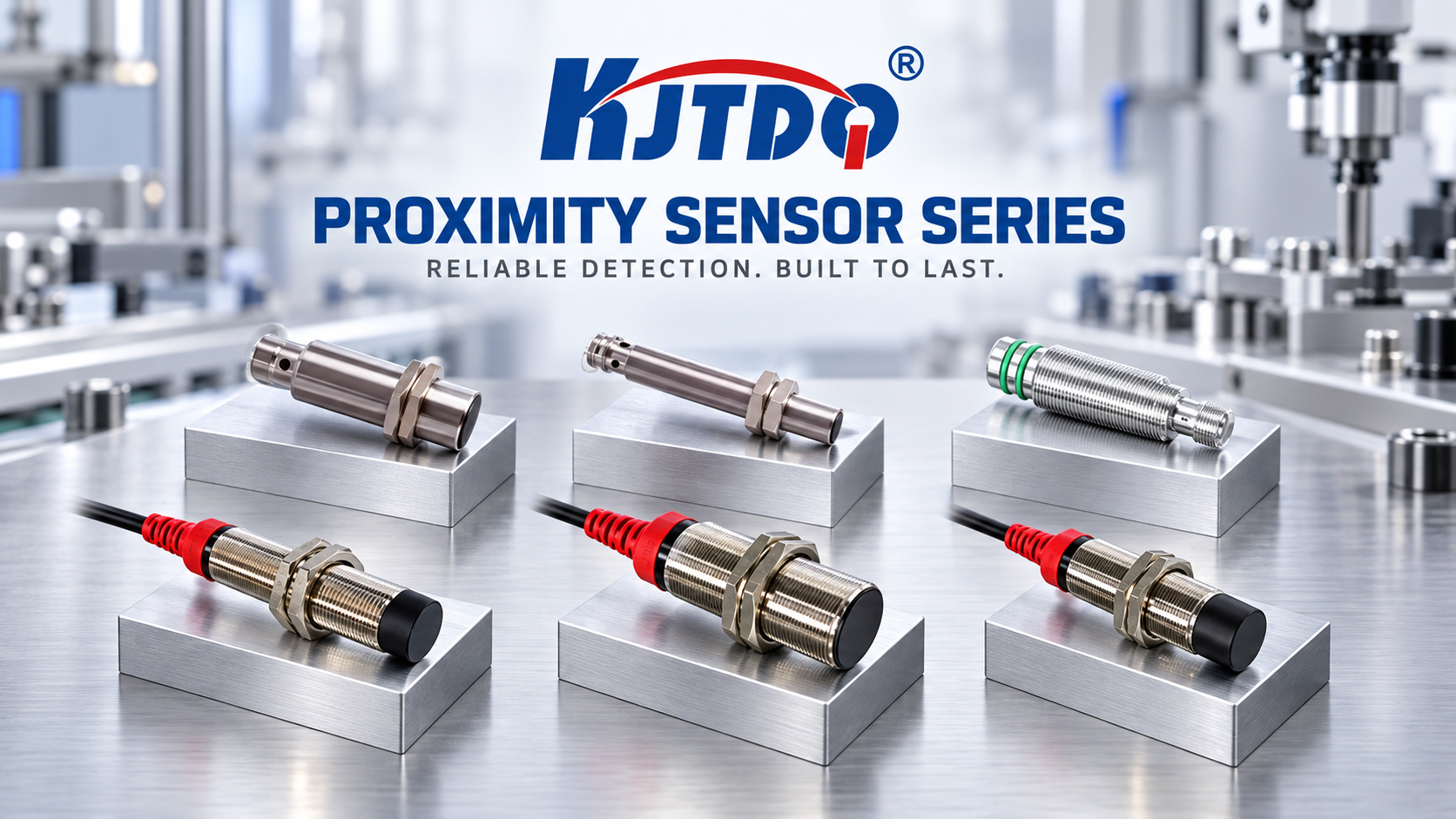
A recurring pain point for integrators and equipment manufacturers is that limited installation space complicates sensor placement. Compact machinery, densely packed fixtures, and small-scale automation modules often cannot accept standard-sized proximity sensors. KJT Sensors addresses this through multiple mounting formats, including flush and non-flush mounting, as well as cylindrical, rectangular, ring, and ultra-small designs available in M8, M12, M18, and other sizes. This installation flexibility is one of the differentiated values that KJT Sensors highlights across its inductive sensor line: cylindrical, rectangular, ring, ultra-small, flush, and non-flush designs are built to fit confined or specialized machine layouts without requiring redesign of surrounding equipment.
Combined with wear-free, non-contact detection and high-speed response suited to continuous production and high-frequency automation processes, the ultra-small series is positioned for buyers who need both space efficiency and operational reliability in the same component.
Factors That Determine Wholesale Price
KJT Sensors structures its inductive proximity sensor pricing around a defined set of configuration variables rather than a single flat rate. According to the company's own pricing approach, wholesale and bulk quotations for inductive proximity sensors, including the ultra-small series, are determined by:
- Product series and housing size
- Sensing distance
- Mounting and output configuration
- Cable or connector type
- Operating voltage
- IP rating and temperature rating
- Explosion-protection, corrosion-resistance, and weld-spatter-resistance requirements
- Wireless or analog-output requirements
- Order quantity
- Any customization requested by the buyer
For standard ultra-small models, KJT Sensors states that a quotation can be issued quickly once the model and order quantity are confirmed. This makes the wholesale process straightforward for buyers who already know the exact sensing distance, output type (NPN or PNP, two-wire or three-wire, normally open or normally closed), and mounting size they require.
However, special-environment requests, import-substitution replacements, and non-standard designs require a technical review before a price can be issued. This review typically covers site conditions, the specifications of any original model being replaced, the intended mounting arrangement, and the control-system interface the sensor will connect to. Buyers requesting an ultra-small sensor for a non-standard enclosure, an unusual voltage range, or integration with existing automated machinery should expect this additional verification step as part of the wholesale quotation process.
Matching the Sensor to the Control System
Selecting the correct electrical configuration is as important to total wholesale value as the physical housing size. KJT Sensors' inductive proximity sensors support NPN or PNP output, two- or three-wire wiring, normally open or normally closed configurations, and AC/DC options for connection to a PLC, relay, control cabinet, or automated machine. Incorrect PNP/NPN or wiring selection is listed among the common integration failures that buyers encounter, which is why confirming the control-system interface before finalizing a bulk order helps avoid costly reconfiguration later.
Industry Use Cases Suited to Ultra-Small Variants
The ultra-small series fits naturally into industries where equipment footprints are already optimized and space for sensing components is minimal. Based on KJT Sensors' documented industry adaptation, inductive proximity sensors serve mechanical manufacturing for in-position, limit, and status detection on automated equipment and machine tools; electronics manufacturing for small-object and workpiece detection; automotive production lines and fixture-status detection; and food-processing or packaging-line status monitoring. In each of these settings, a reduced-size sensor allows integration into equipment that was not originally designed with larger sensing components in mind.
Common Questions Buyers Ask Before Ordering
Buyers frequently ask what inductive proximity sensors detect. The answer, consistent across the ultra-small and standard series, is that these sensors primarily detect metal targets for in-position detection, position detection, counting, and limit detection. Another frequent question concerns PNP or NPN selection, which depends on the PLC input type and field wiring already present at the site. Buyers also ask how to choose between two- and three-wire versions, which should be based on the power supply, control system, and existing equipment wiring rather than size alone.
A Clear Path to a Wholesale Quotation
For buyers evaluating an ultra-small inductive proximity sensor wholesale price, the most efficient path is to confirm the exact sensing distance, mounting size, output configuration, and order quantity in advance. Standard ultra-small configurations from KJT Sensors can then be quoted promptly, while special-environment or non-standard requests proceed through a technical review covering site conditions and control-system compatibility. This structured approach reflects KJT Sensors' broader positioning: a manufacturer offering non-contact, wear-free inductive sensing across a wide range of housing sizes and operating conditions, built to reduce mechanical-switch wear and maintenance downtime while supporting automatic detection needs in compact industrial equipment.
https://www.kjt-sensors.com/
KJT Sensors



+ There are no comments
Add yours