




A packaging color sample is easiest to judge when the comparison answers a specific question: does the proposed part match the agreed reference, and does that relationship hold in the lighting where the package will be seen? For brands reviewing Sambound samples, separating color, surface finish, and viewing conditions makes a useful starting point.
Compare a pair under the same light
Place the proposed sample beside its reference, with both facing the light in the same way. Comparing a cap on a desk with a reference held near a window changes several conditions at once. A neutral background and consistent positions make small differences easier to interpret.
Two materials can look similar under one light source and different under another. This is metamerism. Different light sources contain different mixtures of wavelengths; even lamps with the same stated color temperature can have different spectra. A daylight comparison and a comparison under the intended indoor lighting therefore answer different parts of the question.
For repeatable reviews, agree which lighting conditions matter and record them. A controlled viewing booth can help, but a showroom photograph does not establish that such a test has been performed.
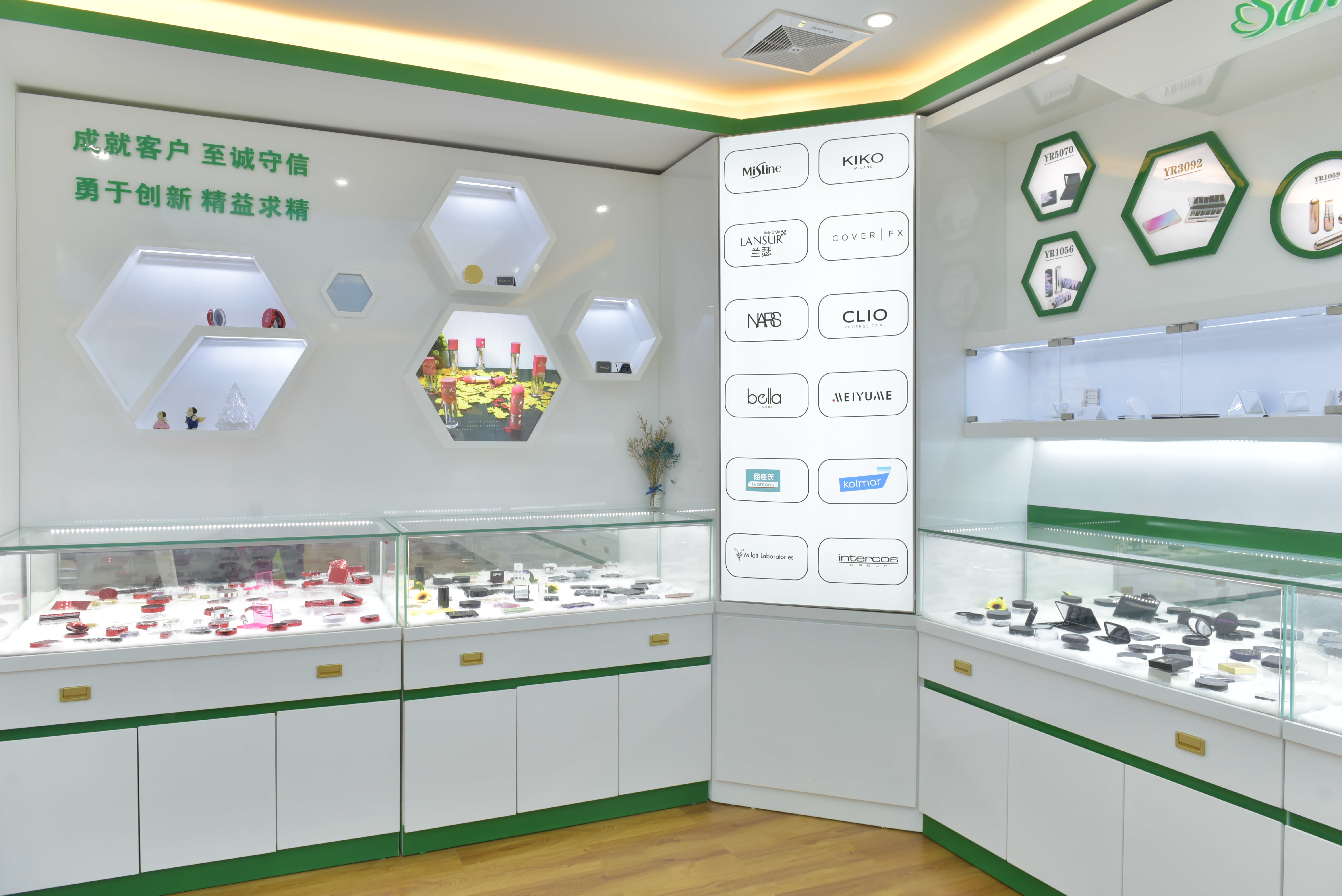
Sample showroom display. The photograph illustrates the display setting, rather than a controlled color comparison.
Compare the finish as well as the hue
A glossy cap, a matte body, and a reflective decoration can share a color description yet look different on an assembled package. Highlights, surface texture, and reflections affect appearance. Turn the sample and reference together, keeping their relative positions consistent, to see whether the apparent difference changes with angle.
A useful reference should represent the intended surface. A flat printed swatch can communicate a color direction, but it cannot show every effect of a curved, textured, transparent, or metallized component. Where appearance matters at a component boundary, inspect the parts together as well as separately.
Keep sample versions identifiable
Record which model, component, material specification, and finish each sample represents. If a later version changes both the base color and the surface treatment, it becomes difficult to tell which change produced the visual result. Version labels allow the next comparison to start from the same reference.
Sambound presents cosmetic packaging and customization information at sambound.com. For a particular project, the physical sample and the agreed specification provide the relevant basis for appearance approval. General customization information alone does not establish a color tolerance, a test method, or a result for that project.
An approval note can identify the reference sample, the lighting used, and whether the proposed appearance was accepted under those conditions. This gives subsequent sample rounds a clear comparison point while leaving instrument settings and numerical tolerances to the actual project agreement.
sambound.com
SamBound New Material Technology Company Ltd.


+ There are no comments
Add yours